




|
|
|
|
||
|
 |
Psychic City (1999, 41.14) ***/½ |
|
| Holiday Drop Dead Eyes Devil Dog Sock Monkey Broken Psychic City Pink Black River |
Below the Belt Mars Moonshine Dub City |
|
Current availability:
Mellotron used:
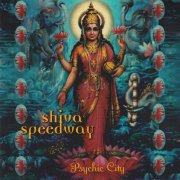
Cambridge, MA's all-female trio Shiva Speedway (originally a quartet) released a handful of 7"s and a lone album, 1999's Psychic City, an alt.rock/riot grrrl/'90s punk mashup often compared to the likes of Sleater-Kinney. The album pulls the odd trick of doing 90° turns just as boredom's about to kick in, notably on the slowburn Black River, featuring some inventive vocal arrangements and tempo changes (relatively speaking), while the lengthy Moonshine shifts between several different feels, although the band struggle to keep up the quality in places.
Peter Linnane plays Mellotron flutes on Below The Belt, clearly genuine, going by the wobbles at the end of the track, although the possible cellos on the title track are more likely to be sustained guitar. Vocalist/guitarist Heidi Saperstein went on to a solo career, although the other members have drifted into obscurity.
See: Heidi Saperstein
 |
Rough Dreams (2002, 43.15) **/½ |
|
| Wagers Gone Too Far After the Prince and the Showgirl All Because You Told Me So Thundercats Snake Eyes Stealing Home John, 2/14 |
Reseda Casino Ten Minutes Queen-Sized Tomb Flycatcher |
|
Current availability:
Chamberlin used:
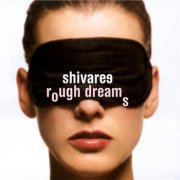
Shivaree apparently make much of their Southern background, but I can't say it has that much effect on their sound, at least to my ears. Going by their second album, 2002's Rough Dreams (apparently unreleased in the States), they play a slightly gothic (note: not Goth) kind of indie, with the improbably-named Ambrosia Parsley (which almost certainly means it's her real name) doing her slightly odd, childlike vocal thing. Y'know, you're either going to like this or you're not... Half measures are unlikely.
Danny McGough is credited with Chamberlin, but on an album that also has a credit for 'string arrangements', you know you're in trouble. The one place I think I can hear it is on Stealing Home, with some strings that actually sound tape-generated, although I wouldn't actually bet anything very important on it. Generally speaking, this irritated the fuck out of me and probably will you too, unless you're a fan of the band who's Googled their way here. Next to no Chamby either, so I really wouldn't bother.
 |
Lost Hits From Milwaukee's First Family of Powerpop: 1979-82 (2006, 65.18) ***½/T |
||
| Teen Line No Substitute Please Stand By Remember Tonight My Association When I Was Younger No Reaction Don't Tell Me |
Hold on Life Without You Why Tell Lies Rather Be Lonely (live) It Hurts Too Much (live) Is That Enough (live) When I Was Younger (live) Hey Deanie (live) |
Baby's Blue Eyes (live) You're So Sure (live) Blue in Heaven Remember Tonight |
|
Current availability:
Mellotron used:
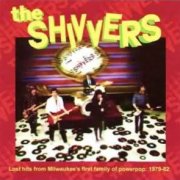
The Shivvers, led by Jill Kossoris, were a Milwaukee-based powerpop outfit (yes, another), less jangly than later versions of the style, more obviously post-punk (without being, y'know, post-punk). They only released one single in their lifetime, minor powerpop classic Teen Line, making 2006's (deep breath) Lost Hits From Milwaukee's First Family of Powerpop: 1979-82 a most welcome release, collecting together what I presume are both sides of the single, a raft of demos, live tracks and a professionally-recorded, expensive-sounding studio session. Highlights? Teen Line itself, of course, No Substitute, the very '60s-sounding No Reaction and Don't Tell Me, amongst others, although the live material, despite being of listenable quality, is chiefly for aficionados.
Kossoris plays Mellotron on the studio tracks tacked onto the end of the disc (source unknown), with background flutes on Blue In Heaven (under real strings) and upfront strings on their re-recording of Remember Tonight, making me think there might have been a working machine in whichever studio they used for the session. Powerpop fans absolutely need to hear this, while bearing in mind that this is the 1980, Farfisa-driven, Elvis Costello version of the style, not the later Americana-influenced one.
 |
Dream on Dreamer (1973, 31.32) **/T |
|
| Time Slips Away Dowee Dowee So Far From Home Take Your Time Little Bit of Heaven Now He's Gone Diana in Her Dreams Just a Song |
In My Time of Dyin' Wild Rose Save Your Love Devil's Suite |
|
Current availability:
Mellotron used:
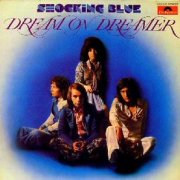
Shocking Blue were a typical Dutch '70s pop group, which still makes them more of a 'rock' band than most current pop (see: the original glam scene's serious rock credentials). 1973's Dream on Dreamer was their seventh and penultimate album, three years after their major US hit Venus, by which time they'd seemingly contracted to their home market, while still singing exclusively in English (find me a Dutch band that doesn't...). Easily the best things here (which isn't saying much) are the band's version of In My Time Of Dyin', two years before Led Zeppelin tackled it in, er, superior fashion and the mandolin solo on Wild Rose. Heady stuff, heady stuff...
An unknown keyboard player adds a major Mellotron string part to Save Your Love, including skilful pitchbends that imitate real strings passably well. Sadly, that's about it for the album's highpoints, so unless you're a fan of Dutch '70s pop or have to have everything with a Mellotron on it, you're probably best off going elsewhere.
See: Mistral
 |
7" (1969) ***/TT½ That Tender Looking Angel Trip Around the World |
 |
7" (1971) **½/T½ Bless the Day Be What You Are |
 |
Make Up Your Make-Up (1974, 38.20) ***/TT |
|
| Make Up Your Make-Up The World Belongs to You No One Knows Bumby Sound The Hour Comes Nigh Wild Flowers I'll Be a Man Good Morning Everyone |
Up and Down She-La-La Face to Face |
|
Current availability:
Mellotrons used:
 |
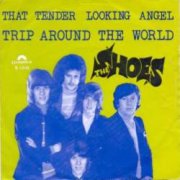
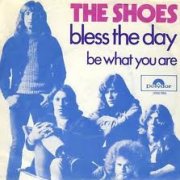
Who were The Shoes? heavily pre-dating the US proto-powerpop band, they were a successful '60s Dutch beat group who split in 1971, briefly reforming in the middle of the decade. 1969's That Tender Looking Angel b/w Trip Around The World is one of several singles they released that year, compiled onto 1970's Let the Shoes Shine in LP (right). The 'A' is a bouncy-yet-minor-key effort, laced with (presumably Phonogram's Hilversum Studios' M300) Mellotron brass and strings, while the flip is (fittingly) rather trippier, swamped with Mellotron strings and a clunky flute melody. Two years later, Bless The Day is slightly dated for the year, sounding more like 1968, complete with Moodies-esque Mellotron strings.
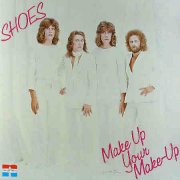
1974's reformation album, Make Up Your Make-Up, is an of-its-time effort, combing hard-ish rock with glam-lite, middling pop/rock, even progressive touches in places, better tracks including the doomy The Hour Comes Nigh, I'll Be A Man and vaguely Strawbs-esque closer Face To Face. Erik van der Wurf and Martin Agterberg play Mellotron, with strings on the opening title track, 'stabbed' string chords (alongside real ones) on The World Belongs To You, a minor string part on She-La-La and a more major one on Face To Face, plus choirs.
I'm not entirely sure why I've given Make Up... three stars; maybe because The Shoes weren't (obviously) a bunch of sad Eurovision hopefuls, but a proper band, while the album does actually have its moments, while their early singles (available on the two-disc Singles A's & B's), while nothing startling, are perfectly acceptable. So; not great, but some nice Mellotron work on a few tracks.
See: Teddylane
 |
Brand New Knife (1996, 46.43) ***/T |
|
| Explosion! Wind Your Spring The Perfect World E.S.P. Loop Di Loop Wonder Wine Magic Joe Fruits & Vegetables |
Tower of the Sun Keep on Rockin' Frogphobia Buddha's Face One Week |
|
Current availability:
Mellotron used:
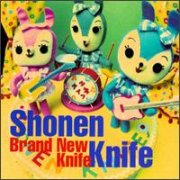
Shonen Knife's schtick seems to be cutesy girly pop-garage punk, Japanese style; note the two different sets of overly-cute girl-dolls-with-guitars pictured on the sleeve of their fifth album, Brand New Knife (ho ho) for proof. They're actually very good at it (the pop-garage punk, that is), although I'm surprised at how relatively laid-back the album is; long way to go before Destiny's Child territory, mind... My favourite track? Has to be closer One Week, chiefly for its ridiculously cutesy-pie lyrics. Sample:
| Thursday, I drive to a toy shop And I buy a Barbie doll |
Guitarist/vocalist Naoko Yamano plays 'Melotron', with a brief string part on The Perfect World, although that's your lot. So; an album that should make all but the most curmudgeonly smile, at least once or twice, although it's somewhat thin on the Mellotron front. Despite rumours, no Mellotron on their follow-up, '98's Happy Hour, although the material's as good, with the added bonus of a great version of Daydream Believer. Incidentally, it seems there's a track on their second effort, 1990's 712, called Blue Oyster Cult; it seems to be about getting food poisoning. Right...
 |
On the Frontier (1973, 42.13) **½/TNeon LifeShips and Sails Living Blind On the Frontier The Boogie Midnight Train Head Under Water/Sepia Sister Old Time Religion Mean Customer |
Current availability:
Mellotron used:
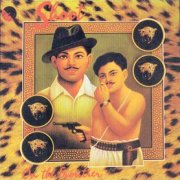
Shoot were one of those one-off '70s bands comprising ex-members of other bands, few of whom did well: in this case, it was Jim McCarty (Yardbirds, Renaissance) and Dave Greene (Raw Material), both clearly looking for a job. Their lone album, 1973's On the Frontier, is a long way from being some kind of long-lost prog classic; it's almost exclusively dull country rock or the kind of middling soft rock that fell out of favour not too long afterwards. About the best things here are Living Blind and Head Under Water/Sepia Sister, but it's pushing it a bit to call any of it 'good'.
McCarty plays Mellotron, with chordal flute and string parts on Sepia Sister, after its sitar intro, Head Under Water, although the strings on Ships And Sails and Old Time Religion are real. As a relatively obscure early '70s album, this probably goes for considerable sums when copies crop up, but believe me, it really isn't worth it. One excellent Mellotron track, mind, but not enough to get that excited about.
 |
No Sir, Nihilism is Not Practical (2004, 54.10) **/½ |
|
| A Llama Eats a Giraffe (and Vice Versa) Dead By Dawn Mouth Like a Magazine If You Like Me Check Yes, if You Don't I'll Die Sampsa Meets Kafka So Selfish it's Funny The Missing Wife Welcome to Plainfield Tobe Hooper |
And the Smokers and Children Shall Be Cast Down Stabbing Art to Death The Dissonance of Discontent Matthias Replaces Judas The Bell Jar |
|
 |
Age of Reptiles (2006, 42.52) **/T |
|
| Naked Lunch Pachycephalosaurus Your Owls Are Hooting Oh! Emetophobia! Sing Me to Sleep George Romero Will Be at Our Wedding The Jesus Lizard Centipede Sisters |
Dinosaur Bones Age of Reptiles |
|
 |
The Fear of God (2009, 45.58) **/T |
|
| I'm Lost Nothing Matters Anymore Lost Connection With the Head Regret Consumes Me Out of My Mind Vehement The Great Emasculation Shepherd, No Sheep |
Let There Be Raw I Think I'm Going to See You Precursor The Fear of God Until We Meet Again |
|
Current availability:
Mellotrons used:
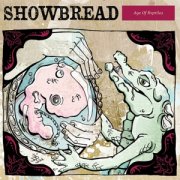
Showbread are a Christian metal outfit (their name is some kind of Biblical quote), whose only claim to originality seems to be their occasional synth use. Not much of a claim, really, is it? 2004's No Sir, Nihilism is Not Practical is their fourth album, a noisy, unfocussed affair, featuring far too much screaming for its own good, frankly. Producer Sylvia Massy Shivy (Acroma, The Cliks, Lollipop Lust Kill) plays Mellotron on Matthias Replaces Judas, with a background string part that doesn't hurt, but doesn't especially enhance the track, either. 2006's Age of Reptiles, also produced by Massy, is slightly more varied and mature, thankfully, although I wouldn't actually take that as any kind of recommendation, frankly. She adds Mellotron strings to the strangely-titled George Romero Will Be At Our Wedding and the end of the ten-minute closing title track, slightly improving them.
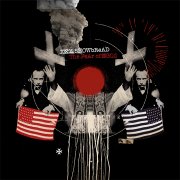
2009's The Fear of God (why is this supposed to be a good thing?) is a rather generic modern metal album with, er, Christian lyrics, pretty much as you'd expect, really. No outstanding features. Sorry. While it doesn't actually have a best track per se, balladic closer Until We Meet Again is the only thing that actually sounds different to anything else here. Massy on Mellotron once more, although she makes us wait for it, with nothing but cellos and strings on Until We Meet Again, not nearly enough to make this worth hearing for it alone, although it's a good example of how to use the sounds tastefully in an acoustic setting. Don't take that as a recommendation, though.
 |
Shtourtsite (1978, 39.27) ***/TSome of YouGatanki, Ladanki White Light Star Way Who is He Window-Dolls Strength Carat |
Current availability:
Mellotron used:
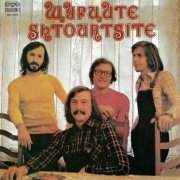
Finding biographical info on Bulgarians Щурците (transliterated, at least in this case, as Shtourtsite) is difficult, chiefly due to alphabetical issues. Suffice to say that I believe their self-titled 1978 release to be not only their second album, but the second with the same title, as if issues needed confusing any further. In many ways, it's a fairly typical late '70s mainstream pop/rock effort, sounding surprisingly like many similar from the other side of the Iron Curtain, language aside, opener Some Of You being typical of its breezy, radio-friendly sound. Better tracks include the boogie of Who Is He and Window-Dolls, whose harmony monosynth part is vaguely reminiscent of contemporaneous Genesis, although the 'jewel in the crown' award is indisputably awarded to closer Carat, a nine-minute, instrumental, jazzy prog epic, sounding not unlike Yes in places.
Either Kiril Marichkov or Vladimir Totev plays the Mellotron (Balkanton Studios' M400, as heard on FSB albums) on a couple of tracks, with background choirs on Star Way and, almost inevitably, choirs towards the end of Carat, just scraping a single 'T'. Do you bother finding a download of this? I wouldn't attempt to pretend it's for the casual (non-Bulgarian) listener, but Euro-prog fanatics may wish to hear its final track, if nothing else.
 |
Wrong Girl (2006, 32.05) **½/T |
|
| How Long? Wrong Girl Wild Things Emanuel Ouija Country Girl A Bite Jerkwatertown |
Poison Kisses Oblivion |
|
Current availability:
Chamberlin used:
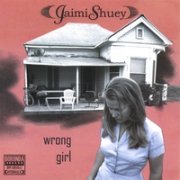
Raised in the Pacific Northwest, Jaimi Shuey moved to L.A. at nineteen, eventually writing her own songs, more country than Americana. 2006's Wrong Girl is, as far as I can work out, her sole album to date, at its best on its rockier material, notably opener How Long? and Poison Kisses, although some of her gloopier country songs are a little hard to bear.
Danny McGough plays Chamberlin strings on closer Oblivion, sounding real enough, apparently recorded live, just himself and Jaimi. Not really one for fans of anything other than fairly full-on country, then, although at least that Chamby seems to be genuine.
 |
The Image Maker Vol 1 & 2 (2007, recorded 1971, 63.31) ***/½ |
|
| Image Maker Bull Run Cry My Little Darling Lady Smith Village Green Crimp Christmas 1914 Fens |
Guernica World War II Concrete Imjin She's a Bad Girl Wizard Tell Me Why Conclusion |
|
Current availability:
Mellotron used:
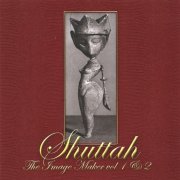
Shuttah are a total obscurity, 2007's The Image Maker Vol 1 & 2 being mastered from the sole surviving acetate; informed opinion has it that someone well-known must've been involved, as the sessions are expensive studio productions and someone funded them... However, when all's said and done, no-one knows who was involved, or if they do, they aren't telling. All very odd. Anyway, for some reason, the hour or so of recordings have been spread over two CDs; OK, so disc two appears to be some kind of Second World War concept, but to add to the expense of the package on those grounds is plain silly...
So what about the music, then? It's a bit of a mish-mash of styles, to be honest, disc one being more pop/rock, although the lengthy Crimp jams it out nicely, while disc two's (supposed) concept is a far proggier affair, opening with the solo guitar of Guernica, other better tracks including The Wizard and Conclusion. The unknown keyboard player adds Mellotron strings to Bull Run, some of which are manipulated to grind to a halt near the beginning of the track.
I keep feeling I should give this an extra half star, but too much of it's a bit too ordinary for its own good, although I heartily applaud Normal Records for unearthing this obscurity and making it generally available. Borderline worth hearing for prog obsessives, but definitely not for Mellotron ones.
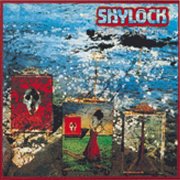 |
Île de Fièvre (1978, 38.50) ****/TT½Île de FièvreLe Sang des Capucines Choral Himogene Lierre d'Aujourd'hui Laocksetal |
Current availability:
Mellotron used:
Shylock were one of several rather good late-'70s French progressive bands who all missed the boat as punk arrived, despite signing to CBS France. Their first release, Gialorgues (****) is an excellent instrumental album, probably marginally superior to Île de Fièvre, in fact. King Crimson were a major influence on the band (guitarist Frederic L'Epee even played a black Les Paul while sitting down), though you wouldn't believe it to hear this album's title track; symphonic in a Genesis vein, this is a lengthy synth-heavy piece, strong on melody and very different to the rest of the album. Didier Lustig's Mellotron use is very sparse here, with just a few string chords creeping in towards the end of the piece.
From Le Sang Des Capucines on, Shylock turn more towards their prime influence and become rather more dissonant, although Choral on side two is precisely what it says on the packet, with some layered Mellotron choirs and strings (Didier actually mailed me to confirm the latter). The album's closing piece, Laocksetal spends several minutes being very Crimson before the Mellotron strings enter, but not in an especially Crimson-like manner, closing the album with a series of repeating chords.
Île de Fièvre's an excellent album, if slightly derivative, although the fractured funk of Himogene shows where the band may have headed if they'd stayed together. Sadly, after arguments with the record company and the rejection of their third album, they split in 1979. I really can wholeheartedly recommend both albums on musical grounds, although this isn't a full-on Mellotron classic. Top marks to Musea for rescuing these.
 |
Honey Pot (1996, 57.07) ***/T½ |
|
| River Song You Got Me Falling Always Here for You Sandy We Had it All After the Rain Whipping Boy Don't Keep Me Hanging on |
Station Strut I Soon Found Out Hold on to Me My My My |
|
Current availability:
Mellotron used:
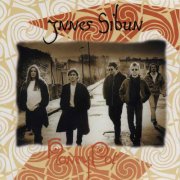
Marvellously-named British blueser Innes Sibun played with Robert Plant in the early '90s, releasing a slew of blues-orientated solo albums both before and since. His 1996 release, Honey Pot, is yer classic blues-rock effort, crammed with Sibun's Stratocaster riffology and every blues trick in the book, in the best possible way. Top tracks? My preference is for the lengthy, jammed-out Don't Keep Me Hanging On (no, not that one), but nothing here appals. Why so long, though? Believe it or not, one can actually have too much of the blues.
Richard Stubbings (briefly, a member of the wonderful Stackridge in the late '90s) plays keys, including credited Mellotron. I was all for saying, "Yeah, right", but the cellos (complete with 'low-note rasp', from the handful of double bass notes at the bottom of the keyboard) on We Had It All simply weren't available in inauthentic form at the time, unless they were direct user-samples, of course, while the suitable warbly strings and cellos on the balladic Hold On To Me are pretty convincing. Does this say anything new? Of course it doesn't, but it says something old as well as anyone else in the field. Faults? It could easily have been fifteen minutes shorter, but then, it wouldn't be me who had to decide which songs to drop.
 |
The Firelit S'coughs (2001, 37.08) ***/T |
|
| Listening to Sound 3 Hours Matamoros Who Wrote the Night? Right Eye, Left Eye The Sighting Felsenmeer Unanimal |
Sink the Town Berthode Offshore Candlelight Lipstick |
|
Current availability:
Mellotron used:
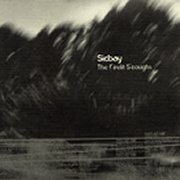
Sicbay are a bassless Minneapolis-based outfit whose members have all graduated from other bands, obviously feeling happier with their current style. Which is? Um, sort of punky something-or-other; sorry, I'm not really up on what they're doing, but it's both energetic and tuneful, which can't be all bad, not to mention the obvious Cardiacs influence on 3 Hours. I've no idea why their debut album is called The Firelit S'coughs, but I'm sure it means something to someone.
Guitarists Dave Erb and Ed Rodriguez both play Mellotron, with strings on Who Wrote The Night? and a typically 'Strawberry Fields'-style flute part on Right Eye, Left Eye, although that seems to be it. So; not one for you progheads (no, really?), or particularly for the Mellotron enthusiast, although two fairly decent Mellotron tracks make this worth hearing if you run into a copy. Incidentally, thanks to Marina for providing my review copy. Don't suppose that Cardiacs influence had anything to do with it, Marina?
 |
Puttin' in Time on Planet Earth (1973, 35.12) ***½/TFull CompassPlay the Piano Have You Heard the News Face Your Fears Think Twice Walking With the Blues Now I Live (and Now My Life is Done) Puttin' in Time on Planet Earth |
Current availability:
Mellotron used:
Although I hadn't previously heard of him, it seems that Ben Sidran is a noted jazz pianist, producer, broadcaster, writer etc., known to many as the lyricist for old buddy Steve Miller's Space Cowboy, apparently a rather lucrative move on his part. 1973's Puttin' in Time on Planet Earth was his third album, containing an intriguing mix of jazz and psychedelia, a combo which reaches its pinnacle on the superb Face Your Fears, featuring both jazz piano and rock guitar solos, although the trippy Now I Live (And Now My Life Is Done), featuring Sidran on Rhodes, comes a close second, just ahead of the title track.
Sidran adds Mellotron here and there, with a beautifully-arranged string part on Face Your Fears, although, sadly, he elects to leave it at that. Y'know, one of the good things about running this site is the occasions when I run into something really good; I'm not so sure about everything here - weird talking blues Think Twice doesn't work so well - but overall, a cautious thumbs-up, though not for the Mellotron.
 |
Far From the Sun (2008, 52.43) ***½/TDreams of TomorrowWaiting for the Sun Time Will Tell Almost There Two Steps Backwards Wishing for More The Summer is Old The Break of Dawn Long Way From Home |
Current availability:
Mellotron used:
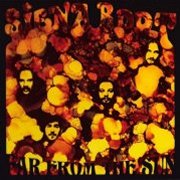
Stockholm-based Siena Root are about as retro as you can get without quiffing up and going all '50s on us. Their third album, 2008's Far From the Sun, recreates 1972 to a T, sounding like a beautiful-yet-unholy cross between Uriah Heep and any number of largely forgotten bands of the era, their single-note riffs and the harmonica solo on Wishing For More pretty much defining their sound. If I have a complaint, it's that it's possibly too redolent of the era, with what seems to be little of the band's own personality left intact. Never happy, am I? Anyway, top tracks include opener Dreams Of Tomorrow, the Mountain-like Waiting For The Sun and cataclysmic, ten-minute closer Long Way From Home, which should give you some idea of what this actually sounds like.
One K.G. West plays Mellotron, amongst other things, although we only get to hear it on Long Way From Home, with an authentic-sounding string part dipping in and out of the mix across its length. This is actually a borderline four star effort, to be honest, although I'd really like to hear a little more of Siena Root themselves next time round. Only one Mellotron track, so probably not worth it on those grounds alone, but it's not what this fine album's about, anyway.
 |
Got What We Want (2002, 37.21) ***½/TT |
|
| Don't Want You Back Be Like Normal Sorry Revisited It'd Be Nice (To Have You Around) One and Only Got What I Want Last Chance Everyone's a Poet |
Sick and Tired Sweet Little Woman Nobody |
|
Current availability:
Mellotron used:
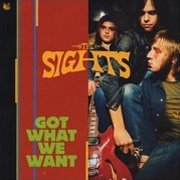
The Sights are more often than not described as 'rock'n'roll', probably more because they come from Detroit than because it's entirely accurate. OK, some of their second album, 2002's Got What We Want is defiantly rock'n'roll (One And Only, the title track), but at least as much of the record is more the heavy end of powerpop than anything (It'd Be Nice (To Have You Around), Last Chance), proving their adaptability, while Be Like Normal has some of that '77 punk energy about it, while maintaining its tunefulness.
The album's keyboards are, unusually, played by the drummer, one Dave Shettler, with a bit of Hammond, plus Mellotron on two tracks, with seriously full-on string parts on opener Don't Want You Back and Sorry Revisited, intense enough to give the album a full two Ts. So; one for powerpop fans who'll scream if they hear one more McGuinn-ian 12-string, with some worthwhile Mellotron work.
 |
Signal (2009, 32.38) ****/TTTTT |
|
| Humility's Value Sooner or Later Mellotronica Park City Southwestern Tour Element One: The Ride Element Two: The View Strong Willed |
The "Prog" Journey Seaside Music Academy Guitar Class One Guitar Class Two Synthesizer Class |
|
Current availability:
Mellotron used:
 |
Signal is effectively Utah-based Kevin Seager's solo project, his/their eponymous instrumental debut appearing in 2009. Although the material tends towards the gentler, mellifluous-guitar-solo end of prog, exceptions include the sequenced piano part on Sooner Or Later, the sequencer-driven electronics on part one of Southwestern Tour, while Strong Willed's strident brass and orchestral chimes have more of a Crimson flavour to them. Oddly, The "Prog" Journey has more than a little of The Byrds about it, while the album closes with the witty Seaside Music Academy, an excuse for Seager to dip into the sound FX box, each of its three parts being pretty much what you'd expect.
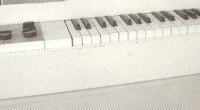
Greg Walker (Syn-phonic label/mail-order boss) owns an M400, which Kevin borrowed for the recording. The first thing you hear upon pressing 'play' is a string note, the rest of Humility's Value being stuffed with string and flute parts, with more of the same across every track, the only exception being part three (Synthesizer Class) of Seaside Music Academy. Mellotronic highlights include the Crimson-esque strings on Sooner Or Later and the authentically out-of-tune strings on Strong Willed, but, frankly, it's all good. Signal is an excellent little album, proof that a small budget no longer has to mean a small sound. Well worth the effort.
 |
Með Suð í Eyrum Við Spilum Endalaust (2008, 55.40) ****½/T |
|
| Goddledigook Inní Mé Syngur Vitleysingur Góðan Daginn Við Spilum Endalaust Festival Suð í Eyrum Ára Bátur |
Illgresi Fljótavík Straumnes All Alright |
|
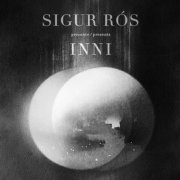 |
Inni (2011, 104.04) ****/T |
|
| Svefn-G-Englar Glósóli Ný Batterí Fljótavík Við Spilum Endalaust Hoppípolla Með Blóðnasir Inní Mér Syngur Vitleysingur |
E-Bow Sæglópur Festival Hafsól All Alright Popplagið Lúppulagið |
|
Current availability:
Mellotron used:
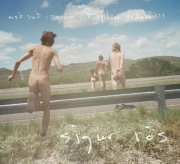
Sigur Rós are the kind of band for whom the term 'transcendental' was invented; they construct giant edifices of sound, almost invariably major-key, using analogue keyboards, bowed guitar and an invented language, Vonlenska, or Hopelandic (people often assume, wrongly, that they're singing in Icelandic). They made their name through several enigmatically-titled releases, somehow merging 'melancholy' and 'triumphalism' into the kind of music that many prog fans have gone ga-ga about, although their appeal is, startlingly, far more mainstream than that, or they wouldn't have a career.
Með Suð í Eyrum Við Spilum Endalaust (With a Buzz in Our Ears We Play Endlessly) is generally regarded as the point at which Sigur Rós cheered up, although, of course, nothing's ever that simple. While certainly more upbeat than their previous output, it's still quite unmistakeably Sigur Rós, a couple of tracks pushing the ten-minute barrier, although I believe most of it's sung in Icelandic, with one song in English. Careful, chaps... Essentially, though, it's every bit as good as everything else they've done, just a little more optimistic. Somewhere along the line, the band discovered the Mellotron; I suspect it might've been sooner had they not been isolated in Iceland, a country not known for its Mellotronic activity. The last I heard, they're ordering a new M4000 from Streetly Electronics, but haven't been able to decide what sounds they want in it... They borrowed an M400 for the recording of Með Suð..., adding strings to Fljótavík, although there are several other places on the album it could be, but apparently isn't. Although you'd think keyboard player Kjartan "Kjarri" Sveinsson would've played it, I believe it was actually drummer Orri Páll Dýrason. So; another wonderful Sigur Rós album. Bastards. Very little Mellotron, mind, but I'd like to think that when they finally get their M4000 sorted out, they might use it a little more.
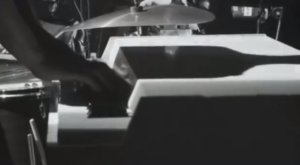 |
A little story for you... My then-partner and I went to see the band on tour in late 2008, then got a call from Mellotron HQ a couple of weeks later: would we like to lend the band my M400 for a DVD shoot at a major gig? Er, whadd'ya think? We belted back up to north London and hauled it up to Alexandra Palace, a grand old gothic pile on a hill looking out over the city. We got it soundchecked, then it was hidden under a black sheet until they played Fljótavík, at which point it was produced to minor cheers (!), Orri reprising his studio part on the string section. We were promised a copy of the DVD (eventually titled Inni), which still hasn't appeared, despite several follow-up e-mails (thanks, guys). It turns out that a two-CD set of their performance has also been released under the same title, recorded across both nights. You can hear the size of the place from the cheers that open proceedings, after which we get a faithful reproduction of the hundred-minute set they played on the tour, including the second night version of Fljótavík and yes, Orri played the Mellotron as badly as we remember...
Sigur Rós have had some bad press from certain quarters, claiming that they're just some run-of-the-mill post-rock outfit, to which I say: bullshit. There's no guarantee you'll like what they do, but don't lump 'em in with your Godspeeds! and your Mogwais, thank you very much. Two albums here, both well worth hearing, but don't bother for the Mellotron (even when it's mine).
See: Jónsi
 |
Windows on the World (2006, 62.01) ***/½ |
|
| The First Men on the Sun Ostbalkon Submarines Laurel Windows on the World Luce and the Japanese Solitary Dancer Plattenspieler |
Silberwinter Windows on the World (reprise) |
|
 |
Bookmarks (2007, 61.10) ***/T½ |
|
| Flugzeug Nach Finkenwerder White Beagle Grovhakket CMC10 Othmarschen in Blau Lighthouse This Car Can Fly Spooky Groove |
Cello House Multiscience Home Good-Byes to Frog-Eyes |
|
 |
Inselwinter (2012, 78.23) ***/T |
|
| Inselwinter 1 Inselwinter 2 Inselwinter 3 Inselwinter 4 Inselwinter 5 Inselwinter Finale Elektrum Inselwinter (Variation) |
Inselwinter Demo #1 Inselwinter Demo #2 Inselwinter Demo #3 Inselwinter Demo #4 Inselwinter Demo #5 |
|
Current availability:
Mellotrons used:
The Silicon Scientist is basically Sonnenbrandt's Stefan Bornhorst (a.k.a. Kpt Korg), whose Windows on the World channels early '80s synthpop, producing an album that could all too easily have been made by a bizarre (or should that be bizzare?) conflation of The Human League and Blancmange. Sonically speaking, Bornhorst has an innate understanding not only of his chosen genre, but also his equipment, placing sounds perfectly in the mix so as not to overwhelm it by swamping every frequency. Modern producers, please take note. On the Mellotron front, Stefan tells me that Submarines features flutes near the beginning (and right at the end) and male choirs (albeit quiet ones) near the end and indeed it does, making me wonder why I didn't notice them first time round.
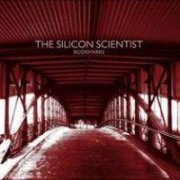
2007's Bookmarks, an odds'n'ends collection recorded over the preceding two years, is a highly limited-edition CD-R that came with the first two hundred copies of Windows on the World. Like its parent album, it's an early '80s synthpop throwback, although most of its contents are instrumental, in 'film soundtrack' style, the minimal vocal parts mostly half-spoken in the background. Bornhorst is credited with a whole slew of vintage goodies, including a Korg MS-20, a Solina string synth, Multi- and MiniMoogs and a real Mellotron M400, which makes a nice change. Anyway, we get strings on CMC10 (a Mellotron owners' in-joke: the CMC-10 is the original, notoriously unreliable motor control board from the M400) and all over Home, although other possibles are probably some form of synth.
2012's Inselwinter appears to be based around two tracks from 2009's Poly, featuring the six-part title track, two related pieces and five demo versions, which makes for quite a lot of rather similar-sounding music. To be honest, the whole thing could probably be improved by cutting it by 50%, unless you look at it as music for meditation, at which it seems to work quite well. Highlights include the upfront bass synth on Elektrum, the Solina strings on Inselwinter Demo #4 and lovely polysynth string solo Inselwinter Demo #5, while Mellotronically speaking, we get chordal string parts on Inselwinters 1 and 3, although that appears to be it.
You're most unlikely to find a 'hard' copy of Bookmarks, although Windows on the World should be easier to trace, but all tracks are available as online streams; worth hearing for synth nuts and synthpop fans.
See: Sonnenbrandt