




|
|
|
|
||
|
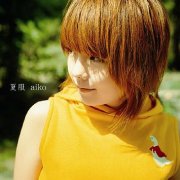 |
Natsufuku (2001, 56.47) **½/T |
|
| Hikouki Be Master of Life Rosie Hisoka na Sayonara no Shikata Owaranai Hibi Kokoro Biyori September Ame Fumu Overalls |
Asparagus Boyfriend Hatsukoi Natsufuku |
|
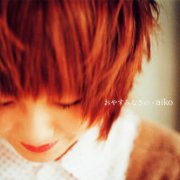 |
Oyasumi Nasai (2001, 20.30) **/½Oyasumi NasaiHi to Kage Cocoa Oyasumi Nasai (instrumental) |
Current availability:
Mellotrons used:
Aiko Yanai is a Japanese pop singer whose producers, presumably, choose to splatter some of her records with vintage keyboards, not that I'm complaining, mind. 2001's Natsufuku (Summer Clothes) is her third album, sounding rather more mature and less J-Pop than you might expect, although I have to say, I can't understand why anyone would want to listen to Aiko's voice for long, particularly when she (almost) holds notes towards the end of her songs; shrill and off-key, for some reason, her producer has opted to eschew the usual levels of reverb, leaving us with a dry, upfront and not especially pleasant sound (see: the closing seconds of September). Among the album's unusual sonic features is the banjo on Boyfriend, while the aforementioned vintage keys turn up, not least a Hammond, a Wurlitzer and a Clavinet, while Masanori Shimada plays Mellotron, with pitchbent strings on one of the album's singles, Rosie and regular ones on Hisoka Na Sayonara No Shikata and Owaranai Hibi. Incidentally, a single from her next album, the following year's Aki Soba ni Iru yo, Oyasumi Nasai, has a smattering of Mellotron strings on one of its b-sides, Hi To Kage.
Unless you're already a big fan of J-Pop, you are not, believe me, going to get too excited about these releases. I've heard an awful lot worse, but they sound like exactly what they are; albums made in a Western style for an Eastern audience, with very little Mellotron. Maybe not.
See: Samples etc.
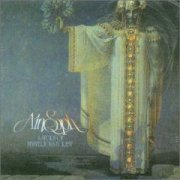 |
A Story of Mysterious Forest (1980, 41.41) ****/T½ |
|
| Crossfire Interlude I Natural Selection Variations on a Theme By Brian Smith A Story of Mysterious Forest Awakening Longing-With the Wind Mysterious Forest Passion |
Deep Sleep Darkness Dance Misfortune Mysterious Forest Awakening Interlude II |
|
Current availability:
Mellotron used:
Ain Soph's debut album, A Story of Mysterious Forest, didn't actually contain their first recordings, just the first to be released. The material on both 1991's Ride on a Camel: Special Live (recorded when they were still known as Tenchi-Sozo) and '93's Mysterious Triangle: Special Live Volume Two dates from '76-'78, as may that on some of their other archive releases. They fall fairly and squarely into the 'Canterbury' area, with much jazzery in all departments, so fusion haters should probably stop right here.
A Story of... got their career off to a good start, with much inventive fusionesque work (and that from someone at best ambivalent to the genre), not to mention two beautiful solo acoustic guitar pieces in the two Interludes. Oddly enough, although side one is largely fusion, side two's title track is all-out Yes-ish symphonic progressive, with barely any jazziness at all, almost sounding like a different band. Masey Hattori's Mellotron strings work on both Variations On A Theme By Brian Smith and A Story Of Mysterious Forest itself is exemplary, as is all his keyboard work, although it seems strange to play 'jazz Mellotron' on one track, but not on the rest. Although I can only hear Mellotron on one part of the title track, it may be present elsewhere, along with the string synth that's present throughout most of the piece.
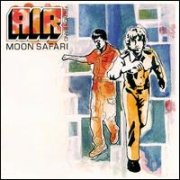 |
Moon Safari (1998, 43.47) ***½/T |
|
| La Femme d'Argent Sexy Boy All I Need Kelly, Watch the Stars Talisman Remember You Make it Easy Ce Matin La |
New Star in the Sky Le Voyage de Penelope |
|
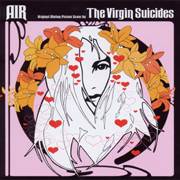 |
The Virgin Suicides (2000, 40.33) ****/TTTTT |
|
| Playground Love Clouds Up Bathroom Girl Cemetary Party Dark Messages The Word 'Hurricane' Dirty Trip Highschool Lover |
Afternoon Sister Ghost Song Empty House Dead Bodies Suicide Underground |
|
Current availability:
Mellotrons used:
Air popped up in the late '90s, seemingly from nowhere, defining a 'new French pop' sound of self-referential musical in-jokes and pseudo-easy listening. Nicholas Godin and J.B. (Jean-Benoit) Dunckel first entered the British consciousness with the mini-album Premiers Symptomes, quickly following it with Moon Safari, utilising a bunch of old synths and immediately becoming the chattering classes' dinner party artist of choice. The 'hit' was Sexy Boy, with the vocodered title line repeating to the point of irritation, but the whole album works on the same level, making for a reasonably pleasant, if undemanding listen. The equipment list is a bit of a gearhead's wet dream; I can only assume that a lot of this stuff could still be picked up fairly cheaply in France in the '90s. There's only one Mellotron track (everything's credited); New Star In The Sky has some drifting flutes over some drifting string synth. I think you get the picture.
The Virgin Suicides is a different matter altogether; as a film soundtrack (directed by Sofia Coppola, fact fans), it has to work on different levels and actually ends up a lot nearer to 'prog' than its predecessor. It's a lot darker than Moon Safari and is stuffed to the gills with Mellotron; mostly strings, with choirs in places. Ghost Song is particularly impressive, with swooping synth over Mellotron choirs; very effective, while Dead Bodies is solid, in-yer-face choirs over a driving backbeat and a million miles away from anything they'd done before. If you didn't like Moon Safari, don't let it put you off hearing this; it's absolutely fantastic and something of a Mellotron classic.
Air's next album, 10,000 Hz Legend, is apparently closer to Moon Safari than The Virgin Suicides and, heretically, features mainly samples. Why? Mainly boredom, it seems. However, after a Mellotron tour de force like its predecessor, somehow they don't really need to produce anything as good again. Buy The Virgin Suicides and ignore the rest.
See: Samples etc.
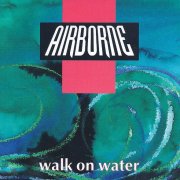 |
Walk on Water (1995, 53.46) ***/TBreath of DarkWhere? Walk on Water I Just Wanna Make You Happy Addiction The Final Chance 40 Days Lovin Kind The One |
Current availability:
Mellotron used:
The Korntal-Münchingen-based Airborne were vocalist Bernd "Baggi" Buchmann's project, aided and abetted by various friends. Although Buchmann seems to have 'previous' in the progressive scene, Walk on Water sounds more like Houston's Galactic Cowboys than anyone, in its mix of downtuned heaviness and melodic vocal work, highlights including chugging opener Breath Of Dark and near-fifteen minute closer The One.
Prog keys man Ines Fuchs, here credited simply as Ines, plays real-sounding Mellotron on The One, with strings dipping in and out of the mix, alongside a generic string patch. Worth hearing for that? Not really, no, but aficionados of the more tuneful end of '90s hard rock may well be interested.
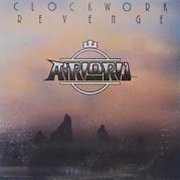 |
Clockwork Revenge (1977, 41.34) ***½/TClockwork RevengePictures in a Puddle Ladies of the Night Earthborn Pilgrim Out of the Woods Is it Such a Dream You Might Even Be |
Current availability:
Mellotron used:
Airlord were one of the many New Zealand bands who headed for Australia to attempt to make their fortune; sadly, like so many others, they failed. Clockwork Revenge is good (if a tad eccentric), while nowhere near a classic; vocalist Steve MacKenzie is (presumably) clearly heavily influenced by Peter Gabriel, but without the subtlety. The title track is about the inhabitants of a toyshop who wreak a horrible revenge on their cruel mistress, with all the theatricality that suggests and several of the other tracks pursue a similar fantasy-related approach. Airlord had a fairly symphonic sound, although they never seemed to go far enough over the top to really stand out from the crowd.
The only Mellotron to be heard on the album is a little choir by keyboardist Alan Blackburn on Ladies Of The Night, which isn't about what you think, but rather another myths-and-legends lyric, falling into line with the rest of the album's subject material. So, not a bad album; pick it up if you don't have to pay an exorbitant amount, but don't bother for the Mellotron.
AirSculpture (UK) see: |
 |
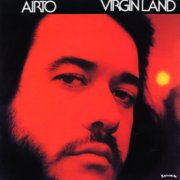 |
Virgin Land (1974, 39.51) ***½/½Stanley's TuneMusikana Virgin Land Peasant Dance Lydian Riff Hot Sand I Don't Have to Do What I Don't Want to Do |
Current availability:
Mellotron used:
Vocalist/percussionist Airto Moreira's fifth album, Virgin Land, seems to be a typical Latin/fusion crossover album from the man, stuffed with fiery playing from a stellar cast, including George Duke on keyboards and the incomparable Stanley Clarke on bass, the whole kit and caboodle produced by Billy Cobham. If you don't do jazz, you could be on a sticky wicket here, although the sheer energy put out by the man and his band may be enough to convert unbelievers. It's not all 900 mph stuff, but the likes of the title track are enough to leave one breathless, even if you don't know a Dorian scale from a Greek column.
Mellotron on one track only, Kenny Ascher (from John Lennon's band) playing a few string chords on closer I Don't Have To Do What I Don't Want To Do, along with the piano part, although there's loads of scorching keyboard work throughout, not least Milcho Leviev's funky Clavinet work on Peasant Dance. Liking jazz isn't a prerequisite for liking this album, although it probably helps if you're keen on superb musicianship; suffice to say, good album, though not for the Mellotron.
See: Fourth World
 |
The Rust Within (2014, 49.28) ****/TTT |
|
| When You Find Someone 27 Sisters of Soul 94 Foolish Fake it Life is What You Choose it to Be Take the World Råstavägen |
Starfly Lifetime Spender So Easy Rifle Gun |
|
Current availability:
Mellotron/Chamberlin used:
Akaba are the natural successors to Pineforest Crunch and Reminder, comprising members of both: Pineforest's vocalist extraordinaire Åsa Carild, Reminder's Tobias Ljungkvist and Åsa's husband, Mattias "Änglagård" Olsson, who played in both. The trio play an updated take on both outfits' skewed Scando-pop vision on their debut, 2014's The Rust Within, the bulk of its material successfully walking the 'happy/sad' tightrope, several tracks managing to combine euphoria and despair in one uneasy, sugar-coated package. Highlights include 94, Fake It, the gentler Foolish and the beautiful Råstavägen, complete with a stunning (and very real) pipe organ coda, although those allergic to programmed drums should possibly approach with caution.
Tobias and Mattias play Mellotron, while Mattias adds Chamberlin to the mix, with a Mellotron string line on 27 Sisters Of Soul (actually from Mats Lundgren), a high flute line, MkII 'moving strings' and Chamberlin solo female voice on Foolish, cellos on Fake It, a full-on string part on Råstavägen and strings (mostly in fifths) on Starfly. I'm quite sure I've missed several parts; Mattias will doubtless berate me at some point for having cloth ears. While some way from your standard Planet Mellotron fare (whatever that might be now), The Rust Within is wholeheartedly recommended to anyone who's ever liked Mattias' various projects over the years (not least AK-Momo, Nanook of the North and Necromonkey) and, of course, Pineforest Crunch and Reminder.
See: Pineforest Crunch | Reminder
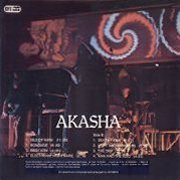 |
Akasha (1977, 42.36) ***/TTTTIsle of KawiBondage Regitativ Electronic Nightmare Death Hymn Light and Darkness The Trip Man and the Void |
Current availability:
 |
Mellotron used:
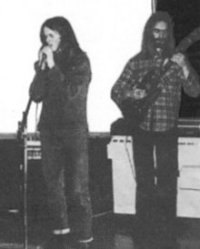
Norway's Akasha are a bit of a peculiarity; despite releasing their sole album in the late '70s, in a blindfold test they'd almost pass for a typical UK 'proto-prog' outfit, the synth work being the only real giveaway. They use that Gracious/Cressida type sound to great effect, though, so although they were a bit of a band out of time, in hindsight it's all rather unimportant, really. The main thing is, Akasha's a good album within its chosen genre and what's more, is stuffed full of Mellotron, played by both Jens Ivar Andreassen and Sverre Svendsen.
Opener Isle Of Kawi is one of the album's strongest tracks and lays out their agenda for all to see, including their heavy reliance on Mellotron strings to create atmosphere. In fact, I don't hear any other Mellotron sound anywhere on the album until a little flute on the intro of last track, Man And The Void, but, despite the rather poor recording of the Mellotron parts, this is definitely one to track down if you just can't get enough of the Sacred Instrument. Other Mellotron highlights are Bondage (presumably as in 'my people are in...', as against suspect sexual practices) and the opening chords of The Trip.
The musicianship overall is nothing special, but the synths (seemingly the only other keyboard instrument) are played with some glee, wibbly noises à la Hawkwind abounding (especially on Electronic Nightmare) and there's a couple of good psychedelic guitar parts, including a Hendrix-y thing on Man And The Void. It has to be said, this is a noticeably 'druggy' album, more so than many of Akasha's contemporaries, so maybe their chemical intake influenced the album's temporal direction. Who knows? Whatever, don't expect classic '70s prog, but for an overseas take on the proto-prog sound with lashings of Mellotron, look no further.
 |
The Imagined Savior is Far Easier to Paint (2014, 78.43) ***½/T |
|
| Marie Christie As We Fight (Willie Penrose) Our Basement (Ed) Vartha Memo (G. Learson) The Beauty of Dissolving Portraits Asiam (Joan) Bubbles (John William Sublett) |
Ceaseless Inexhaustible Child (Cyntoia Brown) Rollcall for Those Absent J.E. Nilmah (Ecclesiastes 6:10) Inflatedbyspinning Richard (Conduit) |
|
Current availability:
Mellotron used:
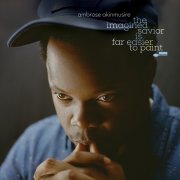
Oakland native Ambrose Akinmusire is, going by his impressive list of awards, one of the world's top jazz trumpeters, 2014's The Imagined Savior is Far Easier to Paint being his third album. Its concept seems to be to bring attention to those whom society has treated with derision, including the unfairly incarcerated, the homeless and innocents killed by gunfire. Musically, Akinmusire is frequently described as 'genre-busting'; to those unacquainted with the finer points of jazz (me), the album sounds like updated bebop, mostly instrumental and exceedingly, well, jazz.
Sam Harris plays real-sounding Mellotron vibes on Rollcall For Those Absent, a heartbreaking piece featuring a small child reading the names of young people killed by gunfire, constantly returning to, "Trayvon Martin..." So; don't like jazz? You won't like this. That isn't a criticism of what is clearly a finely-crafted record, merely an observation.
 |
Eli (1976, 38.33) ***/TEliGuardian Angel Tranquillizer Can't Fake a Good Time There He Still Goes Strindberg Wings of Strings Naked Actress Fairytale |
Current availability:
Mellotron used:
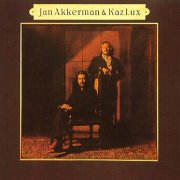
After Jan Akkerman left Focus, to be replaced by Belgian guitarist Philip Catherine, one of his first projects was Eli, an album recorded with his old compadre Kasimirz (Kaz) Lux from their late-'60s outfit Brainbox. The end result, sadly, is somewhat dull and mainstream, with a surplus of funky rhythm work and Lux's soulful vocals, although the album is apparently a concept work concerning the 'dream life of a woodcutter' (!), with an August Strindberg connection, although songs such as Eli itself and There He Still Goes hardly give the impression of such weighty subject matter. There are a few decent tracks, not least guitar instrumental Tranquillizer, Wings Of Strings and Fairytale, but the album's highlight has to be the Focus-like Strindberg, with a beautiful Akkerman line over piano chords, making a very welcome change from the likes of Naked Actress.
Speaking of piano, some of the album's keyboards are played by the mighty Rick van der Linden (Ekseption/Trace), including Mellotron on a couple of tracks, with ethereal choirs on Can't Fake A Good Time and Strindberg, although hardly enough to make a purchase worthwhile on that account. Eli barely scrapes three stars, to be honest, rescued by a handful of worthwhile tracks; maybe it made more sense at the time. Very little Mellotron work, too, so don't go spending too much on this; two out of nine tracks isn't quite enough, I'm afraid...
See: Focus | Ekseption | Trace
 |
Emotions (2003, 45.21) **½/T |
|
| Western Shore Love (to Be Your Main) Sun Don't Shine Broken S.S./Candycane S.S./Candycane (Continued) Rust and Cyanide Lost the Gold |
Resistance Nightmare X In My Time |
|
Current availability:
Chamberlin used:
Alaska! (possibly alaska!) have a Sebadoh connection (Russell Pollard is an ex-member), so it's fairly appropriate that their sound sits firmly into the 'U.S. indie' camp, although they don't sound much like Lou Barlow's mob. Sadly, they're no more interesting, either, although a handful of tracks on 2003's downbeat Emotions cut through the fog of disillusion and alienation, notably Rust And Cyanide, the harmony-heavy Resistance and punchy closer In My Time.
Dave McConnell plays Chamberlin (the MusicMaster 600 at Josie Cotton's studio), with strings (alongside real cello, by the sound of it) on Rust And Cyanide and more upfront ones on In My Time. Overall, then, fans of American indie may well go for this, but the rest of us should probably leave well alone. Certainly not worth it for its minor Mellotron use.
 |
Albatross (1975, 35.45) ****/TT½Four Horsemen of the ApocalypseMr. Natural Devil's Trumpet Cannot Be Found Humpback Whales |
Current availability:
Mellotron used:
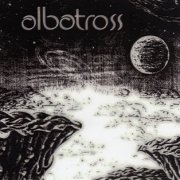
Albatross were a pretty obscure bunch, but their only, self-titled album's actually pretty good, without breaking the mould for American '70s prog, following the standard Yes template (see: Starcastle). Albatross opens with a side-long epic, the suitably epicly-titled Four Horsemen Of The Apocalypse and it doesn't disappoint, unless you were actually expecting the horsemen to burst out of your speakers and make a mess on your living-room carpet. The album's shorter tracks are all good, although Devil's Trumpet rips off the church organ part from Close To The Edge something rotten - in fact, the whole track rips Yes outrageously - and I spotted an ELP cop somewhere too, unfortunately proving the band's essential lack of originality.
Mellotronically, Mark Dahlgren goes for it in a big way on Four Horsemen, strings and choir all over the shop, with one especially good part and, although much of side two is Mellotronless, Mr. Natural features some background strings, while Humpback Whales has a few string chords right at the end of the album. All in all, while falling somewhat short of 'classic' status, Albatross is a good album with some nice Mellotron work. If you can find a copy, that is...
 |
7" (1972) **½/T Africa Stand Jah Rastafari |
Current availability:
Mellotron used:
Dennis "Alcapone" Smith's mainstream career struggled to outlast the '70s, although he's still performing to this day. Africa Stand is an early 45, sitting somewhere between, say, Toots & the Maytals' commercial reggae and the more 'roots' version espoused by several artists, but it's unlikely to ever be lauded as a genre classic (well, have you heard of it?).
Someone plays scratchy-sounding Mellotron flutes on the 'A', so badly recorded that they rival some of this site's worst examples, not least Merrell Fankhauser's The Wind Cried Maui and, more iconically, Lynyrd Skynyrd's legendary Free Bird. I mean, how difficult can it be to record a Mellotron properly? Saying that, I've no idea of the studio conditions. Was this recorded in the UK? Surely there weren't any Mellotrons in JA? Who knows?
 |
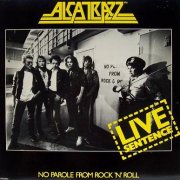
No Parole From Rock'n'Roll (1983, 41.34) ***/T½ |
|
| Island in the Sun General Hospital Jet to Jet Hiroshima Mon Amour Kree Nakoorie Incubus Too Young to Die, Too Drunk to Live Big Foot |
Starcarr Lane Suffer Me |
|
 |
Live Sentence (1984, 38.57) ***/TToo Young to Die, Too Drunk to LiveHiroshima Mon Amour Night Games Island in the Sun Kree Nakoorie Coming Bach Since You've Been Gone Evil Eye All Night Long |
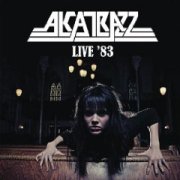 |
Live '83 (2010, 51.52) ***½/T |
|
| Too Young to Die, Too Drunk to Live General Hospital Kree Nakoorie Island in the Sun Evil Eye Since You've Been Gone Hiroshima Mon Amour Suffer Me |
Desert Song Jet to Jet All Night Long |
|
Current availability:
Mellotrons used:
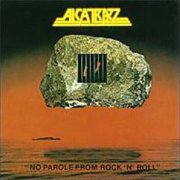
Alcatrazz were actually a multinational band, featuring two members of the recently deceased New England, keys man Jimmy Waldo and bassist Jimmy Shea, drummer Jan Uvena, vocalist Graham Bonnet, ex-Rainbow and fresh out of the Michael Schenker Group and finally, whizzkid guitarist Yngwie (later Yngwie J. "for Johann") Malmsteen. The last-named had already worked his way through Swedes Silver Mountain and US act Steeler in quick succession, while Bonnet, a member of The Marbles in the late '60s, was clearly struggling with his inner demons, his ejection from MSG following an incident when he allegedly exposed himself onstage, under the afluence of incohol. Hmmm. Too Young To Die, Too Drunk To Live eh, Graham? This lineup would make just the one album, 1983's No Parole From Rock'n'Roll, before Malmsteen was off again, on the solo trajectory he was clearly always destined to follow, largely because hardly anyone can work with him for more than an album or two. Allegedly.
The album starts horribly, with the awful AOR of Island In The Sun, after which it switches into fairly typical early-'80s hard rock, with the bonus of Bonnet's voice and Yngwie's, er, 'fiery' lead work, particularly on closer Suffer Me, in which the seeds of his Blackmore-esque neo-classical style are clearly evident. Best tracks? Assuming you can listen to the style at all, Hiroshima Mon Amour (had they heard/heard of the Ultravox track, I wonder? Yes, I know it's a film) and Kree Nakoorie, while Malmsteen's short solo piece Incubus is decent enough. I was only alerted to the possibility that this might have some Mellotronic input after seeing the faked 'onstage' video for Island In The Sun somewhere and noticing Waldo's M400 sitting under a rack of then-modern synths. While nowhere to be heard on that track, Waldo splurges the (male?) choirs all over Kree Nakoorie, with more of the same on Incubus.
The band's record company stuck Live Sentence out the following year, after their successful Japanese tour; Malmsteen tried to block its release, but failed. It's a shame the whole setlist isn't available, as this only really gives a taster of their full show, but as you can see, several tracks from No Parole... are (unsurprisingly) repeated, alongside Malmsteen's Coming Bach (ouch), Night Games from Bonnet's 1981 solo effort, Line Up and the two singles from his one album with Rainbow, Down to Earth, the rather tedious Since You've Been Gone and All Night Long. Jimmy Waldo took his Mellotron along, reprising his choir part on Kree Nakoorie, the only other interesting instrumental part being Gary Shea's uncredited Taurus pedals on Evil Eye. The album's sound quality, er, isn't great, with some pretty sudden edits, but anyone wanting to hear some difficult-to-find Malmsteen will really need to track this down.
2010 brought Live '83, a lower-quality recording than Live Sentence, but presumably nearer to a full set, highlights including General Hospital, ripping instrumental Evil Eye and a decent version of Desert Song, easily the best thing on Bonnet's lone MSG outing, Assault Attack. As a result, this is actually the most satisfying Alcatrazz recording I've yet heard, although the sound quality leaves a little to be desired in places. Waldo gets his Mellotron onto several tracks, with quite obvious strings (albeit briefly) on General Hospital, background choirs on Kree Nakoorie and what sounds like male choirs on Evil Eye and Desert Song, although none of it's exactly upfront.
See: Rainbow | New England
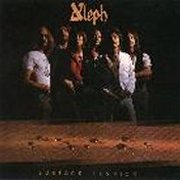 |
Surface Tension (1977, 41.27) ***½/TTTTBansheeMan Who Fell Morning You Were Never a Dreamer Mountaineer Heaven's Archaepelago |
Current availability:
Mellotron used:
Aleph were a seriously symphonic prog outfit from Australia, let down slightly by a dodgy vocalist and, while none of their material was particularly original, they weren't at all bad and are one of a tiny handful of full-on progressive outfits to hail from their country (see: Sebastian Hardie and Rainbow Theatre). On their sole release, 1977's Surface Tension, Aleph concentrated on shorter material on side one, leaving side two as their magnum opus, Mountaineer, where they finally gave themselves room to stretch out compositionally, finishing off with the shorter, though still excellent Heaven's Archaepelago. There aren't any bad tracks on the album, but the shorter ones do pale in comparison with the epic, to be honest.
It's not specified which of the two female keyboard players (!) played the Mellotron, Mary-Jane Carpenter or Mary Hansen, but whoever it was knew her stuff; it's all over the place, mainly strings, mostly used with taste and reasonable restraint, while there's some nice piano work scattered across the album, too. Again, the Mellotron's at its best on Mountaineer, but it's worth hearing anywhere on the album. I've no idea how legal Korea's M2U Records release is, but at least this is available.
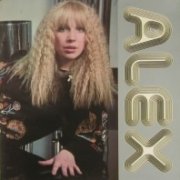 |
Alex (1977, 42.24) **½/½ |
|
| Flying High (You & I) Somebody's Song Love is for the Birds Baby I Need to Love You Heartbreak Queen Love is the Victim Losing Hand Give Love a Chance |
Street Walkin' Woman Lock All the Gates |
|
Current availability:
Mellotron used:
It seems Polish-born Alexandra Naumik Sandøy (1949-2013) had a traumatic childhood, exiled to Siberia with her parents, only returning in the late '60s. After moving to Norway, she made five albums between 1977 and 1983, Alex being the first. It's an album of 'functional disco', I suppose, doing a reasonable dancefloor job without being in the slightest danger of treading on Chic's toes. Better tracks? Heartbreak Queen features some ripping guitar work from Bjørn Christiansen, combining rock and funk to surprising effect, while Street Walkin' Woman is more funk than disco, but this is unlikely to excite many Planet Mellotron readers, frankly.
Svein Gundersen plays Mellotron on power ballad closer Lock All The Gates, chordal choirs lurching in, dramatically, halfway through, although the strings are real. While the Norske Albumklassikere people are doing a fine job of resurrecting Norwegian obscurities (see: Prucel), this is really only one for disco-era obsessives.
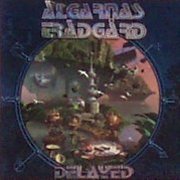 |
Delayed (2001, recorded 1974, 44.46) ****/TTTTakeoffInterstellar Cruise Reflection Almond Raga Beetlewater The Arrival of Autumn My Childhood Trees |
Current availability:
Mellotron used:
From Gothenburg, Älgarnas Trädgård (Garden of the Elks) released just the one album in their lifetime, psych classic Framtiden är ett Svävande Skepp, Förankrat i Forntiden (The Future is a Hovering Ship Anchored in the Past), comparable to early Pink Floyd, featuring both a VCS3 and a Moog modular amongst the band's arsenal of equipment. A strangely never-bootlegged second, unreleased album appeared out of nowhere in 2001, appropriately titled Delayed. Their sound had tightened up considerably after two years of heavy touring, so while the album is loosely 'psych', it has a heavy influence from the international progressive scene of the time, too, particularly King Crimson, Interstellar Cruise featuring some Fripp-ish guitar and Cross-like violin.
Jan Ternald plays most of the Mellotron on the album, although Mikael Johanson chips in on Reflection. Plenty of it, too, with flutes and strings on the lengthy Interstellar Cruise, Beetlewater and The Arrival Of Autumn, while Reflection is simply a beautiful thirty-second Mellotron flute solo. If it's 'pure' prog you're after, you may not like Delayed, but for the (not that much) more adventurous listener, it's a winner. Recommended.
 |
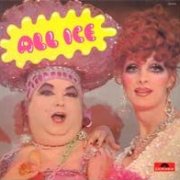 |
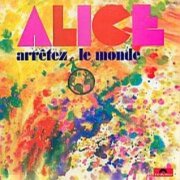
Arrêtez le Monde [a.k.a. All Ice] (1972, 38.14) ***½/TT |
|
| Introduction Salina Arrêtez le Monde ((You've Got to) Stop the World) Part 1 Byzance Il est (Lament) Arrêtez le Monde ((You've Got to) Stop the World) Part 2 Overture Le Roseau (Watertales) |
Quelqu'un Qui t'Aime (Somebody Loves You) Franky l'Oiseau (Franky) Le Cercle (Circle) Part 1 Le Cercle (Circle) Part 2 |
||
Current availability:
Mellotron used:
Alice were that relatively rare thing, an early '70s French progressive band, especially one who sounded next to nothing like brand leaders Ange. Their second and last album, Arrêtez le Monde (Stop the World, also issued in an English-language version, All Ice, relevant titles in brackets above), is a good psych/prog crossover effort, stronger tracks including Salina, mad instrumental Byzance and both parts of Le Cercle, but in truth, there's nothing here to offend fans of the era.
Luc Bertin plays keys, including what sounds like MkII Mellotron (the album was recorded in London, so it's quite possible), with cranky brass on Byzance and strings on Il Est and Overture, although the rest of the album's brass (not to mention flute) sound real. All in all, then, a decent proto-prog effort from a band in some ways ahead of their time, with three decent Mellotron tracks to boot.
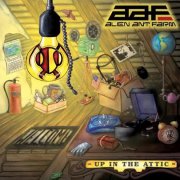 |
Up in the Attic [a.k.a. 3rd Draft] (2005/2006, 54.33) **½/T½ |
|
| Bad Morning Forgive & Forget What I Feel is Mine It Could Happen Around the Block San Sebastian Lord Knows Getting Closer |
Crickets Supreme Lifestyle Consti2tion State of Emergency Sleepwalker She's Only Evil Beehive Album End |
|
Current availability:
Chamberlin used:
Alien Ant Farm were named in honour of guitarist Terry Corso's daydream that humanity could be no more than an alien experiment. Well, I've heard of more stupid ways to name a band... Wittily (?) titling their first two albums Greatest Hits and Anthology, they settled down by their third release, TruANT, although they ran into problems with their next recording. Supposed number four, originally titled 3rd Draft, was rejected by their label, Geffen, so the band gave them the finger, pressed up CD-Rs and sold it on their 2005 tour, causing Geffen to finally give in and release it on their Universal Music Group subsidiary the following year as Up in the Attic, with a revised running order and one new track. After all that, it's a rather dull, commercial alt.rock effort, influences including '80s hardcore and, by the sound, of it, mainstream US radio rock, going by the cheesy riffage of the likes of Around The Block and San Sebastian, never mind unadventurous acoustic workout Crickets. The whole thing's a good ten minutes too long for its style, too; this kind of high-energy material should really be served up in short, sharp bursts.
The ubiquitous Patrick Warren plays Chamberlin on a handful of tracks, with nothing audible on Getting Closer, an orchestrally-arranged string part on Supreme Lifestyle and flutes on She's Only Evil, although the strings on Sleepwalker are real (spot the difficult-to-fake portamento). I can't honestly recommend this overlong, tedious effort to any but confirmed 'alternative' fans, who probably already own it. One Chamby track doth not a (insert favourite season here) make.
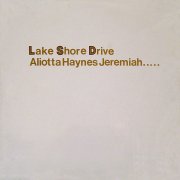 |
Lake Shore Drive (1971, 34.38) **½/½Lake Shore DriveFor Eddy Long Time Gone Uppers and Downers Snow Queen Leaving Chicago A.M.F. One Night Stand Last of the Night People |
Current availability:
Chamberlin (?) used:
Drummer Ted Aliotta left his bassist brother Mitch and guitarist Skip Haynes after one album, the remaining duo bringing in keyboard player John Jeremiah (Ron Zeto replaced Ted), releasing Lake Shore Drive as Aliotta Haynes Jeremiah in 1971. The band are chiefly remembered for its title track, an upbeat paean to an iconic road just outside their hometown, Chicago; the band have always sworn blind that its frequent expostulations of 'LSD!' have nothing to do with the obvious, simply being how the highway's known to locals. Hmmm. Anyway, it's the nearest this very mainstream rock album gets to a highlight, particularly its flowery piano part, although For Eddy reminds me, rather obscurely, of The Mark & Clark Band's super-camp Worn Out Piano from several years hence.
Jeremiah (presumably) plays some form of string-replacement tape-replay instrument on the title track, probably a Chamberlin, given a) the time and b) its sound, although the strings on Snow Queen are real and the ones on Last Of The Night People are an early string synth. I know this bunch are fondly remembered in the Chicago area by music fans of a certain age, but in the cold light of a forty-odd-years-later day, it all falls a little flat.
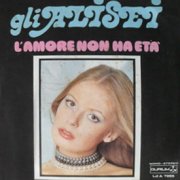 |
7" (1977) ***½/T½ L'Amore Non Ha Età Emigrazione |
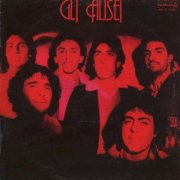 |
Gli Alisei (1979, 36.50) **½/TT½ |
|
| Piccola Amante Mia Vorrei Morire S.O.S. Amore Così è Amore Cresce l'Erba Nasce il Sole Lascia Stare L'Ultimo Traguardo Né Terra Né Poesia |
Pensiero Slippini Blu |
|
Current availability:
Mellotrons used:
It seems that Gli Alisei (The Trade Winds), despite existing throughout the '70s, only managed to release a handful of singles and a lone album. Not dissimilar to, say, La Bottega dell'Arte, they operated at the pop end of the prog spectrum (or, of course, vice versa), which tends to make for rather unsatisfying listening these days, with merely the occasional decent song and good bits in otherwise gloopy ballads. A 1977 single, L'Amore Non Ha Età, b/w Emigrazione, is about the proggiest thing the band ever did. The 'A' is a prog-tinged ballad, but the real meat'n'potatoes is on the other side; Emigrazione is a lovely mini-symphony squeezed into four minutes, stuck on a b-side where no-one will ever hear it. Until now, that is... Mellotron (from Carmelo Lucà or Salvo Papale) on both sides, with background choirs (mixed with real voices?) on the 'A' and cello and choir parts on the flip.
That lone album was 1979's Gli Alisei, adhering almost supernaturally to my above description. Notable tracks? Vorrei Morire vaguely rips off Procol Harum's Whiter Shade Of Pale, ten years late (of course, the original is based on something by Bach, so fair's fair, really), the oddness of the little S.O.S.'s weird synth whooshes, completely unlike anything else here, while the vaguely rocky Cresce L'Erba Nasce Il Sole and the quirky L'Ultimo Traguardo are a vague improvement. Again, either Lucà or Papale on Mellotron on almost every track, with background choirs and upfront cellos on Piccola Amante Mia and Lascia Stare, choirs on Vorrei Morire, Amore Così è Amore, Cresce L'Erba Nasce Il Sole, L'Ultimo Traguardo and Né Terra Né Poesia and, finally, strings on closer Slippini Blu, making a welcome change from the string synth employed across the rest of the record. What, only TT½? Sorry, but it's too background and generic to gain a higher rating. p.s. Avoid 1980's Giù single and it hideous, disco-tinged flip, Ne Vale La Pena, like the plague, unless you're a glutton for such Eurotrash nonsense.
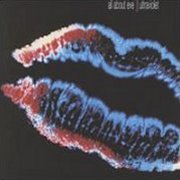 |
Ultraviolet (1992, 50.59) ***½/½ |
|
| Phased Yesterday Goodbye Mine Freeze Things He Told Her Infrared I Don't Know Dream Butcher |
Some Finer Day Blindfolded Visionary Outshine the Sun |
|
Current availability:
Mellotron used:
Ultraviolet was All About Eve's fourth album in five years and is a very long way from their self-titled debut indeed. All the hippy "Hello trees, hello flowers" stuff seems to've fallen by the wayside, to be replaced by a darker vision, although that isn't to say every track is full-on minor key gloom'n'doom. What is certain is that it's far less accessible than their earlier work, though that's rarely a criticism round here. Best track? Possibly weird opener Phased, though the slightly (I do say slightly) more upbeat I Don't Know or Infrared (with a vocal melody that nods towards Pink Floyd's Astronomy Domine) are worth mentioning, too.
Singer/mainwoman Julianne Regan's Mellotron work is sparse, to say the least, with what sounds like a repeating string section part on I Don't Know, although it could be almost anything, to be honest. Definitely sampled strings on one other track, so that's yer lot. If you're a fan and haven't heard it (quite possible, as the band split soon after its release and it was deleted immediately), it's probably worth the effort, but for the rest of us, go elsewhere, I think. Minimal Mellotron, too.