




|
|
|
|
||
|
 |
Heathen Frontiers in Sound (2009, 51.28) ***/TTGringo BluesMy Heathen Revolution Talkin' Revolution Blues I Never Write Slow Love Songs Black Sheep Blues Brother Motherfucker Crucifiction Blues Heathen Frontiers in Sound |
Current availability:
Mellotron used:
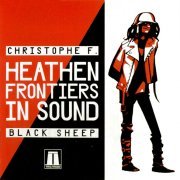
Who is the mysterious Christophe F? (As in Christiane F?) No idea, but he seems to've gravitated into the orbit of a certain J. Cope and his Black Sheep, making 2009's Heathen Frontiers in Sound essentially a Cope album with someone else singing. Well, I say 'singing', but Mr. F. rarely actually breaks into song, preferring a Northern-accented revolutionary 'talking blues' style, like an unholy cross between Bob Dylan and John Cooper Clarke. The eleven-minute Talkin' Revolution Blues is probably the epitome of his folk-informed style, although the closing title track probably runs it a close second.
I presume that's Cope on Mellotron, with strings on opener Gringo Blues and My Heathen Revolution, while Brother Motherfucker features string and oboe parts, unusually. Overall, if you're a fan of Saint Julian And All His Works, you stand a good chance of liking this. If you're not, give it a go anyway, if only for the Mellotron.
See: Black Sheep | Julian Cope
 |
Past Perfect Future Tense (2004, 51.02) ***/TT |
|
| Obsolete All the Time Past Perfect Future Tense No One Gets Me But U Kryptonite Nothing Here to Hold You A Friend Like Me Little Angels |
2CU Shine You Don’t Have to Change Envelop Me Never Sweeter |
|
Current availability:
Mellotron used:
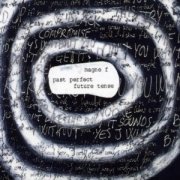
Magne "Mags" Furuholmen is A-Ha's keyboard player/guitarist and co-writer of several of their major hits. After the band reconvened at the end of the '90s, solo albums started appearing, Furuholmen waiting until 2004 to release Past Perfect Future Tense as the international market-friendly Magne F. It's an inoffensive album of acoustic guitar/piano/strings-based pop, likely to appeal to grown-up A-Ha fans, which means, unsurprisingly, that it probably isn't going to do much for your typical Planet Mellotron reader.
Furuholmen plays Mellotron throughout, almost certainly the parent band's MkVI, with strings on Obsolete, All The Time and Kryptonite and flutes (though real strings) on No One Gets Me But U, although all the other strings are real. So; acceptable (if slightly dull) mainstream stuff with a few decent Mellotron tracks. Going by Furuholmen's frankly bizarre website (actually worth a look, on oddness grounds), he's a fan of The Hitch-Hiker's Guide To The Galaxy, which I shall honour by saying: mostly harmless.
Utterly incomprehensible official site
See: A-Ha | Morten Harket
 |
7" (2016) ***½/½ Summer Wasn't There Winter Doesn't Care |
Current availability:
Mellotron used:
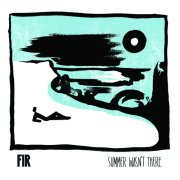
FIR seem to be, chiefly, Beachwood Sparks' Brent Rademaker and The Rain Parade's Matt Piucci, aided and abetted by members of The Allah-Las and others. Their debut single, 2016's Summer Wasn't There b/w Winter Doesn't Care, is exactly the kind of summery, West Coast pop you'd expect; even the 'wintry' flip still sounds kind of summery.
Rob Campanella plays Mellotron, although you'll struggle to work out where: I reckon there's some fainter-than-faint strings on the 'A', but I could be wrong. Hardly a reason to hear this excellent single, anyway.
See: Beachwood Sparks | Allah-Las
 |
City of Fear (1980, 42.56) *****/TT |
|
| Krakow Power Truth or Consequences Lost and Found City of Fear Surface to Air Up to You Silence |
Riding the Thunder Nobody at All |
|
Current availability:
Mellotron used:
FM fit quite neatly into the category of 'Canadian progressive bands using synths'; not a very snappy description, admittedly. 'CPBUS', anyone? There must have been something in the water there in the late '70s, though; FM, Saga, Rush and to an extent, Max Webster all have elements in common and it has to be said that Rush were by no means the first to utilise this style. That honour definitely goes to this lot; FM (not to be confused with the awful '80s UK AOR band) had their 'power trio with synths' thing down pat by '77. The oddest thing about them, though, was their 'no guitars' ruling; they had two different electric violin/mandolin players at different points in their career. Er, they managed to find two?!
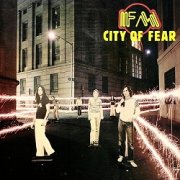
Anyway; purists moan that by their fourth album, City of Fear, FM had moved well away from the 'progressiveness' of Black Noise (****) from a couple of years earlier and I suppose it's fair to say that the songs were shorter and more straightforward, but this is one of those bands who give the lie to the general ruling that this leads to Satan. In my humble opinion, City of Fear is the band's best album; concise but inventive song structures, immaculately arranged parts and above all, great songs. The title track is probably the album's best, but opener Krakow runs it a close second, with the added bonus of much Mellotron, provided by Synergy mainman, producer Larry Fast, although played by band all-rounder Cameron Hawkins. Haunting strings underpin a solo vocal in the verses, then ride over Ben Mink's 'mandolin through a Marshall' bridge sections. Second track in, Power, uses it too, but to rather lesser effect. No more Mellotron to be heard on the album, but there's nary a duffer on display here; even closing ballad Nothing At All has a certain charm and Silence and the storming Riding The Thunder are essential.
 |
1984: L'Ultimo Uomo d'Europa (2015, 55.33) ****½/TTT½ |
|
| I Due Minuti dell'Odio 4 Aprile 1984 Chi Controlla il Passato Controlla il Presente. Chi Controlla il Presente Controlla il Passato O'Brian Bispensiero La Ballata dei Prolet L'Occhio del Teleschermo Giulia |
Lo Sguardo Nel Quadro Processo di Omologazione Il Resveglio La Tortura 2+2=5 La Stanza 101 La Canzone del Castagno Amava il Grande Fratello |
|
 |
|
| Daniele Fuligni at the Studiosette M400 | |
Current availability:
Mellotron used:
Initially coalescing in 2007, it took Rome natives ('Romans' sounds wrong) La Fabbrica dell'Assoluto (named for Karel Čapek's 1922 novel) some years to complete their lineup and release their debut album, 2015's 1984: L'Ultimo Uomo d'Europa, inspired by and based on Orwell's novel. They are, in many ways, a typical Black Widow band: progressive, dark and heavy, keeping at least one foot in the '70s and their country's illustrious progressive history. Their choppy, organ-heavy prog could almost have been recorded in 1975—praise, not condemnation—while Claudio Cassio's histrionic vocal style owes more than a little to Italian faves Van der Graaf Generator's Peter Hammill. Picking out 'best tracks' is near-impossible; like many concept efforts, the overall effect is more important than individual highlights, although the three-part, twelve-minute Processo Di Omologazione encapsulates all of the album's strengths in one piece.
Daniele Fuligni plays the Studiosette M400, with string swells on opener I Due Minuti Dell'Odio, background chord work on 4 Aprile 1984 and Chi Controlla Il Passato Controlla Il Presente..., block choir and string chords on O'Brian, background strings on Giulia, a strings/choir mix on Lo Sguardo Nel Quadro, strings across all three parts of Processo Di Omologazione and strings towards the end of Stanza 101 and on La Canzone Del Castagno, all played with subtlety and taste. I've heard some excellent retro prog lately, but I think this album tops the lot. Buy.
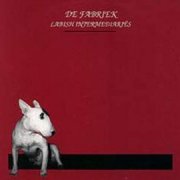 |
Labish Intermediaries (1989, 53.03) ***½/T½Prince Farm's Balance BuddhaSubadai's Sun Beam Sally Angkor's Balance Buddha Nirvana's Polytelis Magic Typhoon |
Current availability:
Mellotron used:
De Fabriek (The Factory) are more often known as 'post-industrial' or somesuch, so their fifth or so album, Labish Intermediaries, must have come as something of a surprise to their audience. It fits fairly neatly into the much-maligned 'EM' category, sounding more like atonal German electronic music than anything more in-your-face. It has its rhythmic parts, admittedly, chiefly on Angkor's Balance Buddha, but the bulk of the album drifts along in a haze of hisses, clanks and low groans. OK, maybe it is industrial.
I was absolutely convinced this was going to be Mellotron-free, until the choirs on Angkor's Balance Buddha made me sit up and take notice. It turns out they're played by Mekanik Kommando/The Use of Ashes' Peter van Vliet, who seems to be one of a handful of musicians (relatively speaking) who nursed an M400 through the '80s. The strings on the same track could be Mellotron or generic samples, but those are quite definitely Mellotron strings in side-long closer Nirvana's Polytelis Magic Typhoon, after the choirs and the generic strings, just for comparison.
See: The Use of Ashes | Narwal
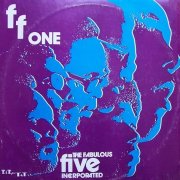 |
F F One (1975, 41.22) ***/TTT½ |
|
| Sweet P Smile Me a Rainbow Feel the Spirit Please Don't Leave Me Now Baby Jah Jah Where Do I Find it Be a Man Wish I Could Read Your Mind |
Oh Lord Why Lord Vagabond Classical Reggae Shaving Cream |
|
Current availability:
Mellotron used:
The Fabulous Five Incorporated (Fabulous 5, Fab 5 or any variant thereof) are, as far as I can work out, unusual on the Jamaican scene for being a cohesive unit, rather than 'frontman plus backing band'. It's difficult to say for sure, given their multiple name variants, but 1975's F F One might be their second album, not so much reggae as a general Caribbean mix of post-calypso, Jamaican soul and yes, reggae, notable moments including the mad fuzz guitar on the Booker T-esque Feel The Spirit, the squelchy synth on Jah Jah and the genuinely epic, hymnlike Oh Lord Why Lord.
Conroy Cooper plays Mellotron and lots of it, with major string parts on opener Sweet P, Smile Me A Rainbow, Please Don't Leave Me Now Baby, Wish I Could Read Your Mind and Oh Lord Why Lord (particularly upfront on the last-named) plus flutes on the amusing Classical Reggae. So; not really reggae, but difficult to categorise as anything else, with plenty of upfront Mellotron work, to the point where fanatics may wish to hear this for it alone.
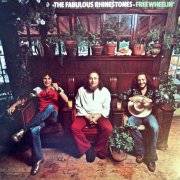 |
Freewheelin' (1973, 38.07) **½/TFreewheelin'Down to the City Go With Change What Becomes of Your Life Vicious Circle Do it Like Ya' Mean it Roots With You, Girl Hurt Somebody Whitecaps |
Current availability:
Mellotron used:
Freewheelin' was The Fabulous Rhinestones' second of three albums, a typical early '70s soul/blues/jazz record, well-written, sung and played, yet utterly of its time and really not that interesting to anyone not into their particular musical niche, I think it's safe to say. Any better tracks? Probably Go With Change, Vicious Circle and instrumental, sax-led closer Whitecaps.
Marty Grebb plays Mellotron, with major string and flute parts on the balladic Roots With You, Girl, although the strings on Whitecaps are real. The Fabulous Rhinestones were perfectly competent, probably a major live draw in their area, but are really rather redundant, several decades on.
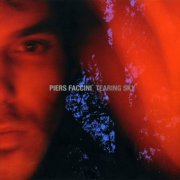 |
Tearing Sky (2006, 57.57) ***/T |
|
| Each Wave that Breaks Sharpening Bone At the Window of the World If I Days Like These Fire in my Head Come the Harvest Midnight Rolling |
Talk to Her Uncover My Eyes The Taste of Tears The Road's Not Long Sons and Daughters Walk Over to You |
|
Current availability:
Mellotron used:
Piers Faccini's family left the UK when he was small, but everybody's got to have a nationality... His fourth album, 2006's Tearing Sky, is unusual in that its gentle, understated folky musings bored me for much of its length, then picked up towards the end, in a reversal of the usual 'started well then went downhill' scenario. I won't deny that the album's overlong, especially with so little musical variation, but material like Uncover My Eyes and closer Walk Over To You help to rescue it from ignominy.
Faccini plays what I believe is LA's Sonora Studios' MkII Mellotron, with background flutes on Midnight Rolling, before the advent of deranged flute and string parts towards the end of the track. Not a top Mellotron release, then, but an album that, with the judicious removal of its lesser material, could actually be halfway decent.
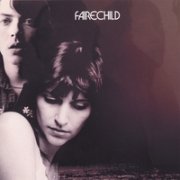 |
Fairechild (2005, 47.00) ***/½ |
|
| Intro Hit and Run Let Somebody in These Days The Way Mellow in My Skin Rock n Roll Enemies |
Belong to Me Even When She Walks On Your Way Last Dance |
|
Current availability:
Mellotron used:
Fairechild were the married duo of Elisa Randazzo and ex-Beachwood Spark Josh Schwartz, their eponymous debut (and sole release?) bearing more than a passing resemblance to the Buckingham/Nicks Fleetwood Mac, apparently earning them the sobriquet Fleetwood Sparks. Although large chunks of the record swish about the West Coast in a West Coast kind of way, Enemies is quite effective, as is the Neil Young guitar on Even When She Walks.
Although Mellow In My Skin starts with real strings, it's Schwartz' Mellotron ones that carry the track, sounding pretty damn' real, which makes a nice change.
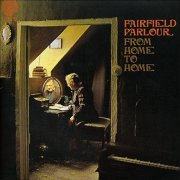 |
From Home to Home (1970, 35.13/53.35) ****½/TTTT |
||
| Aries In My Box By Your Bedside (Onward) Soldier of the Flesh I Will Always Feel the Same Free Emily Chalk on the Wall The Glorious House of Arthur |
Monkey Sunny Side Circus Drummer Boy of Shiloh [CD adds: Bordeaux Rosé Chalk on the Wall Just Another Day Caraminda |
I am All the Animals Song for You Bordeaux Rosé (alternate) Baby, Stay for Tonight Other versions include: Medieval Masquerade Eye Witness Let the World Wash in] |
|
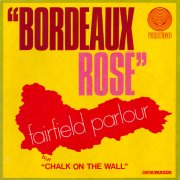 |
7" (1970) ****/T½ Bordeaux Rosé Chalk on the Wall |
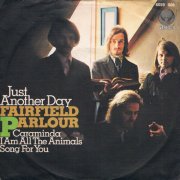 |
7" (1970, 6.59) ***½/T Just Another Day Caraminda I am All the Animals Song for You |
Current availability:
Mellotrons used:
Fairfield Parlour metamorphosed out of UK psych hopefuls Kaleidoscope, who in turn grew out of various West London-based beat groups in the mid-'60s. After inexplicably failing to become huge as Kaleidoscope, Fairfield Parlour went for a more folk/psych direction, Peter Daltrey (no relation)'s wonderful voice and intensely personal lyrics to the fore. They only released one album at the time, the excellent From Home to Home, recently reissued with a swathe of bonus tracks. Much of the album is quite upbeat, major-key stuff with a melancholic undercurrent, but its standout track is the minor-key Floyd-ish ...And Emily Brought Confetti (coincidence?!), which has more than a little of Julia Dream about it, a sad (true?) story about a lonely woman going to pieces at a wedding, worth the price of admission on its own, with some gorgeous Mellotron to boot.
From Home to Home can lay claim to being a minor Mellotron Classic, nine of its thirteen tracks suffused with Mark II, mostly strings, with the odd bit of flute thrown in for good measure, played by Daltrey and guitarist Eddy Pumer. I wouldn't say the bulk of it is 'classic' in the accepted sense, but the subtle, understated parts complement the material beautifully and there are a couple of great pitchbend moments that show just how well the instrument was integrated into the band's sound. Vertigo subsequently released two relevant singles, the gorgeous Bordeaux Rosé, complete with Mellotron strings and the four-track 7" Just Another Day, which features flutes and strings.
This really is a wonderful album, highly recommended to all fans of late-'60s British music, or indeed, anyone who wishes to hear great songs, excellently played, with lashings of Mellotron. A double album's-worth of material recorded a year later but never released, finally crept out as White-Faced Lady in 1991 and seems to be more of the same, but less so. The Mellotron was replaced by real strings and the songs sound as though less care was put into them, although I expect this is maligning a perfectly good album. I'm afraid it just doesn't match the insanely high standards set by From Home to Home. As you can see, there are a couple of extra Mellotron tracks on the expanded CD and that's the version you're most likely to find anyway. So; buy. Immediately. A minor classic.
See: Peter Daltrey & Asteroid No. 4
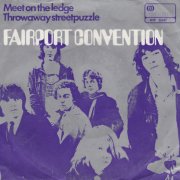 |
7" (1968) ****/½ Meet on the Ledge Throwaway Street Puzzle |
Current availability:
Mellotron used:
Fairport Convention? I've known for years that they're supposed to've used a Mellotron on Meet On The Ledge b-side Throwaway Street Puzzle, but it's taken me until now to get round to hearing the original mix, as against the one on Richard Thompson's (Guitar, Vocal). The A-side is, of course, one of the band's iconic tracks, almost always used to close their annual Cropredy Festival to this day, but what of the flip? Well, it's a Thompson/Ashley Hutchings composition, clearly written in the style of the West Coast American songwriters the band favoured at the time, only, er, not quite as good. Not bad, but not exactly classic.
Rhythm guitarist Simon Nicol is credited with Mellotron, with a handful of low clarinet notes around the 2:10 mark (thanks, Jonathan). While not indispensible, this is worth hearing for Fairport fans who think they've heard everything, but don't bother for the Mellotron. Really.
See: Richard Thompson | Judy Dyble
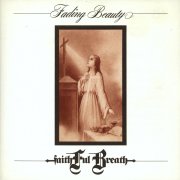 |
Fading Beauty (1973, 44.20) ***½/TAutumn FantasiaFading Beauty Lingering Cold Tharsis |
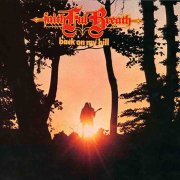 |
Back on My Hill (1980, recorded 1978, 34.38/40.51) ***½/TTT½Back on My HillKeep Me Away This is My Love Song Stick in Your Eyes Judgement Day [CD adds: Die Mörderbiene] |
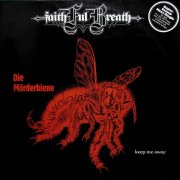 |
7" (1981) ***½/T½ Die Mörderbiene Keep Me Away |
Current availability:
Mellotrons used:
Faithful Breath are better known as an '80s metal band, so some readers may be surprised to learn that they were operating as early as 1973, as a full-on prog outfit. To be perfectly honest, despite Fading Beauty's reissue on the US label The Laser's Edge and its 'lost classic' status, it's not actually that good, certainly in comparison to some of their lesser-known countrymen such as Epidaurus or Führs & Fröhling. The two lengthy tracks slightly outstay their welcome and are decidedly one-paced and overly simplistic, but then, I've heard an awful lot worse and the album makes perfectly pleasant background listening, unlike many I could name (but shan't). It does actually have a brooding, autumnal feel to it, particularly side one's Autumn Fantasia and is several steps up from some of the German 'prog by numbers' I've heard. Despite its being second in the list of Manfred von Buttlar's keys, there's practically no Mellotron to be heard on the album, with all the strings sounding like they're synthesized. I can hear a little choir on the title track and some background brass chords on Tharsis, but as for this being a 'Mellotron Classic'; forget it.
Back on My Hill is their second album (so what were they doing for the rest of the '70s?), released as late as 1980, but they released a metal album the following year as a keyboardless trio, causing some confusion. It turns out that this was recorded in the 1977/78 period, then held back for two years, after which the band disbanded then reformed as a metal outfit. The rather silly sleeve art puts it into 'dodgy metal' territory, but the music certainly doesn't, although its initial release on the dodgy Sky label is enough to make the experienced prog listener blanch slightly. The title track is a good, straightforward song with prog stylings, although the quality of the material drops a little after this. You can see that they were headed for more mainstream territory, with the lush ballad This Is My Love Song; even side-long epic Judgement Day has less variety than you might expect from this type of piece. Von Buttlar's Mellotron is perfectly audible this time round, with upfront strings on This Is My Love Song and Stick In Your Eyes and full-on Mellotron throughout most of Judgement Day. Garden of Delights' CD adds a 1981 single, the German-language Die Mörderbiene, a final prog blast from the band, six minutes long with a nice helping of Mellotron strings.
 |
Kissin' Time (2002, 44.29) ***½/T½ |
|
| Sex With Strangers The Pleasure Song Like Being Born I'm on Fire Wherever I Go Song for Nico Sliding Through Life on Charm Love and Money |
Nobody's Fault Kissin' Time |
|
Current availability:
Chamberlin used:
I was under the impression that Marianne Faithfull (1946-2025) was going through a career renaissance until I checked her discography and discovered that since the end of her drug-induced slump in the '70s, she's released albums fairly consistently for over twenty-five years. These days, Marianne looks like yer gran, if, that is, yer gran smokes sixty tabs and drinks two bottles of gin a day. She does? Bet she can't sing with the same intimacy, even if Marianne's voice is beginning to sound like an old lady's. Kissin' Time isn't, strictly speaking, her own album, as every track is co-written with various collaborators, including Billy Corgan (Smashing Pumpkins), Dave Stewart (that's evil Dave Stewart from the godawful Eurythmics, as against good Dave Stewart from Egg and Hatfield & the North) and Jarvis Cocker from the sublime Pulp. The latter's Sliding Through Life On Charm is the album's best track, both musically and lyrically, although there aren't many low points, to be honest.
Jon Brion's Chamberlin can be heard on a couple of tracks, with strings on Sliding Through Life On Charm and Beck's Nobody's Fault, although, unsurprisingly, it'd be difficult to name it as one of the album's outstanding features. All in all, this is a surprisingly good album, eclectic, though not so much that her fans lose interest, with some impressive names on board. And Billy Corgan. So; forget it on the tape-replay front, but not a bad album. Not bad at all. Fuck-off ugly sleeve, though.
 |
New Facts Emerge (2017, 48.19) ***/T |
|
| Segue Fol de Rol Brillo de Facto Victoria Train Station Massacre New Facts Emerge Couples vs Jobless Mid 30s Second House Now O! ZZTRRK Man |
Gibbus Gibson Groundsboy Nine Out of Ten |
|
Current availability:
Mellotron used:
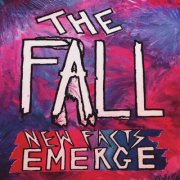
I have a mental list of 'artists who are highly unlikely to ever appear on Planet Mellotron'. Manchester's The Fall are high on that list. In case you haven't encountered them, they convened in 1976, led by legendary maverick Mark E. Smith, just as punk was about to break, although that genre was vastly too narrow for his vision, such as it was. Can I describe them? Only with difficulty. Let's see what Wikipedia says: "...an abrasive, repetitive guitar-driven sound, tense bass and drum rhythms and Smith's caustic lyrics..." They might just be the ultimate cult band, fitting the old cliché 'love 'em or hate 'em' more than anyone else I can think of. Smith's approach might best be described as 'a Mancunian Captain Beefheart, but crazier', typical stunts including fucking about with musicians' amp settings on stage and firing band members for any or no reason.
2017's New Facts Emerge is their last album, Smith's not-especially-untimely-all-things-considered death the following year drawing their forty-year career to a close. I mean, Mark E. Smith was The Fall. He once, famously, said, "If it's me and your granny on bongos, it's The Fall". It's apparently far from their best work, but, going by what little I've heard of them in the past, it's not untypical in its gleeful refusal to conform to any norms whatsoever, probably even their own. After a brief intro, first track proper, Fol De Rol, is (unsurprisingly) about as far from the bucolic folk its title suggests, Couples Vs Jobless Mid 30s is eight minutes of musical patchwork, seemingly gaffa-taped together from various takes (The Fall go prog?), while closer Nine Out Of Ten is another eight minutes of solo, undistorted chordal guitar work, only mildly sullied by Smith's rantings, leaving Brillo De Facto and the title track, perhaps, as the closest this gets to 'normal'. Three stars? What else do I give something that I have no hope of understanding?
Smith: "We went to a studio in Castleford, Yorkshire. It’s a big, fuck-off heavy metal studio. I left them in there for a week or so." It turns out to be Chairworks, whose website tells us that they own (assuming they actually know what they have) a Swedish-built MkVI Mellotron. Bassist Dave Spurr plays wildly pitchbent, er, somethings (strings?) on Couples Vs Jobless Mid 30s, followed by near-random, woozy choir notes thrown in for bad measure, in a bravado display of 'making a Mellotron sound like anything but'. I'm sure Smith was delighted. In fact, had he not been, it wouldn't be on the album. A quick amusing Fall fact for you: my bandmate in Tytan, the legendary 'Big' Kevin Riddles (ex-Angel Witch, for fans of the era) crewed for the band in 1990, becoming temporary keyboard player during the Australian leg, after a typical Smith tantrum. Kev not only played their Japanese dates, but also their Reading Festival appearance, with YouTube footage to prove it.
 |
7" (1967) ***½/TT Scene Through the Eye of a Lens Gypsy Woman |
 |
Music in a Dolls House (1968, 37.14) ****½/TT½ |
|
| The Chase Mellowing Grey Never Like This Me My Friend Variation on a Theme of 'Hey Mr Policeman' Winter Old Songs New Songs Variation on a Theme of 'The Breeze' |
Hey Mr Policeman See Through Windows Variation on a Theme of 'Me My Friend' Peace of Mind Voyage The Breeze 3 x Time |
|
 |
It's Only a Movie (1973, 39.23) ***/TIt's Only a MovieLeroy Buffet Tea for Two Boom Bang Boots'n'Roots Banger Sweet Desiree Suspicion Check Out |
 |
BBC Radio Volume 1: 1968-69 (2004, 61.19) ***½/T |
|
| See Through Windows The Weaver's Answer Breeze Second Generation Woman Observations Dim Holding The Compass The Procession |
How Hi the Li Love is a Sleeper I Sing Em the Way I Feel A Song for Me Drowned in Wine Wheels No Mule's Fool The Cat and the Rat |
|
Current availability:
Mellotrons used:
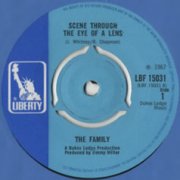
Family were formed in Leicester in the late '60s, led by charismatic frontman Roger 'electric goat' Chapman and guitarist Charlie Whitney; Chapman's voice is something of an acquired taste, but he's nothing if not distinctive... They're a bit of an oddity, being difficult to cram into any existing category, which was probably both their strength and their downfall. Psychedelic hard rock with violin? Warble-voiced balladry? Folk metal? Maybe 'post-psych' serves them best, although it's less of a description than an excuse for not being able to find one. Their first single, the punningly-titled Scene Through The Eye Of A Lens (credited to The Family), is a typical period piece, Mellotron played by Steve Winwood of Traffic; while not actually a classic, it's worth hearing, both sides available on See for Miles' Music in a Dolls House/Family Entertainment twofer.
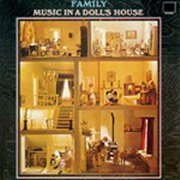
Music in a Dolls House itself is something of a psych classic, incorporating many of the era's quirks while never forgetting that without a good song you're sunk, particular highlights being The Chase, Winter and Peace Of Mind. I'd recommend the album on these grounds alone, but a bonus is the Mellotron strings on several tracks, notably See Through Windows and Voyage, sometimes mixed in with bassist Ric Grech's violin, apparently played by producer Dave Mason, also of Traffic. It's also completely uncredited on the sleeve; in fact, there's no credit for keyboards at all, but the information's leaked out somehow.
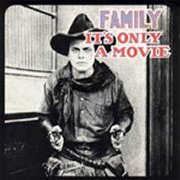
Family carried on for some years, with multiple lineup changes, until calling it a day in 1973. Having not used a Mellotron since their debut, Family chose their last album, It's Only a Movie, with an almost completely different lineup, to use one again, this time played by keyboard man Tony Ashton. The album is probably too diverse for its own good, to be honest, being a sort of rock/blues/soul/country mix (!) which doesn't, in all honestly, especially appeal to this listener. Low-level Mellotron strings and (I think) oboe lead on the title track, but that appears to be it, so I wouldn't go out of your way, if I were you.
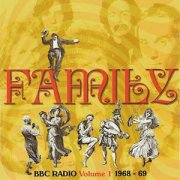
2004's BBC Radio Volume 1: 1968-69 does exactly what it says on the tin, making the contents of five sessions available, mostly from the legendary Top Gear. I'm not au fait with all of the original recordings, so comparisons are difficult, but the first three tracks, from a Saturday Club Session in September '68, consist of two from their debut and The Weaver's Answer from the forthcoming Family Entertainment. The second session here, from Top Gear from a mere two months later, is noticeably different in sound and feel, the band already moving away from the psychedelia of Music in a Dolls House into, well, however you describe the bulk of Family's music. Non-symphonic progressive? Even though this album covers a period of under a year, the range of styles covered is astonishing, making you wonder if anyone actually likes everything in the band's catalogue. Given that their Mellotron use encompasses their first and last recordings, it's hardly surprising that there's only one Mellotron track here, with an atmospheric string part on See Through Windows, closely mirroring the original.
So; whether or not you like Family probably depends on how open-minded you might be. Psych fans will lap their debut up, but then it all gets a bit weird and a degree of iconoclasm probably helps. I can heartily recommend Music in a Dolls House and just as heartily not recommend It's Only a Movie, but the mixed-bag of BBC Radio Volume 1 is another matter. If you have any interest in how psych became prog, not to mention several other styles, it's possibly a good introduction to the band's early music, but not worth it for its minimal Mellotron content.
 |
Magic Happens (1994, 50.21) **½/0 |
|
| Wonderful Excuse Amazing Hangover Move Over I'll Drive Your Secrets Will Stay Mine Airplane Gardens Gone, So Long Hamlet for Now Goldenbook |
Rockbreaking Springing the Atom Blood Orange Nowhere to Go But Down |
|
Current availability:
Mellotron used:
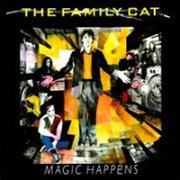
The Family Cat were a Plymouth-by-way-of-London indie band from the late '80s, who released three albums and rode, briefly, on the coattails of Britpop, before dissolving in the mid-'90s. 1994's Magic Happens was the last of these and is fairly easy to stick in the 'typical '90s indie' bracket; not really that '60s, making the 'Britpop' label rather redundant, in hindsight, but with more of a rock element than their immediate forbears, The Smiths. A lack of memorable material doesn't help their cause, but it's the album's dreary feel that really scuppers it.
Sean Slade (Dinosaur Jr, Sebadoh) is credited with Mellotron on Your Secrets Will Stay Mine, but I have absolutely no idea what he's supposed to be doing with it; even the highish sustained notes in the song are clearly guitar. So; a rather dull album with nonexistent Mellotron. Next...
 |
Ars Transmutatoria (1990, 46.19) ***/T |
|
| Demiourgos Belzebub i Amerika Hassan i Sabbah Etter Nansen Kold Eksperimentering Hebhel Spang Virr Dyret Fra Moskva |
Hårdhendt Redigering Exit Kanon |
|
 |
Return of Monster Attack (1996, 57.11) ***/TT |
|
| Looking for Bob Monster Attack Freudian Slippers Børre Svinger Chtulhu Lives! Music From the Black Lodge Spider & the Octopus Belzebub II |
Bring Out What You Have to Give The House Til Sist |
|
 |
One Night I Had a Frightful Dream (2002, 61.59) ***½/T½ |
|
| Supernatural Horror in Literature The Dunwich Horror The Call of Cthulhu The Shadow Over Innsmouth The Gardens of Yin Dream-Quest of Unknown Kadath The Festival Al Azif |
Nyarlathotep The Ancient Track At the Mountains of Madness A Gentleman From Providence |
|
Current availability:
Mellotrons used:
Famlende Forsøk are a sort of sister band to The Smell of Incense, although they've been going for far longer, so maybe that should be the other way round. 1990's Ars Transmutatoria is a challenging, dissonant work, some of it barely 'music' in the usually accepted sense of the word, which isn't to denigrate it in any way. Distant, echoing voices, assorted clangs and bongs (not that kind. OK, maybe that kind) and near-tuneless keyboard and guitar parts combine to make an album quite unlike anything else I've heard. I don't know which of the project's three members plays the Mellotron, though I'm guessing Chrisph (can you pronounce that?), with a repeating string pattern in Belzebub I Amerika, although the strings in Dyret Fra Moskva sound like generic samples, particularly on the low notes.
Six years on, Return of Monster Attack was only available on cassette until a 2002 CD edition, nearly as deranged as its predecessor, probably at its most listenable on opener Looking For Bob and least so on the nine-minute The House. A personage calling themselves 'Han Solo' (who also appears on the Smell of Incense releases) plays Mellotron, with upfront, in-yer-face flutes on Spider & The Octopus and uncredited chordal strings and cellos on Belzebub II and strings on closer Til Sist.
Their next non-compilation release was 2002's One Night I Had a Frightful Dream (subtitled 'A Tribute to H.P. Lovecraft'), gestated over a fourteen-year period (!). Lovecraft is an ever-present influence on the band and, unlike many 'tribute to...' albums, parts of this actually conjure up visions of the Master Of Macabre's work, particularly the haunting The Shadow Over Innsmouth, complete with recorded whale song and the grinding The Ancient Track. Believe me, this isn't an album to sing along to and not just because there are very few vocal tracks; this is dark, dissonant and a welcome change after reviewing piles of modern rock and neo-prog albums, thank you very much. Someone (Chrisph again?) tackles the Mellotron, although I don't think it's Mellotron strings underlying the synth on opener Supernatural Horror In Literature, but those are most definitely Mellotron flutes and cellos (plus strings) on The Ancient Track, with more strings on At The Mountains Of Madness. Music for scaring small children, then, with a bit of Mellotron. Buy them for a change of scenery.
See: The Smell of Incense
 |
Message to the Universe (1986, 33.56) **/½ |
|
| Unexpected Journey Alien Talk Space Shuttle Mechanic Jammin' at Johnnies Hookipa End of an Era The Wind Cried Maui Peace in the World |
Mother Sea Matthew's Dream |
|
Current availability:
Mellotron used:
Merrell Fankhauser's had a long and honourable career, starting as guitarist/songwriter for noted surfists The Impacts in the early '60s. He went on to form MU, a late-period psych sort of thing based in Hawaii, with some considerable agenda re. the existence or otherwise of Lemuria, the fabled continent that may or may not have existed where Hawaii now sits. He progressed to a solo career, but I'm afraid to say that I hope that his other albums are better than this one.
Message to the Universe is pretty ropey, to be honest; a sort of hippy-blues concoction with some bizarre alien visitation concept and a very silly sleeve. Laid-back without being particularly relaxing, it isn't helped by the fact that most of the drums, bass and keys are programmed (this was 1986, but no excuse). The music is too intrusive to be ignored (especially those godawful programmed drums), but neither the material, the arrangements nor the playing manage to excite. Worst of all, though, is the dearth of decent songs. Remember them? Mr. Fankhauser doesn't seem to...
Just to add insult to injury, the Mellotron strings on The Wind Cried Maui (ha ha), by his regular violinist Mary Lee have to be one of the worst examples I've heard. Badly arranged, played and recorded, the few audible chords add nothing to one of the album's better moments (and that probably only because it's an instrumental). The album's only real saving grace is some of the guitar work; Fankhauser's insipid vocals grate after a while and the weedy arrangements and dodgy mid-'80s sounds do little to inspire. Maybe I'm just not doing the right drugs.