




|
|
|
|
||
|
Richard Pinhas (France) see: |
 |
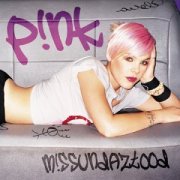 |
Missundaztood (2001, 55.11) ***/0 |
|
| Missundaztood Don't Let Me Get Me Just Like a Pill Get the Party Started Respect 18 Wheeler Family Portrait Misery |
Dear Diary Eventually Lonely Girl Numb Gone to California My Vietnam |
|
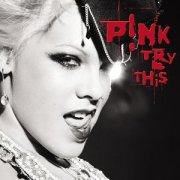 |
Try This (2003, 55.53) **½/½ |
|
| Trouble God is a DJ Last to Know Tonight's the Night Oh My God Catch Me While I'm Sleeping Waiting for Love Save My Life |
Try Too Hard Humble Neighborhoods Walk Away Unwind Feel Good Time Love Song |
|
Current availability:
Mellotrons used:
Missundaztood (or M!ssundaztood) was Alecia "Pink" Moore's second album, after the completely mainstream pop of the previous year's Can't Take Me Home, but it isn't exactly Henry Cow (who he?), if you know what I'm saying. It's actually a mixture of hip-hop influenced mainstream pop (Get The Party Started) and more reflective personal material (Family Portrait, Dear Diary), but isn't anywhere near as offensive as that sounds. It is, unfortunately, rather dull, but that's probably because I'm not a sixteen year-old girl. Incidentally, Pink got her idol, 4 Non Blondes' Linda Perry in to rock things up a little and, in fairness, she seems to have done precisely that. Marti Frederiksen plays Mellotron on Misery, but I'll be fucked if I can hear it; there's the odd bit of strings or cello that could just possibly be tape-replay, but I wouldn't want to stake anything of any great value on it. Anyway, if you like Pink, you probably a) already own this and b) aren't reading this anyway, so with bugger-all Mellotron, it's all a bit irrelevant.
Two years on, she followed up with Try This, getting Perry in to produce a few tracks again. Musically, it's the same mish-mash of mainstream pop, dance and rock with vaguely amusing efforts like God Is A DJ ("If God is a DJ, life is a dancefloor". Whatever) or the slightly harmonically interesting Feel Good Time rubbing shoulders with the considerably blander likes of Catch Me While I'm Sleeping and Save My Life. Perry produces three tracks and without specific credits, it seems likely she doesn't play Mellotron anywhere else, so all I can hear is possible background strings on the drippy Catch Me While I'm Sleeping, along with Perry's sitar.
P!nk. You try searching for a 'name' spelled like that. Anyway, mainstream pop with an occasional rock edge: why would you? Next to no Mellotron, either.
Pink Floyd (UK) see: |
 |
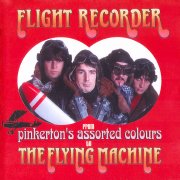 |
Flight Recorder: From Pinkerton's Assorted Colours to The Flying Machine |
||
| Mirror Mirror She Don't Care Don't Stop Loving Me Baby Will Ya? Magic Rocking Horse It Ain't Right Mum and Dad On a Street Car |
There's Nobody I'd Sooner Love Duke's Jetty Kentucky Woman Behind the Mirror Smile a Little Smile for Me Maybe We've Been Loving Too Long Send My Baby Home Again Look at Me, Look at Me |
Baby Make it Soon There She Goes Hanging on the Edge of Sadness The Flying Machine The Devil Has Possession of Your Mind Hey Little Girl Yes I Understand Pages of Your Life |
|
Current availability:
Mellotron used:
Pinkerton's Assorted Colours were a pretty typical mid-'60s pop group, although, for all the money poured into them, they managed just the one hit, Mirror Mirror, although their sound was as post-Beatles as you could ask for. Maybe that was the problem - lack of originality, although it didn't seem to do, say, Herman's Hermits any harm. Like so many other acts of the day (The Tremeloes spring to mind), they mutated into a psych-lite outfit come 1967, changing their name to The Flying Machine and releasing a million-seller in the States, the infuriatingly catchy Smile A Little Smile For Me. Those nice people at Sanctuary have compiled what must be every note ever recorded by both incarnations of the band onto Flight Recorder: From Pinkerton's Assorted Colours to The Flying Machine, disc one dealing with their singles A and B-sides, while disc two mops up album tracks, demos and the like. As you'd expect, it's a bit of a rag-bag, the occasional more inventive track like Flying Machine sitting next to '60s pop by-numbers like Mirror Mirror and There's Nobody I'd Sooner Love with, regretably (if unsurprisingly), vastly more of the latter than the former.
Mellotron (MkII, of course) on a mere one obvious track, player (as so often with '60s groups) unknown, with a cool flute part on Look At Me, Look At Me, that couldn't sound more like Manfred Mann if it tried. It's posible there's some more hidden away here and there (see: the backing flutey sound on Angel (She Was Born Out of Love)), but chances are they're regular orchestral instruments. I've read that Smile A Little Smile... has some, too, but neither version here obliges.
Generally speaking, it seems that both eras of the band relentlessly pursued commercial success at the expense of any real attempt at inventiveness. Pop music, I think it's called. This gets the rating it does more for its professionalism than its quality, although it's perfectly good as far as its oeuvre goes. Whether you'll like it or not's another matter entirely; the vast bulk of this lengthy set is far too cheesily mainstream to really appeal to anyone interested in anything outside the accepted boundaries of '60s pop and with only one Mellotron track in over two hours of music, I really can't recommend it on that front, either.
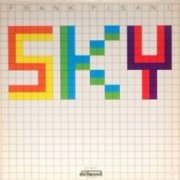 |
Sky (1977, 29.51) ***½/TDeath of the SunSpecial Love Her Song Grabing Air Lament The Pack |
Current availability:
Mellotron used:
Frank Pisani's career stretched back to late '50s Chicago, 1977's Sky seemingly being his last stab at stardom. Sadly, it limped out (only as a promo?) on New York's tax write-off/rip-off Dellwood imprint; other commentators have noted that he may not even have known of its release. Typically, for this kind of rip-off effort, the album's exceptionally brief, its six tracks so diverse that they could almost be six different artists. Sound familiar? Little-known US proggers Jasper Wrath found themselves caught up with the same crew, seeing (or not) two albums appear under two different names, Arden House and Zoldar & Clark. As you can see from the sleeve image, Dellwood treated the hapless Frank's magnum opus with the same forensic attention to detail as they took with all their releases. Never knowingly underspent, eh?
The real tragedy here is that the album's actually pretty good, even if it does sound like six different bands with the same singer. Opener Death Of The Sun is fucking amazing, seven minutes of heavy psych/prog dual guitar/organ riffery, although, without musicians' credits (don't be silly), we've no idea who provides the ripping Hammond and Mellotron strings on the track. Thinking about it, what are the chances he co-opted the Jasper Wrath guys into backing him? Right time, right 'label'... Probably not, but it's a possibility. I'm not sure the album has any other highlights as such, although closer The Pack isn't bad, while Her Song, despite being a little lightweight, has some nice organ work. And Grabing [sic.] Air? You saw the bit where I mentioned the forensic attention to detail? It's pretty limp, anyway, although Lament is anything but, being a solid, Midwest rocker. As with those two lost Jasper Wrath LPs, it's a genuine shame this is unlikely to ever see a reissue. Hey, it's on blogs. Grab a copy.
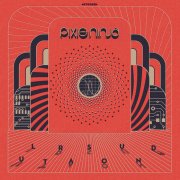 |
Ultrasound (2017, 38.21) ***½/TT½Auditory HallucinationsElusive the Wind Vane Une Promenade Polysomnographic Personal Improvement Cult Ultrasound |
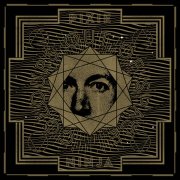 |
Colours Out of Space (2020, 43.44) ****/TT½Colours Out of SpaceLeng Plateau CosmiK Hutchinson Cipher Strange Days |
Current availability:
Mellotron(s) used:
Pixie Ninja, effectively the duo of Jostein Haugen and Marius Leirånes, hail from Rognan, in northern Norway, so it shouldn't come as any surprise to hear that their music is imbued with a wintry quality. Think: Änglagård/White Willow crossed with modern electronica and a smattering of Radiohead and you won't be too far off the mark. Their debut, 2017's Ultrasound, is entirely instrumental, veering between opener Auditory Hallucinations' ambient electronica, Elusive The Wind Vane's Crimson moves, Une Promenade's solo piano and Personal Improvement Cult and the closing title track's full-on symphonic prog. Änglagård's Mattias Olsson not only produces, but provides percussion and Mellotron, adding to the comparisons with his old outfit. Mellotron on everything except the piano piece, with distant choirs towards the end of Auditory Hallucinations, upfront strings and occasional flutes (quite distinct from Ketil Vestrum's real one) on Elusive The Wind Vane, strings and choirs on Polysomnographic and distant strings on the lengthy Personal Improvement Cult, while the closing title track opens with a flute part, strings and choirs subsequently entering the fray.
2020's Colours Out of Space (Lovecraft, of course) is, if anything, an improvement, featuring a little less electronica and a little more prog, at its best on the crazed Leng Plateau, nearly ten minutes of deranged, relentless drumming and twisting guitar and keyboard lines, Hutchinson Cipher being almost as good. Anima Morte's Fredrick Klingwall on Mellotron this time, with blasts of choir on the title track, mad, choppy choirs, skronky flutes and reflective strings on Leng Plateau, strings on CosmiK, chordal choirs and string section on Hutchinson Cipher and various combinations of strings, choirs and cellos on closer Strange Days. Elements of these albums may well not appeal to the die-hard proghead, but, if approached with an open mind, they should reward the more adventurous listener, while even the 'symph or die' brigade, will find much to enjoy. Recommended.
See: Änglagård
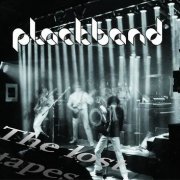 |
The Lost Tapes (2000, recorded 1981, 59.01) ***/TBloodmasterEnd of the Line The Good Earth The Hunchback Sign of the Knife Seventy Warriors |
Current availability:
Mellotron used:
Plackband were named for Plakband, the Dutch equivalent of gaffer tape, as it was apparently all that held their equipment together back in the mid-'70s. Of course, joke names aren't meant to stick (ho ho), but so often do... It took the band a while to work up to a professional level, releasing a lone single in 1978, Seventy Warriors b/w Some Party, although they either didn't own their Mellotron then, or simply didn't use it. They split in the early '80s, having never recorded a studio album, despite having a healthy following in their home area.
Almost twenty years later, a long-forgotten live tape was found in their old rehearsal space and released as The Lost Tapes, proving to be of excellent sound quality and giving a good idea of what a proper Plackband album may have sounded like. And they sounded like...? A rather simplistic version of the classic symphonic prog sound, to be honest, predating '80s neo-prog by a year or two while also sounding a little like Camel, though without the great atmosphere the latter could conjure up on a good day. Most of the material is somewhat overlong for its fairly limited content, particularly The Hunchback, which seems to last for a couple of geological epochs. Don't get me wrong; this is pleasant enough, but all a bit unengaging and nowhere near the quality of their countrymen Focus or Finch, although several miles ahead of '80s bands such as Coda or the awful For Absent Friends.
Mellotron (from vocalist Kees Bik, surprisingly) on every track, although at no point does it get anything resembling a starring role. It was largely used for a background wash of choirs, although I think I spotted a string part at one point, as against the ubiquitous string synth lathered over every track. All in all, despite the number of highlighted tracks above, this deserves its low 'T' rating, as the Mellotron is so quiet as to be hardly there at all.
Plackband reformed around the time of this release, recording a new album, 2002's After the Battle, following the Remember Forever single, including their original 1978 single tracks. Despite the Mellotron sounds, it seems highly likely that it's samples, as their old M400 had been sold many years earlier. As far as The Lost Tapes goes, if you're into that Dutch/German laid-back prog style, you'll probably like it, but anyone with a yearning for something more complex should probably look elsewhere. Remarkably little Mellotron, too, so I wouldn't bother on those grounds either.
See: Samples etc.
 |
Big Bad World (2008, 33.57) ***/T½ |
|
| Big Bad World Natural Disaster Serious Mistake Rainy Day 1, 2, 3, 4 That Girl Sunlight I Really Want You |
Meet Me in California Someday |
|
Current availability:
Mellotron/Chamberlin used:
The Plain White T's (poor grammar, but, in fairness, an awkward one) are an indie/powerpop crossover band, who keep spoiling potentially good songs with irritating indie vocal mannerisms, at least on 2008's Big Bad World; it's by no means a bad record, but I keep getting the feeling it could've been so much better. Best tracks? Serious Mistake, the '60s-ish hit 1, 2, 3, 4 and the very powerpoppy That Girl, with its amusingly risqué lyric, although finishing on its worst track (Someday) nearly got the album docked half a star.
Johnny K plays Mellotron, while Jon Brion does his usual Chamberlin thing, with Chamby strings on Rainy Day, a few Mellotron string chords on 1, 2, 3, 4 and flutes from one or the other on Sunlight. Overall, a reasonable enough effort, but less whining in the vocal department would improve matters dramatically.
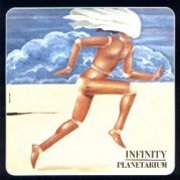 |
Infinity (1971, 36.47) ****/TTTTThe BeginningLife Man (part one) Man (part two) Love War The Moon Infinity |
Current availability:
Mellotron used:
Planetarium were a little-known Italian outfit whose real names were unknown until recently; in fact, there were no credits on the original release of their sole album, Infinity, at all. Musically, they were full-on instrumental symphonic prog (pre-PFM, note), with the odd wordless vocal, meaning that those of you who can't handle 'foreign' vocals should have no problem. Their sound is a little 'proto-prog', particularly on the title track, but that's hardly surprising, given the recording date. Man (Part Two) and War are probably the album's highlights, but there isn't a bad track on board, to be honest.
Band leader Alfredo Ferrari's Mellotron work is pretty full-on, too, with swathes of (presumably) Mark II strings on almost every track, the exception being the acoustic guitar/organ duet of Man (Part One). The finest Mellotron moment is probably the superbly cranky pitchbend at the end of The Beginning (as against the beginning of the end), repeated at the end of the album. Twist that dial! So; good music, loads of Mellotron - can't go wrong really, can you?
 |
Raising Sand (2007, 57.26) ****/½ |
|
| Rich Woman Killing the Blues Sister Rosetta Goes Before Us Polly Come Home Gone Gone Gone (Done Moved on) Through the Morning, Through the Night Please Read the Letter Trampled Rose |
Fortune Teller Stick With Me Baby Nothin' Let Your Loss Be Your Lesson Your Long Journey |
|
Current availability:
Chamberlin used:
Robert Plant's and Alison Krauss' collaboration on 2007's Raising Sand won a Grammy and sold very acceptably indeed; in fact, it's Plant's biggest (kind of) solo success. Can he sing Americana? He can, while Krauss' expertise in the bluegrass and country fields has made her one of the highest Grammy-winning artists (does that sound a bit corporate?), up there with Quincy Jones. Don't like country? Think again; this has more in common with Johnny Cash's late-career revival than hokey Nashville nonsense, as you might expect, at its possible best on the mournful Polly Come Home, Please Read The Letter and Trampled Rose, although nothing here could be excised without diminishing the overall effect.
Patrick Warren is credited with 'piano, pump organ and keyboards' on Trampled Rose, including uncredited Chamberlin, by the sound of it, with a polyphonic cello part that adds to the song nicely. Given how much of Plant's solo work sits in the 'contemporary pop/rock' category, this is not only his best-selling post-Zeppelin album, but possibly his best, too.
See: Led Zeppelin | Jimmy Page & Robert Plant
Plasticland (US) see: |
 |
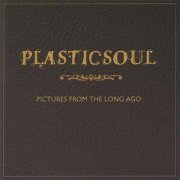 |
Pictures From the Long Ago (2005, 44.37) ***½/TTT½ |
|
| Broken Bones Heartbeats and Baby's Breath Saintly You Choose Me Over and Over Ten Stories Up Roof Above Your Wheels Borrowed and Gone |
Paper and Paraffin Sleep Baby Sleep |
|
Current availability:
Chamberlin used:
The LA-based Plasticsoul are, going by their 2005 debut, Pictures From the Long Ago, an Americana/powerpop crossover act with a heavy Neil Young influence for good measure. It's a fine album, highlights including opener Broken Bones, the countryish Saintly and You Choose Me and mournful closer Sleep Baby Sleep, although nothing here disappoints, probably due to said Neil influence. I would say, "Can you go wrong being influenced by Neil Young?", but then I remembered Pearl Jam.
Loads of Chamberlin (the MusicMaster 600 the band found at Josie Cotton's studio), played by Jake Gideon and David McConnell, although band leader Steven Wilson (not that one, silly) assures me it was himself, McConnell and Marc Bernal. Whatever. Anyway, we get strings and flutes on Broken Bones and Saintly, strings on Heartbeats And Baby's Breath, beautifully upfront strings on You Choose Me, skronky strings on Roof Above Your Wheels and Paper And Paraffin and an uncredited, raucous solo string part right at the end of the album, just for good measure. All in all, recommended for both music and tape-replay, which is a rarity. Unfortunately, despite crediting it, the 'Chamberlin' on the band's follow-up, 2009's Peacock Swagger, reviewed here, is sampled.
See: Samples etc.
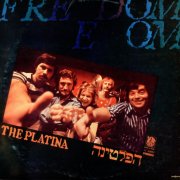 |
Freedom (1974, 32.08) ***/½Freedom SuiteHit'oreroot (Awakening) Shekiah (Sunset) He'rut (Freedom) 11:13 Galim (Waves) Kishooff (Witchcraft) |
Current availability:
Mellotron used:
The Platina were an Israeli jazz group, initially a backing outfit for other musicians, who played as far afield as 1974's Newport Jazz Festival. The same year's Freedom (their second album) features a full-on Rhodes assault, especially on the 'side-long' (actually just thirteen-minute) Freedom Suite and a pleasingly organic sound throughout, probably at its best on the laid-back Galim and energetic closer Kishooff.
Keys man Alona Turel plays Mellotron, although the only possible candidates are the brief, heavily-reverbed flute in Part 2 of Freedom Suite, Shekiah, quite distinct from the real one on the album and a few seconds of similarly heavily-reverbed cello on Part 3, He'rut. Good jazz, bad Mellotron.
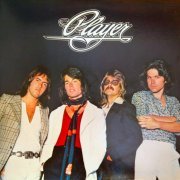 |
Player (1977, 39.32) **½/TT |
|
| Come on Out Baby Come Back Goodbye (That's All I Ever Heard) Melanie Every Which Way This Time I'm in it for Love Love is Where You Find it Movin' Up |
Cancellation Tryin' to Write a Hit Song |
|
Current availability:
Chamberlin used:
Player were, in many ways, an early example of prime AOR, although the 'soft rock' tag would probably describe them just as well, their eponymous 1977 debut straddling the two, admittedly closely-linked genres. Upbeat, pomp-ultra-lite opener Come On Out is fairly typical of the album overall, a very West Coast kind of approach, custom-made for the era's airwaves, Every Which Way and Love Is Where You Find It coming from the same mould, while Cancellation is about the rockiest thing here, although its entirely reprehensible 'underage girlie' lyrics do it no favours whatsoever. Several cheesy ballads finish things off gloopily, making for a rather unencouraging listen all round, frankly.
Steppenwolf's Wayne Cook (who also played Mellotron on Michael Cassidy's Nature's Secret the same year) was the band's 'fifth member', i.e. the one not pictured on the sleeve (count yourself lucky, Wayne). He played Chamberlin, by all accounts, with lush strings on Baby Come Back and This Time I'm In It For Love, a string line and flutes on Goodbye (That's All I Ever Heard) and orchestral-ish strings on balladic closer Tryin' To Write A Hit Song. Is this worth hearing for that reason? No, not really. One for AOR obsessives who find Boston and early Foreigner too heavy.
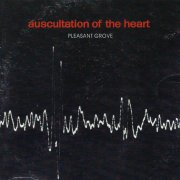 |
Auscultation of the Heart (2001, 44.02) **½/T |
|
| Calculated Approaches I Couldn't Withstand the Damage of an Evil and Wicked Divorce Cone Equation Commander Whatever Fate Uninvited Albatross Ghost Only a Mountain |
Andalusia Sound The Lovers, the Drunk, the Mother |
|
Current availability:
Mellotron used:
2001's Auscultation of the Heart is Dallas' Pleasant Grove's second of four albums (to date), a largely rather limp indie/country crossover affair. Better tracks? Possibly Albatross and closer The Lovers, The Drunk, The Mother, but nothing especially leaps out, at least to this listener.
Joe Butcher plays what sounds like genuine Mellotron flutes on opener Calculated Approaches and Commander Whatever, but, rather like the actual music, it's all a bit uninspired. You know, when something's really bad, it's easy to write about, but this kind of mediocrity stretches a reviewer's talents to the limit. On this one, I've failed.
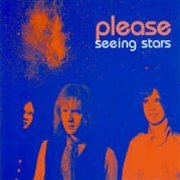 |
Seeing Stars (2001, recorded 1969, 40.09) ***/T |
|
| Seeing Stars Words to Say Before Time Goes By The Road Rise and Shine Still Dreaming Secrets |
Who You Know But Steal Your Dreams |
|
Current availability:
Mellotron used:
Please were a late-period UK psych outfit, better-known for the bands their members went on to join, notably Peter Dunton, who was playing in T2 within a year of this material's recording. The difference between the two bands is startling; Please have a sound that really predates their era, being more early than late psych, with much Farfisa, whereas T2 were definitely proto-prog, although both bands actually sound rather dated these days. I don't believe Please actually released anything much (at all?) at the time, so I presume Seeing Stars is your typical demos and outtakes collection. It seems to be quite highly rated by some psych fans, but to my ears, it falls between too many stools to really cut it all these years later.
Dunton plays Mellotron flutes on Time Goes By; a decent enough part, but nothing outstanding. Otherwise it's pretty much all Farfisa or Hammond, with a drop of Wurly, while that Farfisa really pushes their sound back to the mid-'60s... OK, nothing special, lots better from the era.
See: T2
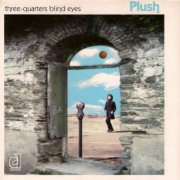 |
7"/CDS (1994/99) ***/TT Three-Quarters Blind Eyes Found a Little Baby ['99 CD version adds: Found a Little Baby (instrumental)] |
Current availability:
Chamberlin used:
Plush are a relatively rare US entrant in the 'louche, faux-'60s singer-songwriter' stakes. Led by Liam Hayes (it's pretty much his solo project), their releases are few and far between, partly due to Hayes' perfectionism; 2002's Fed took several years and vast sums of money to record, almost certainly not recouped in sales. 1994's Three-Quarters Blind Eyes was his/their first release, setting out their pre-psych stall with equanimity, which effectively means that you may well not like it unless you go for (p)lush balladry in a '60s stylee.
Although there's nothing obvious on the A-side, the flip, Found A Little Baby, is smothered in Chamberlin strings and flutes, making at least this track worth hearing for its tape-replay content. Hayes is reputed to've used his Chamby on later recordings, not least 2004's Underfed, a early, pre-multiple overdubs mix of Fed; more news when I get to hear it. He's also lent it to Matthew Friedberger of The Fiery Furnaces, who swamped their 2007 effort, Widow City in it and quite possibly Friedberger's 2006 solo double, Winter Women/Holy Ghost Language Music.
See: Liam Hayes
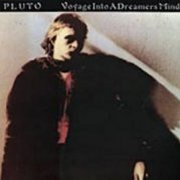 |
Voyage Into a Dreamer's Mind (1980, 34.57) ***½/TT |
|
| Into a Totally Different Race The Struggle Encounter Petal on a Wet Bough Love's Labyrinth The Voyage The Dreamer Hole in a Pocket |
Yanti Au Revoir |
|
Current availability:
Mellotron used:
Norway's Pluto (apparently a person, not a band) released two albums in the early '80s, round about the same time as a band by whom he was surely influenced: Kerrs Pink; it's hard to say which outfit is better, although Kerrs Pink have a higher public profile, due to their patronage by Musea, going by the evidence here. Voyage Into a Dreamer's Mind is a perfectly good and undeservedly obscure late-period progressive album, for which the word 'mellifluous' could have been invented, such is its laid-back melodic approach to the genre; comparisons with Camel (particularly their Snow Goose period) would also be appropriate, with only a few of its ten tracks featuring any vocal involvement.
Difficult to pick out any standout tracks, but nothing here is likely to offend, with the short guitar pieces Hole In A Pocket and Au Revoir being notable. On the Mellotron front (from Pluto himself), after a couple of Mellotronless tracks, the choirs kick in on Encounter, with more of the same on Love's Labyrinth, while The Voyage opens with the album's first obvious string part, although a string synth is in evidence, too. While we're not talking 'Mellotron Classic', what you can hear is sympathetically played, adding nicely to the overall effect; shame he couldn't have used it a little more, methinks.
 |
Cantamos (1974, 36.46) ***½/½Sagebrush SerenadeSusannah High and Dry Western Waterloo One Horse Blue Bitter Blue Another Time Around Whatever Happened to Your Smile All the Ways |
Current availability:
Mellotron used:
Poco were formed by Richie Furay out of the ashes of Buffalo Springfield, as Neil Young and Steven Stills headed for solo careers and, concurrently, CSN/CSN&Y. While they can't lay claim to actually inventing country rock, they're one of its chief exponents, having member crossover with The Eagles, in both directions, although sticking closer to their original template. Still going strong today, they've had a more convoluted history than most, pedal steel man Rusty Young being the one consistent member, others leaving and returning more often than Rick Wakeman with Yes, which is saying something.
Cantamos was their eighth album and second without Furay, who had been persuaded to co-found the Souther-Hillman-Furay Band. It's actually a fine album, vastly better than I'd expected, with material of the quality of Sagebrush Serenade and High And Dry and no awful country schmaltz, thankfully, although the quality does dip slightly towards the end of the record. Although no-one's credited with keys, there are a few seconds of Mellotron strings at the beginning of 'possible best track', Western Waterloo; not the briefest use of the instrument on this site, but bleedin' close... A good country rock album with next to no Mellotron, then. If you like The Eagles and their ilk, but have never delved into Poco's nightmarish discography (more compilations than original albums), there would be worse places to start than here.
 |
Haunted (2000, 70.43) **/T½ |
|
| Exploration B Haunted Control Terrible Thought Walk the Walk Terrified Heart Wild 5 & ½ Minute Hallway Not a Virgin |
Hey Pretty Dear Johnny Could've Gone Mad Lemon Meringue Spanish Doll House of Leaves Amazed If You Were Here |
|
Current availability:
Chamberlin used:
Annie "Poe" Decatur Danielewski is a dance-oriented American singer-songwriter, notable for her vociferous fanbase, who helped with her 'Re-POE-Session' campaign (nice multiple pun there) to persuade Atlantic to relinquish their hold over her masters. Her second album, 2000's Haunted, is probably a decent enough affair within its genre, although since Planet Mellotron isn't terribly keen on commercial dance-pop, it's difficult to say for sure. It certainly has an unexpected breadth of stylistic variation, while Poe has an excellent voice of its type, but to attempt to pick out 'highlights' would probably be futile.
Patrick Warren does his usual Chamberlin thing, nicely audible for once, compared to many albums bearing his name. We get strings and stabby flutes on Terrible Thought, a brief string part towards the end of 5 & ½ Minute Hallway, strings on Hey Pretty, what sounds like literally a single string chord on brief interlude House Of Leaves and what I take to be Chamby strings on Amazed. Given the Chamberlin's chameleon-like quality, it may well be on several other tracks, too, although some of the strings sound real. So; nice to hear the Chamby high enough in the mix to hear, but not an album I can envisage myself playing again in a hurry. OK, ever.
Incidentally, given that Hey Pretty was used as the title music to MTV's short-lived Spyder Games soap, it's possible that the soundtrack's entry on this site (Chamberlin credited to... Patrick Warren) is superfluous. More news should I ever get to hear the thing.
 |
David Poe (1997, 45.19) ***/T |
|
| Telephone Song Blue Glass Fall California Moon Reunion Apartment Silver Eyelashes Star |
Bloody Cop Settlement [Untitled] |
|
Current availability:
Chamberlin used:
David Poe seems to be one of those renaissance man kind of guys, not only a singer-songwriter, but a producer and a composer for TV and dance, amongst other talents. His eponymous 1997 debut is a largely acoustic effort, with folk and r'n'b influences, amongst other disparate genres, the (relatively) rocking Settlement being a highlight. The album's strongest suit, however, is probably Poe's lyrics, painting an unsentimental picture of modern American life typified by Cop: "Stick comes down on the back of his head/and the video ends".
Poe plays Chamberlin (producer T-Bone Burnett's?), with skronky strings and brass on Bloody and flute chords on the final, untitled track, although I'm less sure about the orchestralish string part on Silver Eyelashes. David Poe is a good album of its type, which isn't to say it's for everyone, its mainstream appeal outweighing its artistic sentiments.
 |
Let it Go (1999, 50.32) ***/TTT |
|
| Sea The Waiting Room Wizard Magic Stars From Here on in Good Times Even Me Fine Line Head Heart & Hammer |
Hymn No Surprise Run A Dream Saved Sun |
|
Current availability:
Mellotron used:
Poisonous Museum's sole album to date is, in many ways, a typical 'modern' progressive album, taking much of its influence from the more metallic end of the spectrum. That isn't to say that it's 'progressive metal', à la Dream Theater, but the guitars have a good deal more 'crunch' than any '70s-influenced band. While mostly British, vocalist Marc "Max" Vanhaeren is French, although his English-language vocals are barely accented. The album falls into the 'not great, but not bad' category, with a couple of the songs standing out, but most not really hitting the 'memorable' button.
The Mellotron use by Andrew Smart (borrowed from Streetly Electronics) is sparse but effective, with Good Times and Saved being especially worthy of mention, so don't buy this hoping for a Mellotron Classic, but it's not a bad album of its type.