




|
|
|
|
||
|
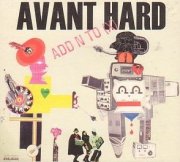 |
Avant Hard (1999, 56.21) ***/TTT |
|
| Barry 7's Contraption Robot New York Skills Steve's Going to Teach Himself Who's Boss Fyuz Buckminster Fuller Revenge of the Black Regent |
Metal Fingers in My Body Ann's Eveready Equestrian Oh Yeah, Oh No Machine is Bored With Love |
|
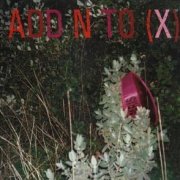 |
Add Insult to Injury (2000, 60.28) ***/TT½ |
|
| Adding N to X Brothel Charge You Must Create Kingdom of Shades Monster Bobby Poke 'er 'ole Plug Me in Hit for Cheese |
MDMH (Miami Dust Mite Harvest) BP Perino Incinerator No 1 The Regent is Dead Violent Breath |
|
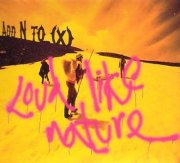 |
Loud Like Nature (2002, 51.03) ***/TT |
|
| Total All Out Water Electric Village Sheez Mine Invasion of the Polaroid People Party Bag Quantum Leap Pink Light |
Up the Punks Take Me to Your Leader (Make Me Really Happy) Lick a Battery (Tongues Across the Terminals) . - U Baby Large Number All Night Lazy |
|
Current availability:
Mellotrons used:
Add N to (X) were one of Britain's chief electronica exponents, apparently specialising in using analogue equipment (hurrah!) to construct their bizarre sound sculptures whilst crapping from a great height onto the fey likes of Stereolab and their ilk. Whatever an 'ilk' actually is. I mean, do you ever hear the word used in any other context? They were also quite keen on writing about the human/machine interface, specifically sexually, which has to be a good thing. Er... Anyway, 1999's Avant Hard was their third album, apparently fairly typical of their oeuvre, skipping between vaguely danceable tracks (Skills, with its '60s-ish feel, Metal Fingers In My Body) and their more experimental side (most of the rest) with ease.
I've seen references to Mellotron sample use, but the album's Mellotron use sounds too skronky to be samples in several places (it turns out they bought Pallas' old Novatron). It is possible that Ann Shenton (I believe) sampled herself playing phrases on the machine which were then looped to death, but the actual sounds are too wobbly and uncertain to be regular samples. Anyway, we have a multiply-repeating string part on opener Barry 7's Contraption, with solo strings opening Revenge Of The Black Regent (good titles, this lot), plus cellos and choir. More strings and choir in Ann's Eveready Equestrian and flutes and cellos in Oh Yeah, Oh No, although I'm not at all sure what opens Machine Is Bored With Love. Its key-click suggests a Mellotron, but I haven't heard anything like it before. [Note: Mattias Puttonen tells me it's the boys choir]. Oh and spot the Egg sample...
The following year's Add Insult to Injury is maybe an infinitesimal amount nearer the mainstream, but not so's you'd actually notice. More weird synth shit and more, well, weird synth shit, I suppose. Three Mellotron players this time round: Shenton, Barry 7 and Steve Claydon, although it's only audible on three tracks. One each? Kingdom Of Shades opens with Mellotron cellos, jerky choir notes and flutes entering the fray soon after, plus choirs, flutes, cellos and strings on closer The Regent Is Dead. Just when you thought it was all over, after a three-minute silence (removed from the timing above), a hidden track, Violent Breath, kicks in, all Mellotron flutes and clanking somethings, which is a nice bonus.
By Add N's swansong, 2002's Loud Like Nature, vocals (of a sort) were starting to make their presence felt a little more and despite it still being a pretty odd album, it's rather less odd than its predecessors, which may've precipitated their split, or may not have. Mellotron (Shenton again?), with distant choirs throughout Quantum Leap, an upfront string part on Pink Light and, having finally started using the damn' thing, it seems there's no stopping her/them, with flutes, cellos and strings on Up The Punks, at which point it suddenly drops out. Three very individualistic albums, then, three lots of genuine Mellotron use, though be warned: not for the faint-hearted, or those who like things on the gentler side. Incidentally, after the split, Shenton sold their Novatron on to I Monster.
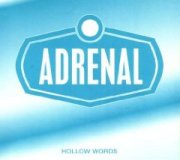 |
Hollow Words EP (1996, 15.06) **½/TTHollow WordsTurn Away Byronic Man Radio Music Intermission |
Current availability:
Mellotron used:
Adrenal were, going by their 1996 EP Hollow Words, a fairly typical Brit-indie act of the time, i.e. a bit post-Britpop while looking for the next set of coattails to ride. Harsh? Probably, but it's a pretty average piece of work, to be honest, sounding like a thousand other bands you could see in Camden's pubs'n'clubs every night at the time, with the notable exception of its last track, Radio Music Intermission, listed as "An instrumental tribute to Kraftwerk's Radioactivity-period", making it the most interesting thing here by a country mile.
Duncan Goddard of Radio Massacre International plays his own Mellotron on the EP, with faint strings on Turn Away and string section and choir on Radio Music Intermission. I don't know how many tape frames he owned at the time (more than me, though), but it's possible there's some other stuff going on here, too. Anyway, not a very exciting effort, but one decent Mellotron track.
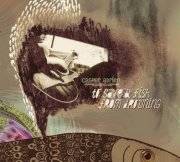 |
To Save a Fish From Drowning (2010, 22.36) **½/TDon't Let The LightsSunshine Ray Small Pity Roar Farewell (My Friend) |
Current availability:
Mellotron used:
Casper Adrien appears to be Casper Broekaart's nom de plume, although I'm willing to be proven wrong. Anyway, his To Save a Fish From Drowning is a rather average, indie/folk-ish singer-songwriter effort, at its least uninteresting on solo acoustic closer Farewell (My Friend).
Matthijs Herder plays his M400, with a fairly overt string part and a little burst of flutes on Ray, but that's your lot. Not that exciting, then, to say the least, but one decent Mellotron track.
 |
Mechelwind (2009, recorded 1973, 85.52) ***½/TTT |
|
| Mechelwind Suite Part 1 Part 2 Part 3 Part 4 Part 5 Hodibbel Mechelwind Mechelwind (live) |
Hodibbel (live) Papa Doing (live) Klaus With the Birds (live) |
|
Current availability:
Mellotron used:
Nuremberg's Aera, connected with Twenty Sixty Six & Then, Wind and Embryo, amongst others, began life as an improvisational outfit, frequently playing with 'whoever was about', apparently impressing many more mainstream acts in the process. They eventually settled down, releasing a clutch of albums between the mid-'70s and early '80s, more sax-driven jazz-rock than progressive, so don't go expecting full-on symphonic madness. 2009's double-disc Mechelwind (named for their town they lived in at the time) features recently-unearthed recordings from 1973, including no fewer than three formative versions of Mechelwind itself, originally released in a nine-minute version on their second album, '76's Hand und Fuß. Highlights? Parts of Mechelwind Suite and Papa Doing, I'd say, probably because they're the least jazzy things here.
Rainer "Steve Robinson" Geyer (2066, Nine Days Wonder) plays Mellotron on both studio and live tracks, with background strings on Part 1 of the twenty-five minute Mechelwind Suite and more upfront ones at the end of Part 2, segueing into Part 3, the first part of which is, effectively, a Mellotron solo, with flutes later on. Upfront flute and mixed strings on Hodibbel, occasional strings and flute (alongside a real one) on the second version of Mechelwind, angular strings (under real flute) on the live version of Hodibbel, complete with radical pitchbends and occasional strings on Papa Doing complete the roll-call. Worth hearing? Yes for fans of German fusion, maybe for the rest of us, while Geyer's Mellotron work, while relatively sparse, is effective.
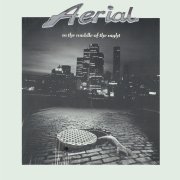 |
In the Middle of the Night (1978, 37.30) ***/TT½HarmonyIn the Middle of the Night Easy Love All Right If Only I Were Older Indispensable Thomas Hensible Race the Sun You've Got a Way Gypsy Face |
Current availability:
Mellotron used:
Aerial began as a Beatles tribute band, Liverpool, before branching out in order to record their own material. Signed to Anthem (Max Webster, Rush in Canada), they released two albums, debuting with 1978's In the Middle of the Night, neatly straddling the powerpop, AOR and pomp divides, opener Harmony actually utilising the term 'Merseybeat' in its lyrics and Easy Love (a hit) being straightforward late '70s pop/rock. The stomping Indispensable Thomas Hensible is an early example of a little-known phenomenon, Canadian Bands Using Silly Names In Song Lyrics, repeated by Saga the same year with Ellery Sneed on their debut's The Perfectionist and Nightwinds from the following year, with The Curious Case Of Benjamin Button (admittedly from the F. Scott Fitzgerald short story).
Keys man Malcolm Buchanan is credited with Mellotron, with flutes, background strings and choir on Harmony, upfront strings on the title track and Easy Love, background choirs on Race The Sun and strings and choirs on the proggy You've Got A Way, all to reasonable effect. Although this came out on CD as early as 1994, paired with its (Mellotron-free?) successor, 1980's Maneuvers, I'd be surprised if that version's still in print, sadly. Hardcore proggers will probably not be as interested in this as they might, but pomp fans really should make the effort to track a copy down. As for the Mellotron, while it's used fairly extensively, it probably isn't enough to make it worth shelling out for, albeit enough to be worth hearing.
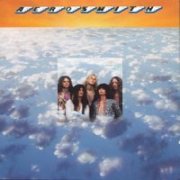 |
Aerosmith (1973, 36.01) ***½/TTMake itSomebody Dream on One Way Street Mama Kin Write Me Movin' Out Walkin' the Dog |
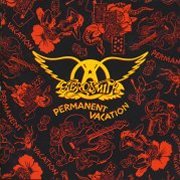 |
Permanent Vacation (1987, 51.46) ***½/TT |
||
| Heart's Done Time Magic Touch Rag Doll Simoriah Dude (Looks Like a Lady) St. John Hangman Jury Girl Keeps Coming Apart | Angel Permanent Vacation I'm Down The Movie |
||
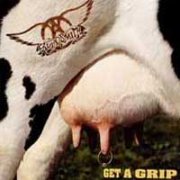 |
Get a Grip (1993, 65.38) ***/½ |
|
| Intro Eat the Rich Get a Grip Fever Livin' on the Edge Flesh Walk on Down Shut Up and Dance |
Cryin' Gotta Love it Crazy Line Up Can't Stop Messin' Amazing Boogie Man |
|
Current availability:
Mellotrons used:
Aerosmith hopefully shouldn't need any introduction, especially to US readers; the quintessential American hard rock/rock'n'roll outfit from the '70s who reinvented themselves in the '80s by bringing in outside writers to become by far and away the best of the 'big hair' metal bands, although it could be said that they transcended the genre completely.
They coalesced around 1970 from various other Boston-area bands and it only took them a couple of years to get signed, releasing their eponymous debut with its astoundingly cheap'n'nasty sleeve in '73, consisting (like so many bands) of the best of their live set. Aerosmith contains several numbers played regularly by the band till this day, including the best ballad they'll ever write, Dream On. Steven Tyler's impassioned vocal belies his years and Joe Perry's blues-influenced guitar style comes into its own, creating a song that has sadly become a bit of a cliché, particularly on US 'classic rock' radio, where I believe it's only slightly less ubiquitous than Stairway To Heaven. One of the best things about the song is the Mellotron; beautifully played (by Tyler, uncredited) strings and flutes that lift the song to another level. In their tell-all autobiography of a few years ago, Walk This Way, Tyler had this to say about it:
| "It came with a standard set of tapes that included brass, flute, violins, cello and an eight-voice choir. By overdubbing you had a cheesy-sounding orchestra at your fingertips. So I put the string section on Dream On sitting at this Mellotron while a friend of mine kept laying out lines of crystal THC that I was snorting while I was playing. That's my memory of the Mellotron, except that we used it for the flute of Dream On too". |
Beat that for Mellotron drug stories... Anyway, a good album, if otherwise pretty basic and some great Mellotron. So what is 'crystal THC' anyway?
It took Aerosmith another fourteen years to use a Mellotron again, apparently due to producer Bruce Fairbairn's association with Canadians Strange Advance's Drew Arnott, a Mellotron owner. Permanent Vacation was the second album recorded by the reformed original lineup and the one to break the band wide open all over again, a position they've managed to sustain to this day. There's no denying its commerciality; Dude (Looks Like A Lady) was on constant rotation on MTV throughout '87 and the album sold in its millions. However, it's still recognisably the same band who recorded Aerosmith a lifetime earlier; the acoustic swamp blues of Hangman Jury, the stomping opener Heart's Done Time. Basically, Aerosmith took on the young guns and beat them at their own game, while royally taking the piss at the same time (see: Dude). Much of the album is a little unlistenable these days though, at least to my ears, while the only thing that saves the big ballad Angel is the major Mellotron string arrangement, but closing instrumental The Movie is an excellent little track, improved further by its Mellotronic content.
Now, I was convinced that was it for Aerosmith's Mellotron useage. Nothing on '89's excellent Pump (****) and, although I've seen mentions of Mellotron use on their belated follow-up, '93's Get a Grip, I'd discounted them until it was very specifically pointed out to me. It's another typical Aerosmith album, to be honest, although it outstays its welcome a little; this is music made for forty-minute bursts, tops. Plenty of good tracks, though little of the quality of their '70s material; Eat The Rich, Livin' On The Edge and Flesh would all easily make a 'best of their later stuff' compilation and the short instrumental Boogie Man is so much better than the title suggests, but don't go expecting Rocks part 2. Next to no Mellotron, actually, with nothing more than a near-inaudible polyphonic flute part near the beginning of Cryin'. No wonder I didn't spot it earlier.
See: Samples etc.
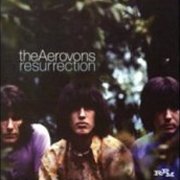 |
Resurrection (2003, recorded 1969, 46.23) ***/T |
|
| World of You Resurrection Say Georgia With Her Quotes and Photos Words From a Song Bessy Goodheart Something of Yours |
She's Not Dead The Years Everything's Alright The Children The Train Song for Jane Here World of You (demo) |
|
Current availability:
Mellotron used:
The Aerovons were one of those one-in-a-million bands who actually manage to realise their dreams, if only briefly. Forming in St Louis in 1966 while still all extremely young, they got themselves signed to EMI and ended up recording at Abbey Road in the Beatles' downtime, even managing to piss Lennon off by messing around on the bed he'd had installed at Yoko's instigation. Actually, I'd have paid good money to've seen John lay into them; I believe the quote was something like, "Oi, wack - what th'fuck d'ya think you're doing?" Anyway, after recording an album's-worth of material and having a couple of non-selling singles released on Parlophone, the band were dropped and split up.
The music? Well, despite their origins, the Aerovons would've easily passed for a second-division British psych/pop outfit, Bessy Goodheart sounding like a Sgt. Pepper outtake and leader Tom Hartman sounding uncannily like McCartney on Something Of Yours. While Resurrection, finally released in 2003, shows considerable talent, it also reveals the band to be, essentially, Beatles imitators, although it has to be said they were pretty damn' good at it. They occasionally shifted into sounding like someone else, Words From A Song copping the Bee Gees something rotten, but overall, it's the Beatles all the way (what have they ripped off on The Children?).
Mellotron? Well, the strings on opener World Of You are real, but I'd swear blind that's a high, single-note Mellotron line on Words From A Song, with more of the same on The Train, a single added to the end of the originally-proposed album sequence. There are also a couple of special-FX inserts that could be Mellotron, but they're not the sounds I've heard before. Anyway, although it's not worth it for the Mellotron, Resurrection is worth the effort for late-'60s completists and Beatles nuts, although it's possibly too derivative for the more casual listener.
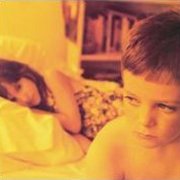 |
Gentlemen (1993, 49.03) ***½/T |
||
| If I Were Going Gentlemen Be Sweet Debonair When We Two Parted Fountain and Fairfax What Jail is Like My Curse |
Now You Know I Keep Coming Back Brother Woodrow/Closing Prayer |
||
Current availability:
Mellotron used:
The Afghan Whigs started as one of legendary Seattle label Sub Pop's main attractions, later tempering their full-on proto-grunge with melody. Gentlemen is doubtless going to be one of those 'growers', with almost every track supporting Greg Dulli's ultra-personal lyrics (he couldn't even bring himself to sing My Curse, apparently, getting guest vocalist Marcy Mays to sing it). This man is in a lot of pain and, just for once, I'm not taking the piss.
Harold Chichester plays piano on most tracks and, although you can hear Barb Hunter's cello in several places, Chichester's Mellotron strings only finally surface in closing instrumental Brother Woodrow/Closing Prayer, sounding strained and screechy. Despite its apparent no-show on the rest of the album, a final string note is almost the last sound you hear, so; a damn' good album of its kind, but you're not all going to go for this stuff, while it really isn't worth it for the Mellotron, although that's no criticism of the frequently excellent music.
See: Greg Dulli | Twilight Singers
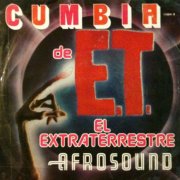 |
7" (1983) ***/TT Cumbia de E.T. El Extraterrestre El Regreso de E.T. El Extraterrestre |
Current availability:
Mellotron used:
(The) Afrosound were apparently Colombia's answer to the Peruvian and Bolivian Chicha movement of the '70s, combining traditional South American music with modern funk and soul, creating a very danceable hybrid in the process. 1983's Cumbia De E.T. El Extraterrestre single (once again, thanks to Mark Medley for this) is a bizarre (and surprisingly listenable) tribute to Spielberg's cheese classic E.T. The Extra-Terrestrial, fusing the band's usual sound with a (very) slightly space-age sensibility, the end result sounding like Colombia's answer to, say, John Keating's space age easy listening albums of the early '70s.
Someone (Jose A. Villerias, credited with 'effects'?) plays Mellotron strings on both sides, including some magnificent tape-wobble on the flip, to amusing effect, although I've no idea where they sourced the machine. Of course, as Mark says, this leaves the field wide open: did they use one on anything else?
 |
CDS (1991) ***½/TT Scheherazade |
Current availability:
Mellotron used:
After the Rain were a short-lived Japanese progressive keys/bass/drums trio, whose sole legacy seems to be a lone, near-nine-minute track, Scheherazade, released as a promo-only CD single in 1991 on the Made in Japan imprint. Unless I'm completely mistaken, it quotes from Rimsky-Korsakov's rather better-known work, jarringly stuck next to more typically Japanese prog tropes, although it's worth hearing for fans of Japanese '80s prog.
Keyswoman Naomi Miura (between stints with Rosalia and Arsnova) adds a decent helping of Mellotron to the piece, in the machine's darkest hour, with string parts dotted throughout and occasional blasts of choir. Are you going to stumble across a copy of this? Even in Shinjuku Disk Union? You are not, but fortunately, some kind soul has uploaded it to YouTube.
See: Rosalia
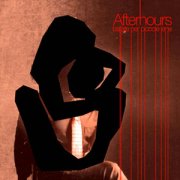 |
Ballate per Piccole Iene [a.k.a. Ballads for Little Hyenas] (2005/2006, 44.05/48.53) **½/T |
|
| La Sottile Linea Bianca (The Thin White Line) Ballata Per La Mia Piccola Iena (Ballad for My Little Hyena) È La Fine La Pi? Importante (The Ending is the Greater) Ci Sono Molti Modi (There's Many Ways) La Vedova Bianca (White Widow) Carne Fresca (Fresh Flesh) Male in Polvere (Sparkle) Chissà Com'è (Desire Froze Here) |
The Bed Il Sangue di Giuda (Judah's Blood) Il Compleanno di Andrea (Andrea's Birthday) |
|
Current availability:
Mellotron used:
Afterhours (apparently named for a Velvets song) are a classic 'local market' band; playing a generally popular style singing in their own language, with a huge following in their own country, comprising kids who can't get to see the band's forebears. Cynical? Moi? They're generally described as 'alternative rock', whatever you take that to mean; sounds like a combination of the Velvets and post-hardcore to me, but what do I know?
Having recorded a couple of English-language albums early in their career, Afterhours took the decision to make (presumably) a last-ditch assault on the English-speaking market, re-mixing their 2005 release, Ballate per Piccole Iene with English vocals, reissuing it the following year as Ballads for Little Hyenas with one extra track. You'll have to be something of an alt.rock aficionado to really appreciate its subtleties, although the band seem to've upped their compositional skills since their previous effort, notably on closer Il Compleanno Di Andrea/Andrea's Birthday. Incidentally, do I hear a Bono cop on Ci Sono Molti Modi/There's Many Ways? I keep expecting the vocalist to sing, "Wipe your tears away!" Mellotron this time round from Greg Dulli (Afghan Whigs/Twilight Singers) and David Adams, meaning we actually get to hear it, with an upfront string part on La Vedova Bianca/White Widow and less of the same on Il Sangue Di Giuda/Judah's Blood.
See: Samples etc.
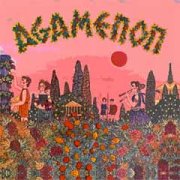 |
Todos Ríen de Mi (1975, 36.18) ***/T |
||
| Todos Ríen de Mi Al Salir el Sol Please Little Man Happy Marriage, Eleanor Send Me Blow Up the Candle (Apaga la Vela) Cuco Go Fly (Cuco Te Vas) Happy Tuesday |
Wooden Tears I Need Money |
||
Current availability:
Mellotron used:
I can't say I know an awful lot about Agamenón, a particularly obscure Spanish outfit from Madrid, although I can tell you they were far more late-period psych than progressive. Todos Ríen de Mi is a reasonable album, but it sounds more like 1968 than 1975 and some of the male/female harmonies are painfully off, although it's partially redeemed by the acid-fried guitar work splattered across most of the tracks.
Not much Mellotron, to be honest, with faint strings on Blow Up The Candle (Apaga La Vela), leaving Happy Tuesday as the only Mellotron track proper, with a strident string part running through much of the song. So; OK, not great (apologies to those that love it), one good Mellotron track, that's your lot.
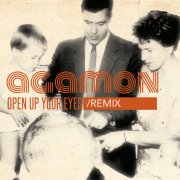 |
Open Up Your Eyes & See the World Go Round & Round (remix) (1993/2015, 77.46) ***/TT½ |
|
| Meditate Cover Boy Gentle Red Open Up Your Eyes Introverted Dirt All the Flowers Kneel Down In My Universal Dark |
Words Ugly Alien Naive Belief The Morning Star One-Way Thinking Ride on My Pony Meditate Naive Belief (second solo) |
|
Current availability:
Mellotron used:
I can't tell you an awful lot about Agamon, other than that they were a three-piece Stockholm-based recording project, including drummer Morgan Ågren, later of Mats/Morgan. They released just the one album, 1993's Open Up Your Eyes & See the World Go Round & Round (a.k.a. Open Up Your Eyes) on the Mellotronen label, alongside Änglagård and others, although a belated follow-up is apparently in the works. Two decades on, the chief participants have chosen to remix and re-release their debut, adding excerpts of two alternate versions, although I have no way of knowing how different the new version is to the old.
And it sounds like...? Hard to say, is the short answer. Somewhere between various eras of King Crimson, incorporating elements of jazz, modern classical and contemporary pop and R&B, amongst other influences. 'Genre defying', as one website puts it. Confused? Me too. Highlights include dark, vaguely Crimsonesque opener Meditate, the vaguely late '70s Genesis-isms of All The Flowers, the driving In My Universal Dark, the UK-alike Naive Belief and the Hendrixy One-Way Thinking, with its lengthy, ripping guitar solo. Sad to say, my favourite tracks tend to be the most 'conventional' ones, or the ones closest to rock orthodoxy; suffice to say, my personal edit of this album would sound like a different band to other listeners' reimaginings of its contents.
Keys man Magnus Andersson (Lagerqvist) plays Mellotron. No, I don't know where he sourced a machine, although, given that Änglagård were labelmates, it's possible that it's theirs. I'll ask some relevant people. Anyway, assuming none of the original version's parts have been mixed out of the reissue, we get clicky flutes on All The Flowers, chordal flutes on Kneel Down, lush strings on the balladic Words and The Morning Star and flutes on original album closer Ride On My Pony. Worth the effort? Overall, yes, but bear in mind that a tolerance for vaguely Zappa-esque jazziness is something of a prerequisite for a full appreciation of this album.
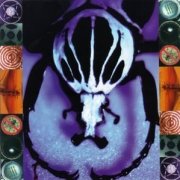 |
Make a Pest a Pet (1996, 51.23) ***/T½ |
|
| Remote Control I Don't Mind Nothing Happens Unity or Grenadine You Complain Scare Myself Blow Up Don't Wreck it |
Cranky Real Stumper Mad at the World My Mistake Exist to Resist |
|
Current availability:
Mellotron used:
The Age of Electric were a Canadian quartet consisting of two pairs of brothers, which must've made for some interesting rehearsal room/tour bus arguments. Apparently highly successful in their home country, they make a pretty appealing indie/powerpop sound on their last album, 1996's Make a Pest a Pet, top tracks including opener Remote Control (apparently a 'radio hit' at home), Nothing Happens and Don't Wreck It.
Chris Bryant plays Mellotron strings, with what sounds like backwards ones on Unity Or Grenadine, regular ones towards the end of Scare Myself and very background ones on Cranky, all to passable effect. Overall, then, not at all bad, if a little overlong; losing a couple of the weaker tracks would not only improve the album, but make it more concise.
See: Limblifter | Ryan Dahle
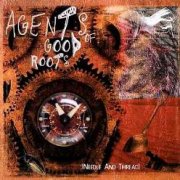 |
Needle & Thread (1999, 49.37) **/T |
|
| I Gotta Move Jakob Radio King Meet Me on Main Street What I Need Innocent Days Shot Down The Blinds |
Beautiful Genius John Brown Everyday |
|
Current availability:
Mellotron used:
Agents of Good Roots perfected their roots rock/jazz/funk style on the same East Coast circuit as the considerably more popular Dave Matthews Band, probably appealing to a generally similar audience. 1999's Needle & Thread was their fourth and last album, a not-especially-appealing mix of the above genres, at their least bad when pushing the boat out a little, as on a brief section in opener I Gotta Move or the jazzy extemporisation in Shotdown.
Stewart Myers plays Mellotron on two tracks, with strings on The Blinds and strings and choir on John Brown, sounding wobbly enough to be real, which is nowhere near enough to make it worth hearing this tedious album. They released an EP, Seed, the same year, Myers credited again, although, given that its lead-off track is John Brown and the rest of it's live, I'm sure it has no other Mellotronic input.
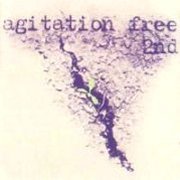 |
2nd (1973, 41.33) ***½/½First CommunicationDialogue & Random Laila, part 1 Laila, part 2 In the Silence of the Morning Sunrise A Quiet Walk Haunted Island |
Current availability:
Mellotron used:
Agitation Free grew out of the Berlin scene in the late '60s, giving members away to several bands who went on to become better-known, including Ash Ra Tempel and Tangerine Dream. Their debut, Malesch, was heavily influenced by their recent Near-Eastern trip, while the material on the following year's 2nd was pieced together on several trips to France. Above all, this is a jamming record; all the pieces are obviously either direct improvs, or worked up from them, with the first four tracks (originally the whole of side one) merging into one continuous piece.
Drummer Burghard Rausch adds a few rich Mellotron string chords near the beginning of closing jam Haunted Island, but you wouldn't exactly call it a Mellotron track, never mind album. Basically, if you're into the 'krautrock' ethos, or at least the gentler, jamming end of it, you'll probably like Agitation Free; they were obviously extremely good at what they did and 2nd was a far more enjoyable listen than many similar albums to which I've been subjected. A cautious recommendation, then, though not for the Mellotron.
See: Ash Ra Tempel | Tangerine Dream
 |
The Book of Hours (2025, 44.54) ****/TTFlute of PerilLevitator Burial Mound The Book of Hours Part I Part II Part III Part IV |
Current availability:
Mellotron used:
Norway's Agropelter, named for a North American mythical creature, are Kay Olsen's solo project, aided and abetted on his debut, 2025's The Book of Hours, by a raft of major names from the Scandinavian scene, not least bassist Jonas Reingold (Flower Kings, many others), Mattias "Änglagård" Olsson (percussion/vintage keys) and White Willow's Jacob Holm-Lupo on the technical side. All-instrumental, it freely mixes influences from both 'classic' '70s prog and that from the '80s and later, the end result being a smörgåsbord of progressive rock, although anyone expecting a retro Änglagård/Anekdoten/Wobbler-style album should probably look elsewhere. The centrepiece of the record is its half-hour-plus, four-part title track, which covers enough ground to keep the more exploratory prog fan busy for weeks, the other tracks being decent enough (Olsen considers opener Flute Of Peril to be part of The Book Of Hours itself), if not of quite the same quality.
On the Mellotron front, Mattias slaps it on all over, with strings on Flute Of Peril, a few seconds of strings and chordal choirs on Part I of the title track, cello (with double bass notes) and chordal flutes and choirs on Part II, a solo flute/strings section in Part III, and choirs and strings (heavily pitchbent at one point) on Part IV. Given the breadth of Mattias' Mellotron sound library, I'm quite sure several other lesser-known sounds (whither the 'singing glasses'?) are lurking in the mix, too, although the church organ on several tracks is real. Hardcore retro-prog fans may baulk at the modern synth sounds that crop up here and there, but I find very little to criticise on The Book of Hours. Buy.
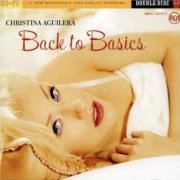 |
Back to Basics (2006, 78.32) **½/0 |
||
| Intro (Back to Basics) Back in the Day Makes Me Wanna Pray Ain't No Other Man Understand Without You Slow Down Baby Oh Mother |
F.U.S.S. (Interlude) On Our Way Thank You Still Dirrty Here to Stay Enter the Circus Welcome Candyman |
Nasty Naughty Boy I Got Trouble Hurt Mercy on Me Save Me From Myself Right Man |
|
Current availability:
Mellotron used:
It's impossible to live in the Western world and not be aware of Christina Aguilera (surely?); teen Disney star turned mega-selling adult artist, she's pretty much conquered the Latin/R&B market over the last decade, despite releasing surprisingly few albums. 2006's Back to Basics is only her third full English-language release; an overlong double disc (although it would just fit on a single), it mixes her usual style with Latin, cabaret, jazz and blues, although it's overwhelmingly an R&B record, to be honest. She suffers from the same problem as other current divas (see: Mariah Carey), in that she's got a great voice and knows it, wailing away over material that just needs a good, steady voice to sing the bloody tune. What's with all this showing-off crap? Horrible. Anyway, although it's perfectly good at what it does, I'm on a bit of a loser attempting to pick out anything resembling a 'best track'; it's all functional, singalong radio stuff, but it's blander than the muck peddled by various US-based hamburger chains and shallower than the gene pool in a hick Southern town.
One of several co-producers, Linda Perry (4 Non Blondes, much production work) allegedly plays Mellotron on the album, but there's no obvious sign of it amongst the high-gloss production, although I'm sure it could be secreted away almost anywhere. So; mainstream pop, effectively, albeit with a swing-era twist. Y'know, you really, really are not going to like anything about this record, unless a) you have a secret yearning for MTV-fodder, or b) you've found your way here looking for Aguilera reviews.
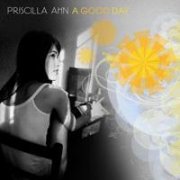 |
A Good Day (2008, 35.53) **/½ |
|
| Dream Wallflower I Don't Think So Masters in China Leave the Light on Red Cape Astronaut Lullaby |
Find My Way Back Home Opportunity to Cry A Good Day (Morning Song) |
|
 |
When You Grow Up (2011, 44.56) **½/TT |
|
| When You Grow Up One Day I Will Do Oo La La Vibe So Hot City Lights I Don't Have Time to Be in Love Cry Baby Lost Cause |
Empty House I Will Get Over You Elf Song Torch Song |
|
Current availability:
Chamberlins/Mellotron used:
Despite being signed to jazz specialists Blue Note, Priscilla Ahn is the kind of singer-songwriter whose songs get used in sloppy films or TV programmes like Grey's Anatomy. Her debut album, 2008's A Good Day, is a super-bland effort, tailor-made to be played in Starbucks or wherever, mostly vaguely folky stuff, overlaid by her insubstantial vocals, with the occasional countryish twang (Leave The Light On) thrown in for good (or otherwise) measure. Zac Rae plays Chamberlin on Wallflower, with the faintest of faint, er, something (strings? Flutes?), that you'd have absolutely no idea was there if it wasn't credited. This is pretty awful, to be honest, if heartfelt; drippy nonsense of the worst kind. She'll sell millions.
Now, I don't know if I'm in a mellower mood a couple of years on, but 2011's When You Grow Up, despite still being fairly drippy, doesn't inspire the same hatred in me at all; in fact, it's quite sweet, admittedly in a drippy kind of way. Maybe it's simply a better album? Ahn and Ethan Johns both play Mellotron, while Ahn throws a bit of Chamberlin in for good measure, with a nicely upfront Mellotron flute part and vibes (from both players) on Oo La La, Mellotron (flute) and Chamberlin (unidentified woodwind and guitar?) from Ahn on I Will Get Over You and Mellotron on Elf Song (harp glissandos??) from Johns, although the strings on City Lights and Lost Cause are real. I seriously cannot recommend Ahn's debut, but When You Grow Up will probably keep Laurel Canyon-style singer-songwriter fans happy while they wait for the old guard to trawl through their archives again.