




|
|
|
|
||
|
|
Necromonkey Neda Neighborhood Texture Jam Carol Nelson |
Neon Rose Nervous Nessie |
Netherworld Neumann Neuschwanstein |
Neutral Earth New Birth New England |
 |
Necroplex (2013, 52.41) ****/TTTT |
|
| Pea Asshole Vote Elements Tuba Melt Small Rome Every Dead Indian Empty Traps and Nightfall |
Spoken The Utopian and the Teaspoon Winds Over Iceland Knock Knock Hornets Nest Notebook Memory Last Entry |
|
 |
A Glimpse of Possible Endings (2014, 37.00) ****½/TTT"There Seem to Be Knifestains in Your Blood"The Sheltering Waters The Counterfeit Pedestrian (A) Glimpse (of Possible Endings) The Worst is Behind Us |
 |
Show Me Where it Hertz (2015, 45.42) ****/T½Entering the Sublevels of NecroplexEverybody Likes Hornets But Nobody Likes Hornet Egg The Rage Within the Clouds The Electric Rectum Electoral Like Fun You Are The Current Beneath the Squarewave |
 |
The Shadow of the Blind Man (2016, 18.28) ***/½Kinky PandaPocket Tribe End (Malfunction Remix by Chris Cline) Nyfiken Blod |
Current availability:
Mellotron(s)/Chamberlin used:
Mattias Olsson (Änglagård, a million others) should need no introduction to regular readers of this site; Necromonkey (with Gösta Berlings Saga's David Lundberg) is his latest project, their debut, 2013's Necroplex, being every bit as eclectic as we've come to expect from the fertile imagination of Mr. Olsson. It shifts between a host of disparate styles, the larger part of the album falling into the 'uncategorisable' bracket, personal highlights including the thoroughly epic Asshole Vote, Every Dead Indian and closer Last Entry, probably chiefly due to their 'proggier' sound. Other notable tracks include ominous opener Pea, the piano-led waltz-time Small Rome and bass clarinet solo piece Notebook Memory, rather proving the point that, Optigan rhythms aside, there's no such thing as a 'Necromonkey sound'.
Mattias has thoughtfully provided full instrumental credits, so I can, with complete authority, tell you that on the Mellotron front, we get:
Mellotronic highlights? All of it, really, although one section in Every Dead Indian that almost screams 'Mellotron strings attack' turns out to be nothing of the sort. Hey, it's that kind of album. Suffice to say, anyone who liked any of Mattias' various 'off-piste' projects is almost certain to like at least some of Necroplex; this is the kind of record that will reward repeat playings, refusing to give up all its secrets upon first listen. Very recommended.
Wasting no time, the duo have produced another selection of recordings for our edification, all of a year on, A Glimpse of Possible Endings, consisting of fewer, yet longer tracks. Once again, categorisation is near-impossible: the rhythmic electronica of opener "There Seem To Be Knifestains In Your Blood" both does and doesn't have anything much in common with The Sheltering Waters, which appears to feature, at risk of using an unwelcome phrase, a heavy dose of trip-hop, 1998 style. The Counterfeit Pedestrian is a brief, slightly fucked-up piece for solo piano and closer The Worst Is Behind Us semi-channels Sigur Rós' transcendent post-post-rock, rather proving my point as to the album's eclecticism. The album's highlight (at least from PlanetMellotronLand), however, is the fifteen-minute sort-of prog epic title track, possibly best described as an electronica/symphonic prog cross, suddenly turning into a trip-hop Änglagård halfway through, as massed Mellotrons stomp programmed beats into the dirt.
Tape-replay? Naturally, although not always as overtly as on their debut:
Knifestains, despite its half-dozen credited sounds, is actually very low on the tape-replayometer, but the other two tracks give the album its three Ts between them. The title track sounds like all three Mellotron sounds battle it out at once, which probably means that they do, while The Worst Is Behind Us is no slouch on the Mellotron front, either. Recommended? Oh yes...
Going by its sleevenotes, 2015's Show Me Where it Hertz (v. witty, chaps), while a studio recording, is based around a set the band played in Stockholm that January, concentrating more on the electronic aspects of their work, as against the more typically 'prog' ones. The end result is, unsurprisingly, more of an electronica album in a progressive setting than a prog album per se, vaguely like Tangerine Dream tackling the proggier end of the Kraftwerk catalogue. Personal favourites? Probably Like Fun You Are and The Current Beneath The Squarewave, the latter probably because it's the nearest the album gets to a 'symphonic' sound, whatever you take that to mean. Although Chamberlin and/or Mellotron (presumably played by both members) are credited on all but one track, they're often buried so deeply in the mix that they're near-impossible to spot, more audible parts including the Chamby female voices on opener Entering The Sublevels Of Necroplex, the Mellotron wineglasses in The Electric Rectum Electoral and the string section/choirs in The Current Beneath The Squarewave.
The following year's three-track EP, The Shadow of the Blind Man, is the band's most recent release to date. Lead track Kinky Panda comes across as an eight-minute version of the more extreme end of King Crimson's oeuvre, all angular guitars, fuzz bass and shouted vocals, Pocket Tribe End (Malfunction Remix by Chris Cline) slowly decays to a distorted vocal piece, while Nyfiken Blod is drone-based, with glockenspiel interruptions. One of the duo plays a couple of brief bursts of dirty Mellotron brass on Kinky Panda, but that's your lot.
See: Samples etc. | Änglagård
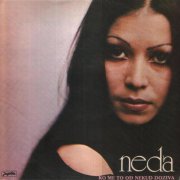 |
Ko Me to Od Nekud Doziva (1976, 32.27) ***/T½ |
|
| Šalvare Sarajka Djevojka Majci Plakala/Mene Majka Kara/Neko Tiho Zapjeva Tri Djevojke U Mene Se Zagledalo Jedno Momče Vrlo Milo Došli Momci Veseli Ima Babo 100 Ovaca Oj Daljino, Daleka Bila |
8 Dana Proći Će Jednom Ovi Dani Ko Me to Od Nekud Doziva |
|
Current availability:
Mellotron used:
Neda Ukraden is a popular Serbian singer, still recording today. 1976's Ko Me to Odnekud Doziva was her second album, in a solid Yugoslav folk/middling rock style, taking songs from the former and adding the sound of the latter, not an uncommon technique in many European countries at the time. It's not a bad effort of its type, but not something that's going to thrill many these days, I suspect.
Srećko Zubak is specifically credited with 'Mellotron 400', with strings on opener Šalvare, Mene Majka Kara and the title track and what sounds like mixed strings on Sarajka Djevojka Majci Plakala. It's possible it doubles the Hammond elsewhere, but it's hard to tell. So; Euro folk/rock/pop with a little Mellotron. Unlike several other Yugoslav Mellotronic 'sightings', at least this one's real and easily found as a download, should you be that curious.
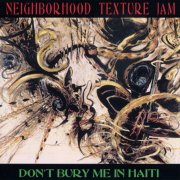 |
Don't Bury Me in Haiti (1993, 63.09) **½/½ |
|
| Little Toymaker Passive The Brucification Before Pilate Nothing So Heinous German Song Solitary Guy Mental Obsession/Physical Craving Wei Jia |
Gung Gung Chi Chi Piao My Baby Loves Me Waiting In Sverdlovsk Too Many Cows He's Not The Same Unnecessary Surgery Barbara Of Seville |
|
Current availability:
Mellotron used:
Despite their name, the Memphis-based Neighborhood Texture Jam aren't a jamband, more (to quote good ol' Wikipedia) 'fus[ing] elements of punk, industrial and funk into a heavy, rhythmic rock sound', aided and abetted by a member credited with 'texture', i.e. metal percussion. Their second album, 1993's voodoo-referencing Don't Bury Me in Haiti, features moments of greatness, chiefly when they utilise their killer guitar sound on material like the driving The Brucification Before Pilate or German Song, but far too much of this overlong album wallows around in a mid-paced '90s indie stew, dragging their better songs down with it.
New member John Whittemore plays Mellotron, with a minute of solo flutes right at the end of the record, on Barbara Of Seville (ho ho). Real? Although I can't trace where this was recorded, given that it was released on Ardent Records (before they became a Christian-only label), chances are we're hearing the legendary 'Big Star' Ardent Studios M400. Really not enough to recommend anything more than hearing the relevant track on a slow day.
Nektar (UK) see: |
 |
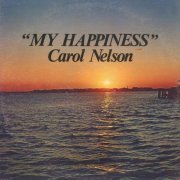 |
My Happiness (1980?, 28.56) *½/T |
|
| My Happiness Me and Bobby McGee For Once in My Life They're Stepping All Over My Heart The House of the Rising Sun Anytime I Will Survive You Made Me Love You |
It Makes No Difference Now One Day at a Time |
|
Current availability:
Mellotron used:
Carol Nelson was a Florida-based light entertainer, who released the undated My Happiness around 1980, at a guess (once again, 'thanks' to Mark Medley for this one). Er, what can I say? Although I only know four of its ten tracks, it looks like they're all covers, including songs known through versions by the likes of Judy Garland and Kitty Wells. Is anything here even remotely listenable? Possibly her take on The House Of The Rising Sun, resetting it in its (presumably) correct female setting (listen to the overly-familiar lyrics again), while her disco-lite take on Gloria Gaynor's I Will Survive at least raises a wry smile. The rest? Hokey country, slushy MOR, even swing-era stuff like You Made Me Love You, while gospel closer One Day At A Time is particularly awful. Very poor, although at least she could sing. Its brevity is a plus, too.
David Anson plays credited 'piano and Mellotron', with 'orchestral replacement' strings on the opening title track, For Once In My Life and I Will Survive, all fairly low in the mix, although the strings on The House Of The Rising Sun are string synth. To my surprise, this is on Discogs and has even turned up on a couple of blogs of the 'listen to this cheesy crap LOL' variety. Hmmm. Listen to this cheesy crap! LOL.
Willie Nelson & Leon Russell (US) see: |
 |
 |
A Dream of Glory and Pride (1974, 45.06) ***/T½SensationA Picture of Me Love Rock Primo Let's Go and Get That Boy Julia's Dream A Dream of Glory and Pride |
 |
Two (1975, 41.25) ***/TI'm an EntertainerFalse Star Thoughts My Lady Waiting for the Train Bloody Welfare Is There an Eden |
 |
Reload (1975, 40.04) ***/TDead EyesNight Birds Too Long Race for Knowledge A Man's Not a Man A Smell of Death Reload Dust and Rust Tears of Pain |
Current availability:
Mellotrons used:
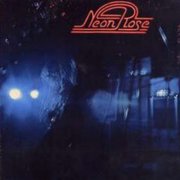
Neon Rose were a Swedish hard rock outfit with progressive tendencies, though considerably less than, say, Trettioåriga Kriget. In many ways, they're a classic 'local band'; you know, picked up a following in their home town/region/country, but weren't original or charismatic enough to break through into a wider market, as against 'didn't get the breaks'. That isn't to say there's nothing of merit about them - far from it - but much of their material has dated badly and doesn't bear comparison with better-known bands of the era. They debuted with 1974's A Dream of Glory and Pride, the bulk of which, rather predictably, consists of workaday hard rock, despite some of the track lengths. It gets more interesting towards the end of the album, notably on the proggiest thing here, the lengthy closing title track, with inventive riffing from all concerned. Vocalist/guitarist Roger Holegård's Mellotron finally appears on Julia's Dream (er, has a ring of familiarity about it?), with a flute part over the acoustic intro, plus cellos and strings on the title track, but it's hardly a runaway Mellotron classic.
They followed up early the next year with Two, largely more of the same, with plenty of 'would've worked live to a bunch of pissheads' boogie and not enough material of any real interest. Holegård and bassist Benno Mengarelli on Mellotron this time round, with choirs on the balladic My Lady and the proggier Bloody Welfare, the best track here. The CD adds three live tracks, including a beery version of Eddie Cochran's C'mon Everybody, (obviously) Mellotron-free, for diehards only. Their last album, Reload, appeared later in '75, displaying a modicum of sophistication, at least in comparison with its predecessors. Tracks like Race For Knowledge and Reload itself are less boogie-by-numbers than before, showing the band's increased knowledge of dynamics (in fairness, they already knew how to write longer-form songs). Back to Holegård alone on Mellotron, with choirs on Night Birds and strings on the title track, so once again, notalottatron.
 |
 |
About Everything (2000, 58.56) ***/T |
|
| Dying Each Day Best Days Granny Ate the Buttons Waters May Run (Troublesome & Deep) Bulldog Sophie Red Shark Reach Out for Love |
7 in the Morning 48 Hours Rougher Ground Where is the Summer |
||
Current availability:
Mellotron used:
Nervous released one album, 1996's Son of the Great Outdoors, to little acclaim, then spent many months in '98 working on the follow-up for Grapevine, About Everything (or Nervous About Everything, I suppose). By this time, they had ex-Cardiac Bill "William D." Drake on board, who rang me up and asked if they could use my Mellotron. Well, you don't tend to say 'no' to anyone involved with Cardiacs (well you don't, do you?), so I duly delivered it to the basement studio they'd had rented for them, where it stayed for several months, alongside a bevy of other analogue gear, including a Wurlitzer, a late-period Hammond and Leo Sayer's old Rhodes Suitcase 88. My poor Mellotron was ailing at the time (this was just before it broke down completely during the recording of the Spratleys Japs album) and I believe they sampled it at some point, so I've no idea how many of the Mellotron tracks here are 'real' and how many are samples, so I'll treat them all as real.
What I don't actually know is whether or not this album ever obtained a proper release; I've had a four-track promo for a while, then found this full-length version for a quid, sans inlay, so the second image is the promo's sleeve with the 'promo' bit removed. Discogs now have an entry for a 'proper' version, providing me with the first image, the original poster scanning it very poorly. I'm afraid to say the album itself is not fantastically interesting (sorry chaps), being country-flavoured pop, however unlikely that sounds coming from a London-based outfit. The songs aren't bad, but it looks like we'll never know how they would've fared in the marketplace. The one track that really leapt out at me was Bulldog, which turned out to be The Beatles' Hey Bulldog anyway. Figures.
Bill played my Mellotron on a good few tracks during the sessions, but I suspect most of them ended up on the cutting-room floor (I believe there were thirty-plus on the go at one point). The very first sound you hear on the album is an introductory flute part, kept up right through Dying Each Day, while it's possible there's more buried in the mix; the choirs on Waters May Run (Troublesome & Deep) only really become apparent at the end of the song. Various string parts throughout the album sound like samples, but who knows?
See: William D. Drake | Cardiacs
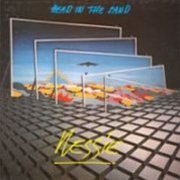 |
Head in the Sand (1979, 39.45) **½/½Too Much MoneyLooking in Your Eyes A Song of War Lightning Stars Spanish Singer Unreal Body It's a New Day Dawning Head in the Sand |
Current availability:
Mellotron used:
Nessie's first album, The Tree (**½) is a distinctly average set, rather cheesy nearly-prog, languishing in an unfortunate slough of despond somewhere between symphonic prog and mainstream pop/rock. Head in the Sand starts off as if it's going to be a better proposition, despite the appalling vocals (anonymous, as all four members are credited; very sensible too), but, by track four it's descended into tedium, Lightning Stars being dull pop-boogie. It gets worse, but you probably don't need the gory details.
Henri Leruth is credited with Mellotron, although all the strings are produced by an over-loud string machine. There's a definite (male voice?) choir chord pedalled in near the beginning of opener Too Much Money and some very background choirs on Looking In Your Eyes, but that really seems to be it. Nessie are one of those obscure bands that collectors are on the lookout for, but I can tell you now; this is not a long-lost prog gem, it's tediously mainstream, with the merest glimmer of interest on about two tracks. Avoid.
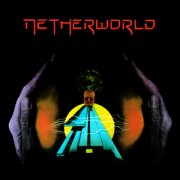 |
In the Following Half-Light (1981, 44.04/54.31) ****/TTT½ (TTTT)Too Hard to ForgetSon of Sam Straight Into Infinity Maybe if They Burn Me Isle of Man A Matter of Time Sargasso I-II-III [reissue CD adds: Cumulo Nimbus] |
Current availability:
Mellotron used:
Despite forming in 1975, it took Netherworld until 1981 to release their only album, In the Following Half-Light; the usual story of not getting the breaks when prog was popular, then soldiering on for years before finally releasing a self-funded LP, now highly collectable. Their sound is rather like a more American Genesis, a few 'later' influences creeping in here and there, possibly comparable to an updated Lift. No one track is especially outstanding, but the overall effect is excellent, although Netherworld were never really going to be frontrunners.
 |
Randy Wilson played Mellotron on most tracks, mostly strings, with male voice choir on Sargasso. Good use throughout, particularly on Isle Of Man and A Matter Of Time, those strings right at the front of the mix. I've seen a quote from the band where they remark on what they called their 'God Sound', a mixture of Mellotron strings and choirs, though I don't actually hear any audible evidence of it here. Given their one M400, they couldn't have produced it live, either; maybe it was more concept than reality. Incidentally, the only reason the album doesn't get a higher 'T' rating is the rather background Mellotron use on the album's earlier tracks.
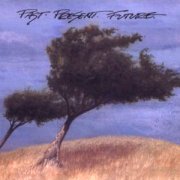
Anyway, before the album's reissue by those wonderful Musea people, Greg Walker's Syn-Phonic label in the States released a double-vinyl compilation in 1992, Past-Present-Future (right), which gathered together tracks from eight bands (two per side - hoorah!), some of which remain otherwise unreleased over a decade later. Netherworld's contribution was the slightly disjointed Cumulo Nimbus, which seems to consist of three different tracks with gaps in between, tied together by a 'thunder' sample (in pre-sampler days, of course). It takes a while for the Mellotron to kick in, but when it does, it's with full-on choirs, far more in-yer-face than anywhere on ...Half-Light. This had been added to the Musea CD, bringing the disc up to nearly an hour.
On their website, the various ex-members sound hopeful that more unreleased material will be unearthed at some future stage. Let's hope so; Netherworld were a good band, if not timelessly classic and more of this stuff would be most welcome. In the Following Half-Light is definitely worth the purchase and Past-Present-Future's worth picking up if you can find a copy (I don't even own one myself). Worth the effort.
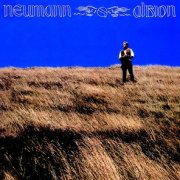 |
Albion (1986, 38.12) ***/T |
|
| Kohti Kesää Naiselleni Saaga Auringosta Ruusujen Sota Sana Saapui Ranskaan '39 Albion Gwaihir |
Tuuliruhtinas Mennyt Maailma Gaudete |
|
Current availability:
Mellotron used:
As with so many lesser-known overseas artists, I'm having trouble finding out much about Finland's Pertti Olavi "Neumann" Nieminen. Going by 1986's Albion, he's essentially a folk artist; while the '80s were barely any kinder to folk than to other non-contemporary genres, he has a decent stab at making a good album, highlights including the fiddle-led Ruusujen Sota, his decent, Finnish-language version of Brian May's Queen classic '39 and closer Gaudete, a straight version of the medieval hymn as popularised by Steeleye Span, sung in the original Latin. On the downside, while opener Kohti Kesää starts with a very pleasant melodic 12-string part, the promise isn't kept up; Saaga Auringosta is all gloomy vocals and digital synth, Tuuliruhtinas is slightly dodgy country, while a few too many 'traditional' Scandinavian influences crop up: you know, accordions, massed male vocals, that kind of thing.
Esa Kotilainen, probably the only Finnish Mellotron owner/player in the '80s and '90s, adds flutes, strings and choir to the folky Naiselleni, to good effect, although it's a shame it wasn't used elsewhere. Worth hearing for folk-rock fans, one decent Mellotron track.
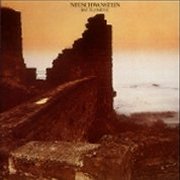 |
Battlement (1978, 39.05) ***½/TT½Loafer JackIce With Dwale Intruders and the Punishment Beyond the Bugle Battlement Zärtlicher Abschied |
Current availability:
Mellotron used:
If I had a pound for the number of times I've seen Neuschwanstein described as 'exactly like Genesis; a complete clone', etc. etc... Well, excuse my ears, but... really? Battlement's a pleasant enough album, but even after several plays, the first band I think of when I put it on is Marillion. It predates them by several years, but the essentially fairly simple song structures, washes of string synth and tortured vocals remind me of none other than Aylesbury's finest (?). Good news if you like Marillion; however... To be absolutely fair, from other reviews I've read, the CD was completely remixed and apparently sounds more like Genesis as a result (it happens). By the looks of it, they messed about with the cover art too; the original LP is far less 'yellow' than the scan I downloaded.
I'm probably being a little harsh here, but I wouldn't want anyone to rush out to buy this on my recommendation expecting a symphonic classic; I seem to be in a minority on this one, but it sounds more like proto-neo-prog (new category, anyone?) than yer full-on '70s thing to me. None of the tracks stand out especially, although there's some nice Mellotron here and there from keyboard player Thomas Neuroth; again, nothing to write home about, but the choirs in the oddly-titled Intruders And The Punishment are particularly effective, with some nice string swells in places.
 |
Neutral Earth (2019, 54.11) ***½/T½ |
|
| Three Kings Apart Forbidden Planet Broken Fences Metabolic Myopathy Lingering Parade Gulag Mondays A Song of Peacock Ore Just Below the Stars |
Lessons in Extinction Neutral Earth Brian's Little Piano Sigmund's Cat |
|
 |
Current, Volts & Ohms (2021, 54.45) ***½/TTT |
|
| King Boodamir (inc. The Subjects of Battlefields and Trench or Treason) Maps & Legends The Wrath of God Ensemble Upon Stars Blue Leech Sir Specimen Neolithic Traveller |
Devil's Workshop 2.0 A Matter of Energy Feed the Machine A Mind of Open Doors Mother 1964 |
|
 |
Strange News From a Distant Star (2023, 52.16) ****/TTTT |
|
| Microbe Domain A Place in the Sun Mutations The Year of Meteors Letters to the Sun A Difficult Path (inc. Fields of Glass Hearts) Big Black Bird (inc. Wings to the King) The Battle of Parallel Worlds |
Prismatic Departure A Reason for the Seasons |
|
 |
Coma (2023, 44.14) ****/TTTT |
|
| Coma Coma In the Bay of Dawn Different Blue Music/Gift of Science Absolute Zero Low Earth Orbit Eclipse of the Glass Moon Coma Reprise |
The Seven Metals of Antiquity Time Lapse Illusion Metamorphosis Ambient Replies Fountains Beyond the Sun Blind Spiders A Light, a Life |
|
Current availability:
Mellotrons used:
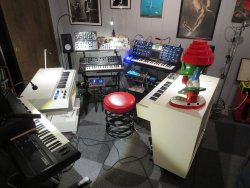 |
Neutral Earth (loads of fun Googling this one...) describe themselves as hailing from 'Florida and Illinois', one of the duo, Craig P. Smith, being a veritable Mellotron veteran. Difficult to know how to describe 2019's Neutral Earth; it contains elements of post-rock, indie, avant-rock and prog, amongst other disparate genres, while their Facebook page lists, among 'artists we like', Eno, Roxy Music, Smashing Pumpkins, Bon Iver and Talking Heads, so if you can make any sense out of that... Best tracks? Hard to say; I can only tell you that I preferred Forbidden Planet, Brian's Little Piano and semi-ambient, ten-minute closer Sigmund's Cat. Smith plays his M400, alongside a digital machine and a software version, but the only sightings for which I'm prepared to stick my neck out are the flutes and choirs on Metabolic Myopathy, strings and cellos on Brian's Little Piano and strings and flutes on Sigmund's Cat. Several other tracks featuring probable fakeotron, not least the Mellotron mandolins that cropped up at one point. At the time of writing, I don't believe this is physically available, although its creators have uploaded it to YouTube.
2021's Current, Volts & Ohms features the same eclectic mix of influences as on their debut, albeit with a shift towards the prog spectrum, notably on eight-minute opener King Boodamir (Inc. The Subjects Of Battlefields And Trench Or Treason) (!). In some ways, it's difficult to know what to say about Neutral Earth, as they cover so many bases; since they've decided to simply give their music away, they do exactly what they want, completely ignoring commercial constraints, so their albums can sound more like multi-artist compilations than cohesive band efforts. Aside from that opener, other highlights include Ensemble Upon Stars, Neolithic Traveller and the almost-hard rock of A Matter Of Energy, but there's an element of 'too many ideas being thrown into the pot' in places. Craig plays Mellotron on several tracks, although two digital versions turn up, too. On the genuine front, we get lone string notes drifting in and out of opener King Boodamir, along with a big, dirty (sampled?) brass chord and a brief choir part towards the end, high-end cello chords, a string line and solo flutes on Ensemble Upon Stars, strings and flutes on Sir Specimen, little bursts of echoed flute on Devil's Workshop 2.0, background strings and a cello line on Feed The Machine, fat chordal strings and a flute line on A Mind Of Open Doors and occasional strings on closer Mother 1964. On the samplotron front, we get a flute line on The Wrath Of God, strings on Blue Leech and a string section line on A Matter Of Energy.
Their first album of 2023, Strange News From a Distant Star, apparently 'loosely based' on a Herman Hesse short story, moves even further towards the prog mainstream, such as it is, highlights including the Yes-like The Year Of Meteors, the synth-heavy Letters To The Sun, The Battle Of Parallel Worlds and fifteen-minute closer A Reason For The Seasons. Craig lists the Mellotron sounds used on the album's YouTube page (not to mention giving PM a namecheck), while Joe Fasula plays the sampled version. So... Strings all over opener Microbe Domain, with massed woodwinds at the end, cellos on A Place In The Sun, flutes and upfront strings on Mutations, boys' choir (including a solo part), French horn and strings on The Year Of Meteors, woodwinds, flutes and (sampled?) choir on Letters To The Sun and flutes and (sometimes phased) strings on A Difficult Path (Inc. Fields Of Glass Hearts). To continue (that sentence was becoming overlong), we get a flute line on Big Black Bird (Inc. Wings To The King), beautifully upfront strings and a solo flute part on The Battle Of Parallel Worlds, background strings on the brief Prismatic Departure and strings and cellos on A Reason For The Seasons, although I presume the church organ is sampled. I'm not sure where the 'strings' (presumably string section), regular brass and gongs are, but the mix tends towards the fairly dense on several tracks.
...And on '23's second release, Coma, Neutral Earth finally achieve Peak Prog. The album's based on one section of a twenty-three minute piece of the same name the protagonists wrote in 1975, almost (ulp!) fifty years earlier. Joe and Craig had wanted to write a Thick as a Brick-style one-track record, and the end result, while slightly directionless in places, achieves that aim with aplomb. There isn't much point picking out 'better bits'; like all such albums, this is designed to be listened to in one sitting. Craig's Mellotron on almost every part, principally strings and flutes, although church organ, woodwinds and various choirs turn up in places, too. Consider Coma a triumph of the old adage 'never give up'. Incidentally, the actual album is forty-three minutes long; the extra minute or so consists of a short (and extremely murky) extract from the original 1975 piece. Is this their best album? Perhaps until the next one...
See: Craig P. Smith | Eternal Void
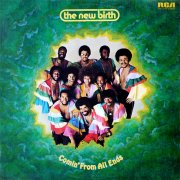 |
Comin' From All Ends (1974, 44.41) ***/TT |
|
| End to End Take This Train to Freedom I Wash My Hands of the Whole Damn Deal Lady Love Pretty Music Patiently Echoes of My Mind Do it Again |
Comin' From All Ends Epilog |
|
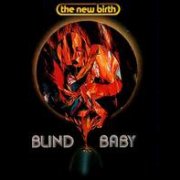 |
Blind Baby (1975, 35.50) **½/TBlind BabyDream Merchant Forever Granddaddy I Remember Well Blind Man Why Did I Epilogue |
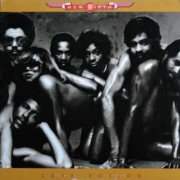 |
Love Potion (1976, 34.54) **½/TTFallin' in LoveWe Are All God's Children I Never Felt This Way Before Hurry Hurry Slow Driving The Long and Winding Road Sure Thing |
Current availability:
Chamberlins used:
Detroit's The New Birth's Comin' From All Ends is a mixed bag, much of it the expected mid-'70s soul/funk, highlights including the über-funky, Clavinet-driven I Wash My Hands Of The Whole Damn Deal and the jammed-out, eight-minute title track. James Baker plays Chamberlin, with what I think are Chamby strings on Do It Again, with definite ones on the title track and closer Epilog. The band dropped the definite article when they shucked off their old management, releasing 1975's Blind Baby soon after. A typical mid-'70s funk/soul album, it seems to do what it does well, although little of the material really stands out, which is probably why they're not a household name. Baker on Chamberlin again; although most of the album's string parts sound like string synth, it's definitely Chamby on Why Did I and flutes on Epilogue.
The band followed up with '76's Love Potion, very similar to its predecessor, including a cover this time, their faithful interpretation of The Beatles' The Long And Winding Road. James Baker and Carl McDaniel on Chamby this time, with strings on We Are All God's Children, I Never Felt This Way Before, The Long And Winding Road (less obviously) and closer Sure Thing. New Birth were one of what seem to my ears to be hundreds (thousands?) of interchangeable soul groups of the era, but at least they weren't allied to that horrible Philly soul sound; you know, The Stylistics and their cheeso ilk.
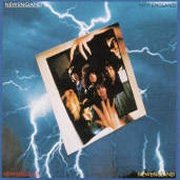 |
New England (1979, 41.02) ***½/TTT½ |
|
| Hello, Hello, Hello Don't Ever Wanna Lose Ya P.U.N.K. Shall I Run Away Alone Tonight Nothing to Fear Shoot Turn Out the Light |
The Last Show Encore |
|
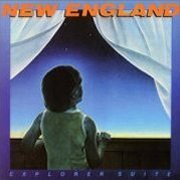 |
Explorer Suite (1980, 43.58) ***½/TTT |
|
| Honey Money Livin' in the Eighties Conversation It's Never Too Late Explorer Suite Seal it With a Kiss Hey You're on the Run No Place to Go |
Searchin' Hope You'll Be Born Again |
|
 |
Walking Wild (1981, 35.38) ***½/TT |
|
| Walking Wild Holdin' Out on Me Don't Ever Let Me Go Love's Up in the Air DDT Get it Up L-5 She's Gonna Tear You Apart |
Elevator You're There |
|
 |
1978 (1998, recorded 1978, 37.55) ***½/TTT½ |
|
| Alone Tonight Nothing to Fear Candy I Will Be There Shoot Don't Ever Wanna Lose Ya Hello Hello Hello Even When I'm Away |
Searchin' Turn Out the Light |
|
 |
 |
Greatest Hits Live [a.k.a. Live at the Old Waldorf] |
|
| Alone Tonight Shoot Hello Hello Hello Last Show Encore Hey You're on the Run Shall I Run Away |
Nothing to Fear Don't Ever Wanna Lose Ya Explorer Suite P.U.N.K. You'll Be Born Again |
||
Current availability:
Mellotrons used:
New England are one of those strange imponderables life chucks up sometimes; why were they not huge? New England is chock-full of great melodies and big guitars, easily rivalling the likes of Foreigner and Journey, if not quite in the Boston league. Maybe they were a bit too gutsy? Or the keyboards a touch too prog? The public's taste is always fickle and even a sure-fire winner like this can be ignored if the planets aren't correctly aligned. Part of the problem was probably the label concerned; as an independent, Infinity (also home to the excellent Screams) were never going to have a big enough budget to achieve the saturation airplay that a band like New England needed. Even the coup of Kiss' Paul Stanley 'producing' the album (actually produced by Mike Stone) didn't give them enough sales to step into the big league.
 |
Anyway, on to the music. The album's runaway pomp/AOR classic is the mighty Don't Ever Wanna Lose Ya; utterly ridiculous, but at the same time quite magical, with a chorus to die for several times over, but, startlingly, only a minor hit (reached US #40). The rest of the album is actually quite varied, shifting between ballads along the lines of Turn Out The Light and all-out rockers like the lyrically iffy P.U.N.K., but nothing quite reaches the heady heights of the hit that never was. The melodies actually beat Foreigner and co. into the ground in several instances, but it obviously just wasn't enough. Keyboard man Jimmy Waldo used quite a 'retro' rig for 1979, with very little obvious polysynth (although various machines had been available for the preceding couple of years), sticking mainly to Hammond, piano, monosynth (sounds like Moog) and, of course, largish quantities of Mellotron. After a slow start, he really didn't stint on his Mellotron use here, with strings on most tracks, including (of course) Don't Ever Wanna Lose Ya, plus choirs on Alone Tonight. His string work was actually quite orchestral, although a lack of originality in the Mellotron department loses them a T or so.
The following year's Explorer Suite is less of a 'concept piece' than I'd been led to expect, being more of a natural follow-on from their debut. The songwriting is mostly in the same league, although there's no Don't Ever Wanna Lose Ya, but then, how often does lightning strike twice? Waldo's keyboards sound (sadly) more contemporary, with plenty of polysynth and less of everything else, until, that is, you hit track five, Explorer Suite itself. You want Mellotron? Huh? This is loaded with it - mainly choir, plus strings, seeming to trigger a bit of a Mellotron-fest from the hands of Mr. Waldo (although there's a smidgeon of strings on track four, It's Never Too Late). Despite lacking one killer song, Explorer Suite is a worthy second effort, with nearly as much Mellotron as their debut and, if anything, more of a 'pomp' songwriting style.
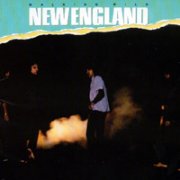
Their third (and last) album, Walking Wild (produced by Todd Rundgren) carries on in a similar vein, although it seems to lack the various highlights of its two predecessors. Don't get me wrong; it's perfectly good at what it does, but it's rather more generic AOR, lacking the surprise factor of another Don't Ever... or Explorer Suite. Waldo's Mellotron is still in evidence, if mostly rather further back in the mix and mostly choirs, apart from a fairly overt string part on L-5. That was it for New England; you can only bang your head against the wall for so many years, I suppose. Waldo went on to Alcatrazz, the rest of his bandmates into relative obscurity.
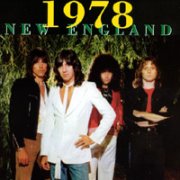
The band may've split in the early '80s, but two Mellotron-heavy archive releases have recently become available. 1978 gathers up their pre-first album demos, containing four otherwise unavailable tracks, pretty much what you'd expect, being high-quality demos of largely familiar material. Maybe they don't have that 'sheen' you expect of big-budget recordings, but a (very) slight roughness quite suits the material, surprisingly. About the only real loser here, is Don't Ever Wanna Lose Ya, which is slower, in a different key and, overall, less gutsy. I suppose that's what 'proper' producers are for... Anyway, full-on Mellotron strings on opener Alone Tonight and several other tracks, with a Strawberry Fields-style flute part on Hello Hello Hello that isn't on the official album version. Other than that, it's fairly standard use throughout, but 1978 gives an interestingly different perspective on their first album material, so it's probably worth it for fans.
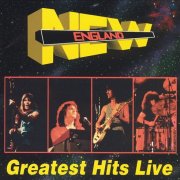
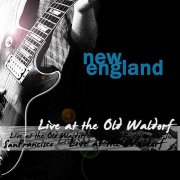
2003's shoddily-titled (not to mention that crummy sleeve) Greatest Hits Live appears to be the same recording as Live at the Old Waldorf from four years later, presumably the version you're going to find more easily, anyway. Despite a lack of hard'n'fast recording details, it's obviously from the San Francisco venue, most likely in 1980, before the release of Explorer Suite, featuring almost everything from their debut and a handful of new songs. The actual recording's excellent, while the playing is, as you'd expect, spot-on, as is the material. Highlights? Opener Alone Tonight, John Fannon's 'budget Brian May' solo spot on Encore, a pre-release version of Explorer Suite and the mighty, mighty Don't Ever Wanna Lose Ya, but I'm not exaggerating when I tell you that there's not one duffer here. Despite the standard 'one keyboard player, many keyboard parts' issues, Waldo does as good a job as humanly possible in reproducing studio parts onstage, not least the Mellotron on several songs. Alone Tonight features a full-on high-speed string part, plus choirs, other overt parts including the strings on Shall I Run Away (craftily juggled with a piano part) and the rather murky choirs, followed by strings, that open Explorer Suite (it sounds like the two sounds playing together: backing tapes?), with varying amounts of strings on the other highlighted tracks. I don't think I'm going overboard in claiming that this is THE quintessential New England album; their best material, with extra added live energy and shedloads of Mellotron. What's not to like?
See: Alcatrazz | Hirsh Gardner